
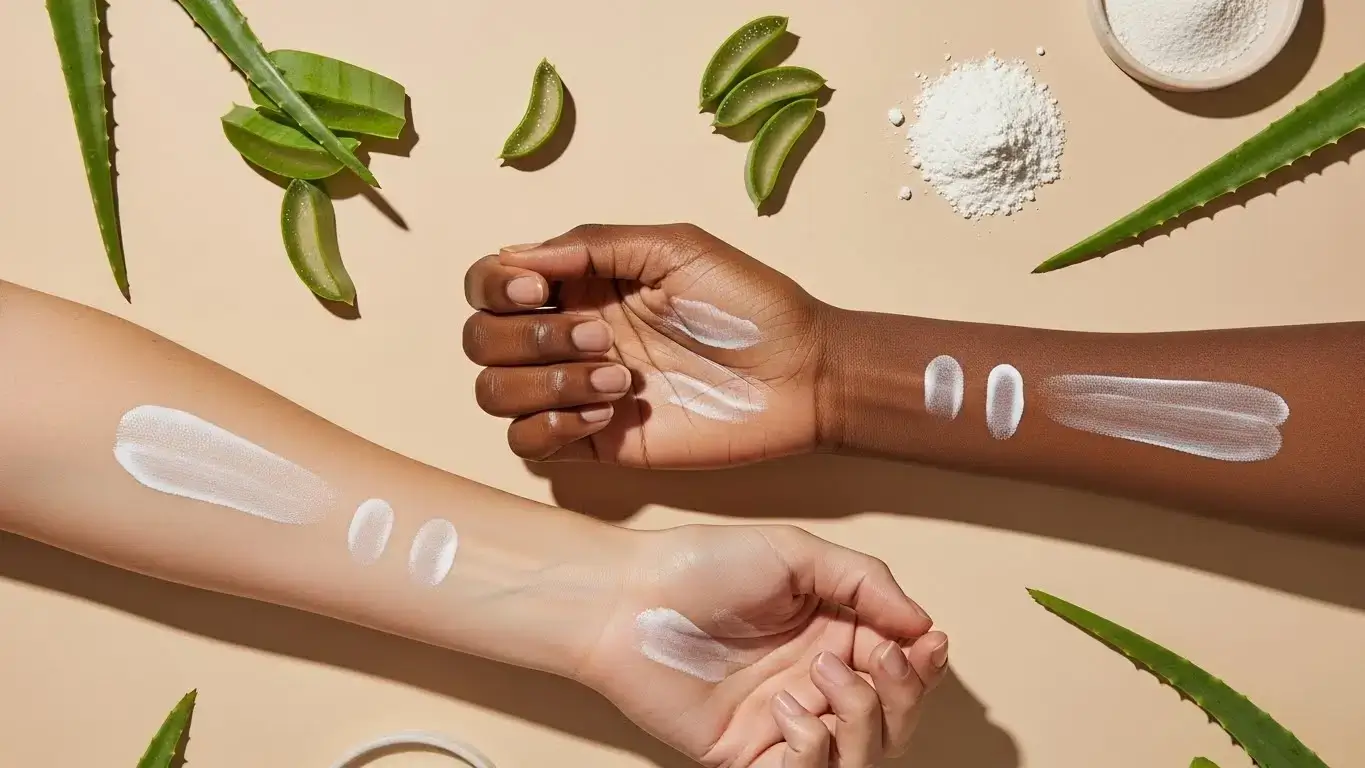
Let’s be real for a second: finding a sunscreen when you have acne-prone skin feels like navigating a minefield. You know you need protection—especially to prevent those stubborn post-acne dark spots (PIH) from lingering for months—but you’re terrified that one wrong application will trigger a breakout that takes weeks to clear.

And then there’s the “Ghost Factor.“
For years, choosing a “safe” physical sunscreen meant accepting that you would look like a mime for the rest of the day. Thick, pasty, chalky, and impossible to rub in. But the game has changed. As a skincare enthusiast who has battled hormonal acne for over a decade, I’ve tested more tubes than I can count. I’m here to tell you that the best mineral sunscreen for acne prone skin no white cast actually exists.
In this guide, we aren’t just listing random products. We are diving deep into the science of Zinc Oxide, explaining why “physical” blockers are your acne’s best friend, and sharing the top 5 formulas that actually disappear into your skin.
Table of Contents
1. Mineral vs. Chemical Sunscreen: Why Mineral Wins for Acne
If you walk down the skincare aisle, you’ll see two main categories: chemical and mineral (physical). While chemical sunscreens are cosmetically elegant, for sensitive and acne-prone skin, the distinction is critical.
The Heat Problem with Chemical Filters
Chemical sunscreens (containing ingredients like Avobenzone or Oxybenzone) work by absorbing UV rays and converting them into heat, which is then released from the skin. While this ensures no white cast, that heat release can be a major trigger for those of us with rosacea or inflammatory acne. Heat acts as a vasodilator, potentially increasing redness and inflammation.
The Mineral Shield Advantage
Mineral sunscreens, typically utilizing Zinc Oxide or Titanium Dioxide, work differently. They sit on top of the skin and reflect/scatter UV rays like a physical shield. They are inert, meaning they don’t react chemically with your skin. For sensitive, reactive, and acne-prone types, this is the holy grail because it provides protection without irritation.
💡 Pro Tip: Always look for the word “Non-Comedogenic” on the label. This ensures the product has been tested not to clog pores, regardless of whether it is mineral or chemical.
2. The Science of the “White Cast” (and How to Avoid It)
Why do mineral sunscreens leave us looking ghostly? It comes down to the particle size of Zinc Oxide and Titanium Dioxide. In their natural state, these minerals are white powders. When applied thick enough to block the sun, they block visible light, too—hence, the white cast.
However, skincare technology in 2025 has advanced significantly. To solve the best mineral sunscreen for acne prone skin no white cast dilemma, modern labs are using two main methods:
- Micronized Zinc: Manufacturers break down the zinc particles into microscopic sizes. They are small enough to be transparent on the skin but engineered to be large enough not to enter the bloodstream (unlike controversial nano-particles).
- Tinted Formulas (Iron Oxides): This is my personal favorite method for acne scars. By adding iron oxides (pigments) to the formula, brands can offset the stark white nature of the zinc. Plus, Iron Oxides provide added protection against Blue Light (HEV light) from screens, which is known to worsen hyperpigmentation (melasma and dark spots).
3. Top 5 Best Mineral Sunscreens for Acne Prone Skin No White Cast
I have personally vetted these products. They are non-comedogenic, fragrance-free (mostly), and truly invisible on most skin tones.
1. The Dermatologist Favorite: EltaMD UV Clear Tinted (SPF 46)
Why it works for acne: You cannot talk about acne sunscreens without mentioning EltaMD. While technically a hybrid, the mineral content is the star. It contains high-purity Niacinamide (Vitamin B3), which actively calms redness and regulates oil production while you wear it.
The “White Cast” Verdict: The tinted version blends seamlessly into light to medium-deep skin tones. It leaves a natural finish—not matte, but not greasy. It’s expensive, but worth every penny.
2. Best for Redness: Hero Cosmetics Force Shield Superlight Sunscreen (SPF 30)
Why it works for acne: From the makers of the famous pimple patch. This is 100% mineral (Zinc Oxide) and has a sheer green tint. Why green? Green cancels out red. If you have active, angry breakouts, this neutralizes the color instantly.
The “White Cast” Verdict: It applies incredibly sheer. It gives a “glass skin” effect initially but dries down to a natural, semi-matte finish. Perfect for lighter skin tones battling rosacea.
3. The Drugstore Gem: La Roche-Posay Anthelios Mineral Light Fluid
Why it works for acne: French pharmacy skincare is elite. This ultra-light fluid has a matte finish, making it perfect for oily skin types that usually break out from heavy creams. It uses “Cell-Ox Shield” technology for antioxidant protection.
The “White Cast” Verdict: You must shake this bottle well. It goes on white but disappears within 30 seconds of rubbing. For darker skin tones, definitely opt for the tinted version to ensure zero ashiness.
4. Best Matte Primer: Bliss Block Star Invisible Daily Sunscreen (SPF 30)
Why it works for acne: If you hate the “dewy” look that makes you look sweaty by noon, this is for you. It feels like a blurring silicone primer. It contains blueberry and acai extracts to fight free radicals.
The “White Cast” Verdict: Zero cast. It has a universal beige tint that works on a surprisingly wide range of skin tones and effectively blurs large pores.
5. The Barrier Repair: Kinship Self Reflect Probiotic Moisturizing Sunscreen
Why it works for acne: Acne-prone skin often has a damaged barrier from harsh treatments (like Benzoyl Peroxide). This contains probiotics to support the skin microbiome. It’s incredibly soothing for turmeric-prone skin.
The “White Cast” Verdict: It has a pearlescent finish. It doesn’t look white, but it definitely leaves a glow. Avoid if you are extremely oily, but it is perfect if you are using drying acne medications like Accutane or Retin-A.
4. Ingredient Spotlight: Why Zinc Oxide is an Acne Hero
We often think of SPF ingredients just as UV blockers, but Zinc Oxide is essentially a double agent for skin health. Did you know that Zinc is the main ingredient in diaper rash creams? That’s because it is inherently anti-inflammatory.
For acne sufferers, a high percentage of Zinc Oxide does three magical things:
- Deflects UV rays: It physically stops UV damage from inflaming existing acne lesions (which causes scarring).
- Soothes irritation: It actively calms the redness and heat associated with pimples.
- Astringent properties: It can help mildly regulate sebum (oil) production without stripping the skin barrier, creating an environment where bacteria struggles to thrive.
Finding a sunscreen with a high percentage of Zinc Oxide (10%+) is usually the best bet for sensitive, acne-prone skin.
5. How to Apply Mineral SPF Without Pilling
Have you ever applied sunscreen only to have it ball up into little white flakes (pilling)? It’s annoying, but it’s usually a user error or a product mismatch, not the sunscreen’s fault.
The 3-Step “No-Pill” Method:
- Wait for Skincare to Dry: Give your moisturizer or Vitamin C serum at least 5 minutes to fully absorb before applying mineral SPF.
- Pat, Don’t Rub: Mineral sunscreens form a film. If you rub aggressively like you’re washing your face, you break that film. Dot it all over your face and gently pat/press it in.
- Watch the Base: Avoid using oil-based serums underneath water-based sunscreens. The oil and water will separate, causing pilling.
6. Interactive Quiz: Find Your Perfect SPF Match
🧪 The Sunscreen Selector
Not sure which one to pick? Answer 2 quick questions to get a personalized recommendation.1. What is your primary skin concern besides acne? I am extremely oily/greasy I have a lot of redness/rosacea My skin is dry/dehydrated My skin is just sensitive 2. Do you wear makeup over your sunscreen? Yes, I need a primer-like finish No, I want a natural look Find My Sunscreen
Finding the best mineral sunscreen for acne prone skin no white cast takes a bit of trial and error, but the technology has never been better. Your skin deserves protection that doesn’t feel like a punishment. Start with one of these recommendations, and remember: the best sunscreen is the one you actually want to wear every single day.
Medical Disclaimer: This article is for informational purposes only and does not constitute medical advice. The information contained herein is not intended to treat, diagnose, cure, or prevent any disease. Always seek the advice of your physician or other qualified health provider with any questions you may have regarding a medical condition.
7. Frequently Asked Questions (FAQ)
Does mineral sunscreen clog pores?
Generally, no. Mineral sunscreens sit on top of the skin rather than absorbing into the pores like some chemical filters. However, the inactive ingredients matter. Look for “non-comedogenic” and “oil-free” labels to ensure the base ingredients (like heavy coconut oil) won’t clog your pores.
Can I use mineral sunscreen if I have dark skin?
Yes, but you need to be selective. Avoid traditional white zinc formulas as they often leave a purple cast. Opt for tinted mineral sunscreens or formulas utilizing “micronized” zinc technology to ensure the product blends invisibly into melanin-rich skin.
Is SPF 30 enough for acne-prone skin?
Yes, SPF 30 blocks about 97% of UVB rays, which is sufficient for daily use. The most important factor is applying it generously (two finger lengths for face and neck) and reapplying every 2 hours if you are outdoors. SPF 50 provides marginally better protection (98%).
Do I need to double cleanse to remove mineral sunscreen?
Highly recommended. Mineral filters (Zinc/Titanium) can be stubborn to remove because they are water-resistant. Using an oil cleanser or micellar water first to break down the SPF, followed by a gentle water-based cleanser, ensures all residue is removed, preventing clogged pores.