
Looking for a natural remedy for migraines and allergies? Discover the science-backed benefits of Butterbur, its active compounds Petasin and Isopetasin, and why PA-free certification is non-negotiable for your safety.
Table of Contents
If you’ve ever spent a spring morning sneezing uncontrollably or a dark afternoon locked in a room due to a debilitating migraine, you know how desperate the search for relief can be. While over-the-counter medications are effective, they often come with a heavy price tag of drowsiness or long-term side effects. This is where Butterbur (Petasites hybridus) enters the conversation as a clinically validated, natural alternative. I’ve seen many people find a new lease on life through this herb, but it’s a remedy that requires respect and specific knowledge to use safely. 😊
Butterbur for Migraine Relief: Science vs. Pain 🧠
The most prominent health benefit of Butterbur is its role in migraine prevention. Unlike acute treatments taken once a headache starts, Butterbur works as a prophylactic. The secret lies in its active chemical compounds: Petasin and Isopetasin. These compounds act as natural calcium channel blockers and inhibit leukotriene synthesis, effectively reducing the neuroinflammation and vasospasms that trigger migraine attacks.
Clinical studies, including research published in journals like Neurology, have shown that a standardized extract of Butterbur can reduce the frequency of migraine attacks by up to 48% when taken consistently over several months. To be honest, in the world of herbal medicine, reaching nearly 50% efficacy is incredibly rare and places Butterbur in a league of its own.
💡 Pro Tip: For migraine prevention, most studies suggest a dosage of 75 mg twice a day. However, consistency is key—it usually takes 4 to 6 weeks to feel the full prophylactic effect.
Seasonal Allergies: A Natural Antihistamine Alternative 🌼
Many of my readers ask, “Can I stop my allergies without feeling like a zombie?” The answer is often Butterbur. It functions as a natural antihistamine, but with a unique mechanism. While traditional antihistamines block H1 receptors, Butterbur suppresses the inflammatory chemicals (leukotrienes) that cause the swelling and mucus production in your nasal passages.
Interestingly, some comparative studies have shown that Butterbur is just as effective as popular pharmaceutical options like Cetirizine (Zyrtec) or Fexofenadine (Allegra) for treating allergic rhinitis (hay fever), but significantly less likely to cause the sedative “brain fog” associated with older allergy meds.
Asthma Support and Anti-inflammatory Action 🫁
Beyond head and nose, Butterbur shows promise in Asthma Support. By reducing airway hyper-responsiveness, it helps keep the bronchial tubes relaxed. Its potent anti-inflammatory properties mean it doesn’t just treat symptoms; it helps calm the underlying “fire” in the respiratory system.
While it should never replace a rescue inhaler, using Butterbur as a complementary supplement has been shown in small trials to improve lung function in patients with chronic bronchitis and allergic asthma. It helps the body manage the overreaction to environmental triggers like dust or pollen.
Crucial Safety: The Truth About PA-free Butterbur ⚠️
This is the most important part of this guide. In its raw form, Butterbur contains Pyrrolizidine Alkaloids (PAs). These are chemicals the plant produces to defend itself, but they are highly toxic to the human liver and can be carcinogenic.
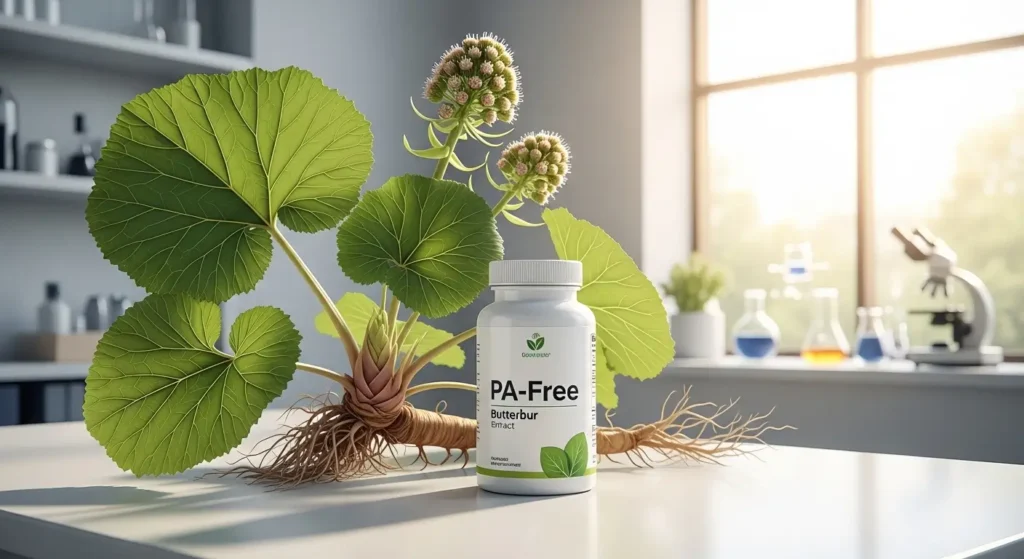
You must only consume Butterbur products labeled as “PA-free.”
Reputable manufacturers use specific CO2 extraction processes to remove these alkaloids while keeping the beneficial Petasins intact. If a bottle doesn’t explicitly state it is PA-free, do not buy it. It’s simply not worth the risk to your liver health.
Summary Checklist for Buying Butterbur 📝
- Check for “PA-free” or “Pyrrolizidine Alkaloid-free” on the label.
- Look for standardized extracts containing at least 15% Petasin and Isopetasin.
- Verify third-party testing (USP, NSF, or ConsumerLab).
Frequently Asked Questions about Butterbur ❓
Q1: How long does it take for Butterbur to work for migraines?
A: It is not an instant pain reliever. For migraine prophylaxis, you typically need to take it for 4 to 12 weeks to see a significant reduction in headache frequency.
Q2: Can Butterbur cause side effects?
A: Most people tolerate PA-free Butterbur well. However, some may experience mild “burping” with a herbal taste, upset stomach, or fatigue. If you are allergic to ragweed, daisies, or marigolds, use caution as Butterbur is in the same plant family.
Q3: Is Butterbur safe for long-term use?
A: Most clinical trials have lasted 4 to 6 months. While generally considered safe when PA-free, it is best to consult with a healthcare provider if you plan to use it for longer than half a year.
Q4: Can children take Butterbur for allergies?
A: Some studies have shown effectiveness in children, but due to the potential sensitivity of the developing liver, it should only be administered under the strict supervision of a pediatrician using guaranteed PA-free products.
Medical Disclaimer: This article is for informational purposes only and does not constitute medical advice, diagnosis, or treatment. Always seek the advice of your physician or other qualified health provider with any questions you may have regarding a medical condition. Never disregard professional medical advice or delay in seeking it because of something you have read on this website.
Have you tried Butterbur for your migraines or allergies? Let us know your experience in the comments! 😊