
Feeling down? Your gut might be the culprit. Discover how 90% of your body’s serotonin is made in your gut and the powerful diet changes that can help transform your mental health.
We’ve all been there. That persistent, low-grade gloom you can’t seem to shake. Or maybe it’s a nagging anxiety that buzzes just beneath the surface. We’re often told these feelings are “all in your head”—a simple imbalance of brain chemicals. But what if I told you that the key to your happiness and mental well-being isn’t just in your brain, but in your… gut?
It sounds strange, but it’s one of the most exciting frontiers in modern medicine. The science of **nutritional psychiatry** is revealing an undeniable, powerful connection between what we eat, the health of our gut, and the state of our mind. The star player in this story? A familiar chemical: Serotonin. This article is a deep dive into the science of the gut-brain axis. We’ll explore exactly how your gut produces the vast majority of your serotonin and provide a clear, actionable guide on the foods to eat—and those to avoid—to build a happier, healthier mind from the inside out.
Table of Contents
- What is Serotonin (And Why Is It a Big Deal)?
- The Serotonin Surprise: Your Gut is the “Second Brain”
- How Gut Bacteria Manufacture Happiness (The Science-Backed Mechanism)
- The Serotonin Saboteurs: 7 Foods Harming Your Gut Health
- The Serotonin Diet: How to Eat for Better Gut Health and Mood
- My Personal Experience: A 3-Week Gut Reset for Mental Clarity
- Conclusion: Your Happiness is On Your Plate
- Frequently Asked Questions (FAQ)
What is Serotonin (And Why Is It a Big Deal)? 🤔
You’ve probably heard of serotonin, often called the “happy chemical.” But that’s a massive oversimplification. Yes, serotonin is a neurotransmitter that plays a critical role in regulating your mood, anxiety, and happiness. It’s the primary target of the most common antidepressants (SSRIs, or Selective Serotonin Reuptake Inhibitors).
But its job description is much broader. Serotonin also helps regulate:
- Sleep-Wake Cycles: It’s a precursor to melatonin, the hormone that governs your sleep.
- Digestion: It controls the muscles in your intestines, dictating how quickly food moves through your system (gut motility).
- Appetite and Cravings: It helps signal to your brain when you’re full.
- Blood Clotting: Platelets in your blood release serotonin to help wounds heal.
Given this, a serotonin shortage doesn’t just mean a low mood. It can mean poor sleep, digestive issues (like IBS), and constant carb cravings. It’s a systemic problem. And that’s why *where* it’s made is so important.
The Serotonin Surprise: Your Gut is the “Second Brain” 🤯
Here is the statistic that changes everything: An estimated 90-95% of your body’s total serotonin is produced and stored within your gut.
It’s not made by your brain and shipped down. It’s manufactured right inside your gastrointestinal tract. Your gut is lined with over 100 million nerve cells—more than your spinal cord. This intricate network is called the **Enteric Nervous System (ENS)**, and scientists now refer to it as our “second brain” because it operates independently to manage the complex business of digestion.
Within this “second brain,” specialized cells called enterochromaffin (EC) cells are the serotonin factories. But these cells don’t work alone. They are in constant communication with the real bosses of your gut: the 40 trillion microorganisms known as your **gut microbiome**.
How Gut Bacteria Manufacture Happiness (The Science-Backed Mechanism) 🔬
So, how does a bowl of yogurt or a side of asparagus translate into a better mood? It’s a fascinating three-step process.
Step 1: You Eat the Raw Material (Tryptophan)
Your body can’t make serotonin from scratch. It needs a specific building block: an amino acid called tryptophan. Tryptophan is “essential,” meaning you can only get it from your diet. You find it in foods like turkey, eggs, nuts, seeds, cheese, and tofu.
Step 2: Your Gut Microbes Do the Work
This is where the magic happens. When you eat fiber-rich foods (we’ll call these **prebiotics**), your gut bacteria feast on them. As they break down this fiber, they produce beneficial compounds, most notably **short-chain fatty acids (SCFAs)** like butyrate.
These SCFAs, along with certain probiotic bacteria (like *Bifidobacterium* and *Lactobacillus*), directly signal to those EC cells in your gut lining, telling them to produce and release serotonin from the tryptophan you ate.
In short: No healthy gut bacteria = no signal. No signal = poor serotonin production.
Step 3: The Gut “Talks” to the Brain
Here’s a crucial distinction: the serotonin made in your gut largely *stays* in your gut to regulate digestion. It does not cross the blood-brain barrier to enter your brain. So how does it affect your mood?
It sends signals. The gut and brain are physically connected by the vagus nerve, an information superhighway. Your gut microbes and the serotonin they help produce communicate with the brain via this nerve, influencing feelings of anxiety and well-being. A healthy, serotonin-rich gut sends calm, happy signals. An inflamed, unhealthy gut sends stress and alarm signals.
The Serotonin Saboteurs: 7 Foods Harming Your Gut Health 👎
If you’re constantly feeding your gut the wrong things, you’re essentially arming the “bad” microbes. This leads to a state of imbalance called **dysbiosis** and systemic **inflammation**—both of which are heavily linked to depression and anxiety. Let’s be honest, we all love some of these, but moderation is key.
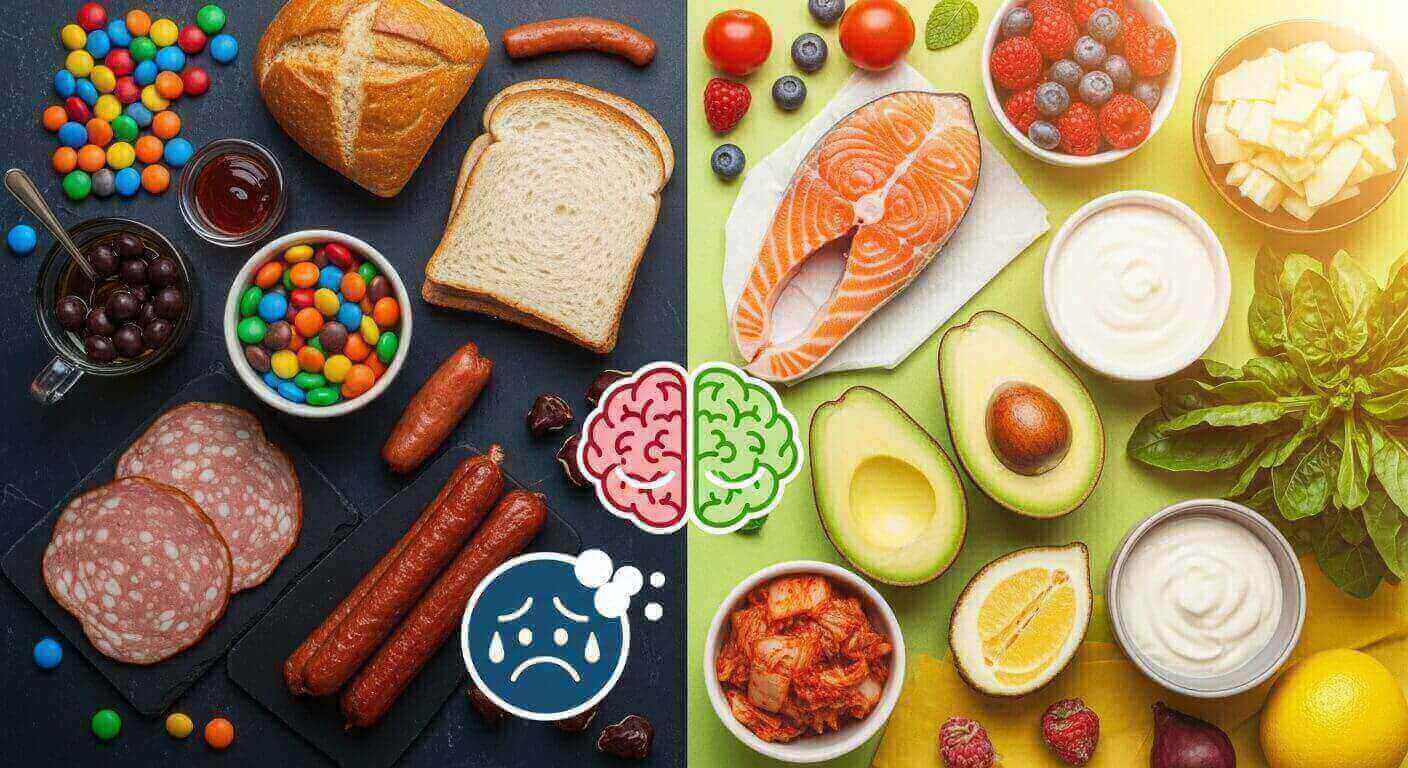
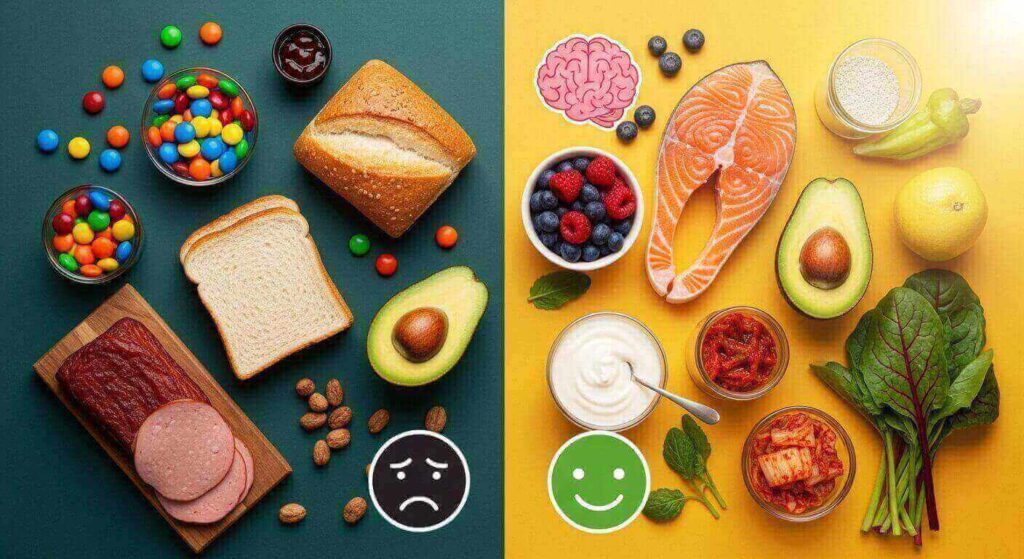
- Refined Sugars (Soda, Candy, Pastries): This is super-fuel for harmful bacteria and yeast, which can crowd out your beneficial microbes.
- Refined Carbs (White Bread, White Rice, Pasta): These are digested too quickly, offer no fiber for your good bacteria, and spike your blood sugar, leading to energy crashes and mood swings.
- Processed Meats (Hot Dogs, Deli Meat, Bacon): High in preservatives like nitrates and sodium, which can irritate the gut and promote inflammatory microbes.
- Fried Foods (Trans Fats): These fats are highly inflammatory and can damage the gut lining, potentially leading to “leaky gut” (increased intestinal permeability).
- Artificial Sweeteners (Aspartame, Sucralose): Studies show these “zero-calorie” sweeteners can paradoxically disrupt the balance of the gut microbiome and even impair glucose tolerance.
- Alcohol: It acts as a direct irritant to the gut lining, can kill off good bacteria, and interferes with the absorption of essential nutrients.
- Excessive Caffeine: While a little coffee is fine for many, high amounts can over-stimulate gut motility, leading to irritation and anxiety in sensitive individuals.
The Serotonin Diet: How to Eat for Better Gut Health and Mood 🥑
This isn’t just a theory. A groundbreaking 2017 study called the “SMILES” trial was one of the first to put this to the test. Researchers took a group of individuals with major depression and put them on a modified Mediterranean diet for 12 weeks.
The results were stunning. The group that changed their diet saw a massive improvement in their symptoms, and 32% went into full remission. The control group, which only received social support, saw only an 8% remission rate. The diet was more powerful than friendship alone.
So, what does this “serotonin diet” look like? It’s all about feeding your good microbes.
1. Embrace PROBIOTICS (The Factories)
These are the living, beneficial bacteria themselves. Eating them directly replenishes your gut’s army.
- Yogurt & Kefir: Look for “live and active cultures” and plain, unsweetened varieties.
- Fermented Foods: Sauerkraut, kimchi, miso, and tempeh are all excellent sources.
2. Feed with PREBIOTICS (The Fuel)
These are the indigestible fibers that your good bacteria love to eat. This is arguably the most important step.
- High-Fiber Veggies: Garlic, onions, leeks, asparagus, artichokes.
- Resistant Starches: Slightly under-ripe bananas, oats, legumes (beans, lentils).
- Whole Grains: Quinoa, barley, brown rice.
3. Prioritize OMEGA-3s & POLYPHENOLS (The Firefighters)
These compounds actively fight inflammation, protecting both your gut lining and your brain.
- Fatty Fish (Omega-3s): Salmon, mackerel, sardines, anchovies.
- Nuts & Seeds (Omega-3s): Flaxseeds, chia seeds, and walnuts are plant-based powerhouses.
- Polyphenols: These are bright, colorful antioxidants found in berries, dark chocolate, extra virgin olive oil, and green tea.
My Personal Experience: A 3-Week Gut Reset for Mental Clarity 🙋♂️
As a writer covering health, I had to try this myself. I was struggling with persistent “brain fog” and a general lack of motivation. For 21 days, I strictly eliminated the “Serotonin Saboteurs”—especially refined sugar, processed foods, and alcohol—and aggressively added in pre- and probiotic foods. My daily breakfast became a kefir smoothie with berries and chia seeds, and every dinner included a large, diverse salad or a side of kimchi.
The first three days were tough. I had sugar cravings and felt irritable. But by day five, something shifted. The brain fog I had accepted as “normal” began to lift. By the end of week two, my energy levels were stable throughout the day—no 3 PM crash. Most surprisingly, my baseline mood was just… lighter. Things that would normally stress me out seemed more manageable. It wasn’t a miracle cure, but the change was undeniable. I had experienced the gut-brain axis firsthand.
Conclusion: Your Happiness is On Your Plate 🍽️
Your mental health is not just in your head. It’s in your gut. The 40 trillion microbes living inside you are a powerful chemical factory that, when treated right, can produce the very compounds that promote happiness, calm, and clarity.
You don’t have to overhaul your entire life overnight. Start small. Swap your soda for a sparkling water. Add a side of sauerkraut to your meal. Throw some flaxseeds in a smoothie. Each small change is a vote for your good bacteria, a step toward rebuilding your gut, and a powerful investment in your own well-being.
Frequently Asked Questions (FAQ) about Serotonin and Gut Health ❓
Q: Can I just take a serotonin supplement?
A: No. Serotonin itself cannot cross the blood-brain barrier, so a supplement wouldn’t affect your brain’s mood centers. Some people take precursors like Tryptophan or 5-HTP, but this should only be done after consulting a doctor, as they can interact with medications. Focusing on diet is a safer, more holistic approach.
Q: Does the serotonin from my gut travel to my brain?
A: This is a common misconception! No, the serotonin produced in the gut does not cross the blood-brain barrier. It primarily works to regulate your digestion. Its effect on *mood* is indirect, through the vagus nerve (which it “talks” to) and by reducing inflammation in the body, which in turn affects brain health.
Q: What’s better, probiotic supplements or probiotic foods?
A: While supplements can be helpful, most experts prioritize food. Fermented foods like kefir and kimchi offer a wider *diversity* of bacterial strains, which is key for a resilient microbiome. Plus, the food itself provides other nutrients. If you do opt for a supplement, look for one with well-studied strains like *Lactobacillus* and *Bifidobacterium*.
Q: How long does it take to see a difference in my mood after changing my diet?
A: It varies for every person. Some people report feeling better within a few days, as their gut inflammation subsides. For others, it may take 3-4 weeks of consistent change to measurably shift the microbiome and feel a difference in mood and energy. Consistency is the most important factor.
Q: Can this “serotonin diet” cure my depression or anxiety?
A: This is incredibly important: Diet is a powerful tool, but it is not a standalone cure for clinical depression or anxiety disorders. It should be seen as a foundational part of a comprehensive treatment plan that may include therapy, medication, exercise, and stress management. If you are struggling, please speak with a medical professional or mental health provider.
“The Serotonin Diet: 7 Foods to Avoid and What to Eat for Mental Health”에 대한 1개의 생각