
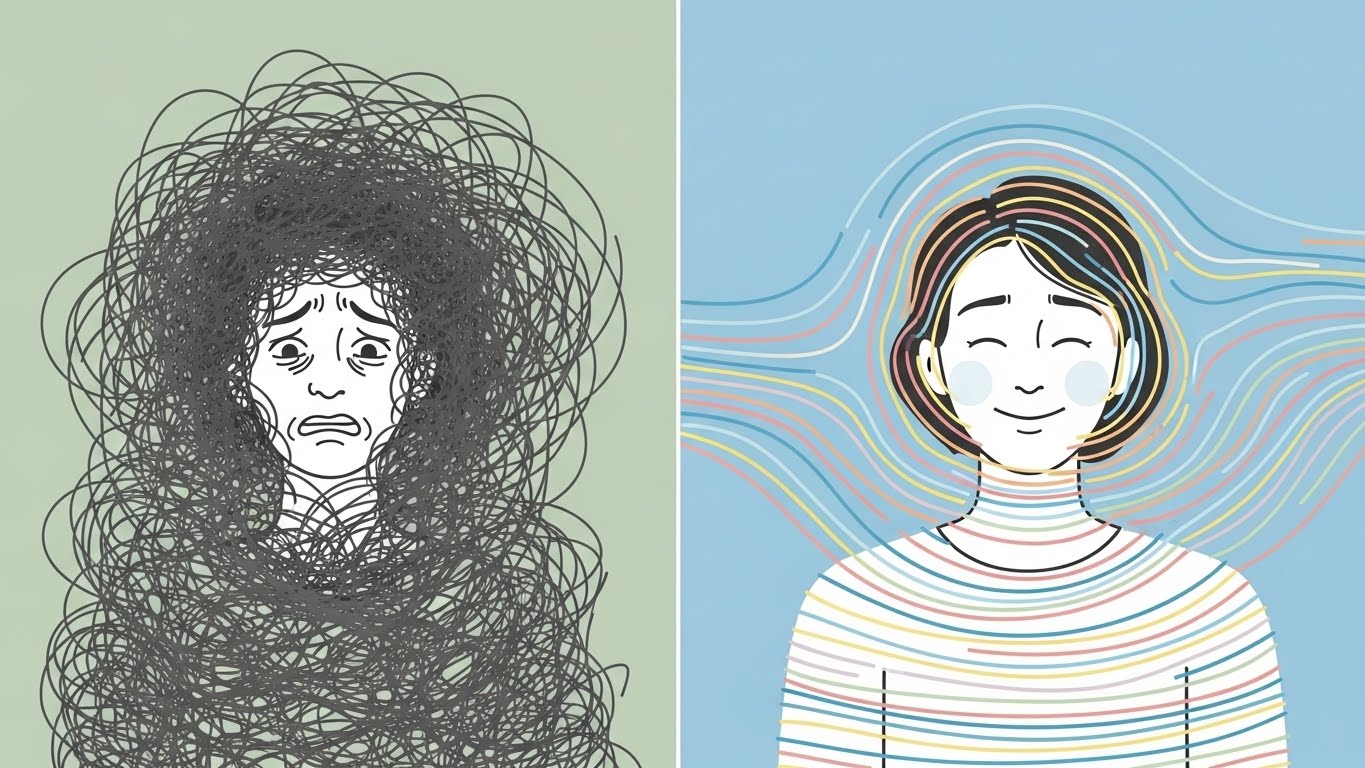
Unsure about your progress? Discover 8 proven signs on how to know if therapy is working for you, from mood shifts to better habits. Take our self-check now!
Let’s be honest: starting therapy is an act of bravery. You step into a room (or a Zoom call), open up your darkest closets, and hope that talking about it will somehow fix the wiring. But unlike taking antibiotics for an infection or putting a cast on a broken leg, the results of psychotherapy aren’t always visible on an X-ray.

You might find yourself a few sessions—or even a few months—in, wondering, “Is this actually doing anything?” It is a valid question. In fact, it is one of the most important questions you can ask. Therapy is an investment of your time, money, and emotional energy. You deserve to know if that investment is yielding a return.
Understanding how to know if therapy is working for you isn’t just about feeling “happy” all the time. It is nuanced. It is about shifts in perspective, changes in behavior, and how you handle the curveballs life throws at you. In this guide, we are going to look beyond the surface level and dive into the concrete, psychological indicators that prove your mental health is on the upswing.
Table of Contents
- 1. Emotional Regulation: The “Pause” Before the Reaction
- 2. Shifting Perspectives: Reframing Negative Thoughts
- 3. Behavioral Changes: Habits and Coping Mechanisms
- 4. The Therapeutic Alliance: Do You Trust Your Therapist?
- 5. Improved Relationships and Boundary Setting
- 6. Growing Self-Compassion and Reduced Shame
- 7. Facing Discomfort: The Willingness to Do the Work
- 8. Alignment with Treatment Goals
- 9. Self-Assessment: A Quick Progress Checklist
- 10. Frequently Asked Questions (FAQ)
1. Emotional Regulation: The “Pause” Before the Reaction
One of the earliest signs that therapy is effective is a subtle shift in how you handle triggers. Before therapy, a stressful email or a snide comment from a partner might have sent you into an immediate spiral of anger or anxiety. You might have lashed out or shut down instantly.
When you are making progress, you start to notice a “pause.” Viktor Frankl famously said, “Between stimulus and response there is a space. In that space is our power to choose our response.”
If you find yourself feeling the anger bubble up, but then taking a breath and thinking, “I’m really frustrated right now, but I don’t need to scream,” that is a massive victory. It doesn’t mean you don’t feel the emotion; it means the emotion no longer sits in the driver’s seat. This improved emotional regulation is a cornerstone of success in modalities like CBT (Cognitive Behavioral Therapy) and DBT (Dialectical Behavior Therapy).
2. Shifting Perspectives: Reframing Negative Thoughts
We all have an inner critic. For many seeking help, that critic is a bully with a megaphone. A clear indicator of how to know if therapy is working for you is when the volume on that megaphone starts to lower, or when you start to argue back with logic.
For example, instead of thinking, “I made a mistake, I am a total failure,” you might start thinking, “I made a mistake, but I’m human and I can fix it.” This is called cognitive reframing.
Identifying Cognitive Distortions
You know therapy is clicking when you catch yourself “catastrophizing” (expecting the worst) or engaging in “all-or-nothing thinking” and gently correct yourself. You are no longer accepting every negative thought as an absolute fact. You are becoming a scientist of your own mind, observing thoughts rather than drowning in them.
3. Behavioral Changes: Habits and Coping Mechanisms
Insight is wonderful, but insight without action is just daydreaming. Effective therapy eventually shows up in your daily life. This is often where the rubber meets the road.
Look for tangible changes in your habits:
- Sleep Hygiene: Are you sleeping more soundly because you aren’t ruminating until 3 AM? [Image of a person sleeping peacefully]
- Substance Use: Are you relying less on alcohol, food, or scrolling social media to numb your feelings?
- Procrastination: Are you tackling tasks you used to avoid out of anxiety?
These behavioral shifts might be small at first. Maybe you went for a 10-minute walk instead of doom-scrolling. That is progress. Therapy helps replace maladaptive coping mechanisms (things that hurt us) with adaptive ones (things that help us).
4. The Therapeutic Alliance: Do You Trust Your Therapist?
Research consistently shows that the relationship between the client and the therapist—often called the “therapeutic alliance”—is the single biggest predictor of therapy success. It matters more than the specific type of therapy used.
So, ask yourself:
- Do I feel safe sharing embarrassing or painful things with this person?
- Do I feel heard and understood, rather than judged?
- Can I give feedback to my therapist (e.g., “That didn’t feel right”) without them getting defensive?
If you feel a sense of collaboration—like you are a team working on a puzzle together—that is a huge green flag. If you find yourself lying to your therapist or dreading every session because you feel dismissed, therapy likely isn’t working, even if the therapist is highly qualified.
5. Improved Relationships and Boundary Setting
Mental health doesn’t exist in a vacuum; it lives in our relationships. As you become healthier, your relationships often shift. This can be one of the most confusing signs because sometimes, things get “rocky” before they get better.
Signs of progress include:
- Saying “No”: You start setting boundaries with people who drain you, without engaging in crippling guilt.
- Deepening Connections: You are more vulnerable with safe people, leading to greater intimacy.
- Identifying Toxicity: You recognize unhealthy patterns in friendships or family dynamics that you previously ignored.
If you are standing up for yourself more, or if you are able to listen to your partner without immediately becoming defensive, your therapy is translating into real-world relational skills.
6. Growing Self-Compassion and Reduced Shame
Shame is the feeling that “I am bad,” whereas guilt is the feeling that “I did something bad.” Shame keeps us stuck; self-compassion sets us free. A profound indicator of how to know if therapy is working for you is a softening of your internal dialogue.
You might notice you are less likely to beat yourself up for days over a minor social faux pas. You begin to treat yourself with the same kindness you would offer a friend. This doesn’t mean you let yourself off the hook for bad behavior, but it means you hold yourself accountable with love, not self-hatred.
7. Facing Discomfort: The Willingness to Do the Work
Here is a counterintuitive truth: sometimes, feeling worse or more tired after a session is a sign it is working. Therapy is often compared to cleaning out a deep, infected wound. It hurts to scrub it out, but that pain is part of the healing process.
If you find yourself willing to talk about the “hard stuff”—the trauma, the fears, the shame—rather than just spending 50 minutes chatting about the weather or work gossip, you are doing the work. The “Therapy Hangover” (feeling exhausted after a session) means you were vulnerable, and vulnerability is the engine of change.
8. Alignment with Treatment Goals
In the beginning, you and your therapist likely set goals. “I want to have fewer panic attacks,” or “I want to get over my ex.”
Check in on those goals. Are panic attacks happening less frequently? Are they less intense? Do you recover from them faster? Progress is rarely a straight line—it’s more like a stock market chart with ups and downs—but the general trend should be moving upward toward your specific objectives.
Self-Assessment: The Progress Checklist
Read the following statements. If you can answer “Yes” or “Sometimes” to at least 4 of them, your therapy is likely on the right track.
- I feel safe and respected by my therapist.
- I am beginning to understand why I react the way I do.
- I can name my emotions more accurately (e.g., “I’m disappointed,” not just “I’m mad”).
- I am taking better care of my physical body (sleep, food, movement).
- My relationships feel slightly easier or more authentic.
- I can stop a negative thought spiral faster than I used to.
Note: This is a qualitative self-check, not a medical diagnosis.
If you went through this list and felt discouraged, don’t panic. Progress looks different for everyone. However, if you have been attending consistently for months and feel stuck, stagnant, or unsafe, it is time to have a frank conversation with your provider—or consider finding a new one.
Final Thoughts: Trust the Process, But Verify the Results
Therapy is a journey of self-discovery, and like any journey, there will be flat tires and scenic routes. But ultimately, you should be moving toward a destination of better health and higher functioning.
Remember, you are the expert on your own life. Use these indicators as a compass. If the needle is moving, keep going. The work is hard, but the freedom on the other side is worth every bit of effort.
Frequently Asked Questions
How long does it usually take to see results from therapy?
There is no single timeline, as it depends on the individual and the issues being addressed. However, many people report feeling some relief after 3-4 sessions, with more significant behavioral changes noticeable after 3-6 months of consistent weekly therapy.
Is it normal to feel worse before feeling better?
Yes, absolutely. This is often called the “therapy hangover.” Unpacking trauma or confronting difficult truths can temporarily increase anxiety or sadness. This is usually a sign that you are addressing the root causes rather than just symptom management.
What should I do if I don’t think therapy is working?
The first step is to speak up. Tell your therapist, “I feel like I’m not making progress on X.” A good therapist will appreciate the feedback and adjust the treatment plan. If things don’t change after that discussion, it may be time to look for a therapist who is a better fit for your needs.
How do I know when I am done with therapy?
You might be ready to stop or reduce therapy when you have met your specific treatment goals, you feel confident using coping skills independently, and your symptoms no longer interfere with your daily life. “Graduating” from therapy is a success to be celebrated.
“How to Know If Therapy Is Working for You: 8 Clear Signs”에 대한 1개의 생각