
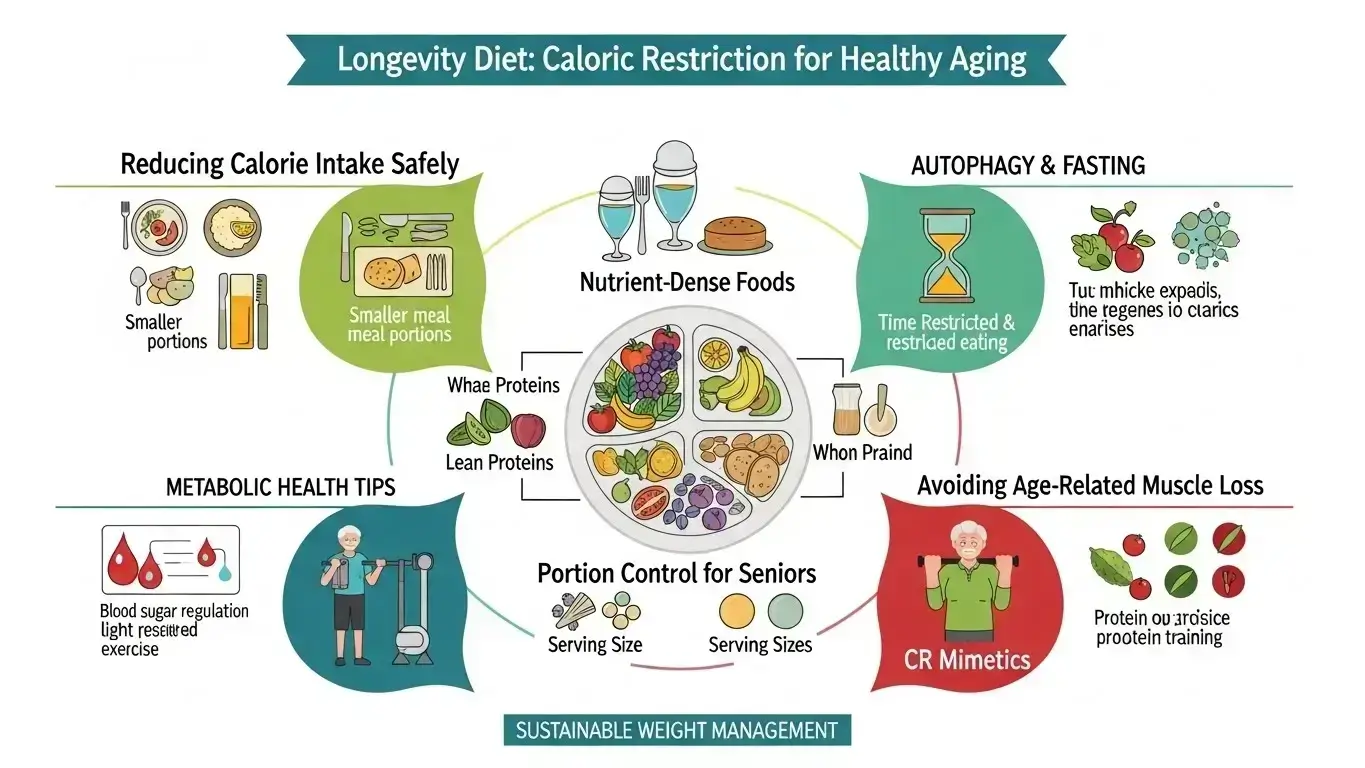
Unlock the secrets of longevity with these caloric restriction diet tips for healthy aging. Discover the science, practical portion control, and how to eat less without feeling hungry.
We all want to live longer, but more importantly, we want to live better. We want to be the grandparent who runs around the park, not the one watching from the bench. In the quest for the fountain of youth, one method has stood the test of scientific scrutiny more than any supplement or superfood: Caloric Restriction (CR).
But let’s be clear right away—this isn’t about starvation. It isn’t about being miserable. It is about strategic efficiency.
As someone who deeply analyzes longevity trends, I’ve seen people fail at this because they cut calories but ignore nutrition. Today, we are going to dive deep into caloric restriction diet tips for healthy aging that are sustainable, scientifically backed, and designed to keep your metabolic engine running smoothly for decades to come.
Let’s redefine your relationship with food and time. ⏳

Table of Contents
- 1. The Science Behind Caloric Restriction and Longevity
- 2. Visualizing the Data: Calories vs. Lifespan
- 3. Practical Caloric Restriction Diet Tips for Beginners
- 4. Mastering Portion Control and Meal Timing
- 5. The Dangers: Malnutrition and Muscle Loss
- 6. Frequently Asked Questions (FAQ)
The Science Behind Caloric Restriction and Longevity 🧬
Why does eating less help you live longer? It seems counterintuitive. You’d think more fuel equals more energy, right? Not exactly.
Think of your body like a factory. When the factory is overwhelmed with raw materials (excess food), the workers focus solely on processing that intake. They get sloppy. Trash builds up. However, when the supply of raw materials slows down (caloric restriction), the workers have time to clean up, repair machinery, and recycle waste.
This cleanup process is called autophagy.
Implementing caloric restriction diet tips for healthy aging triggers metabolic pathways that reduce oxidative stress and inflammation. Studies, particularly those involving rhesus monkeys and rodents, have consistently shown that reducing caloric intake by 20-30% (without malnutrition) can significantly extend healthspan and delay the onset of age-related diseases like diabetes and cardiovascular issues.
Visualizing the Data: Calories vs. Lifespan 📊
To truly understand the impact, we need to look at the data trends observed in longevity research. The relationship between calorie intake and biological aging often follows an inverse trajectory.
Impact of Caloric Restriction on Biological Markers
*Based on generalized data from mammalian longevity studies (e.g., NIA and Wisconsin Study).
Typical Western Diet (100% Intake)High Oxidative Stress
Mild Restriction (10% Reduction)Improved Metabolic Health
Optimal CR (20-30% Reduction)Maximized Lifespan Potential
Practical Caloric Restriction Diet Tips for Beginners 🥗
So, how do you eat less without feeling like you are starving? The secret lies in Nutrient Density, not just calorie counting. If you reduce calories but eat junk, you will crash.
1. Focus on Volume Eating
Your stomach has stretch receptors that signal fullness based on volume, not calories. Fill your plate with high-fiber, high-water foods. You can eat a massive bowl of spinach, cucumbers, and berries for the same caloric cost as a few crackers.
2. The “Crowd Out” Method
Instead of obsessing over what to remove, focus on what to add. Add a large salad or vegetable soup before your main meal. This naturally reduces the space left for higher-calorie, nutrient-poor foods.
3. Slow Down Your Chewing
It takes about 20 minutes for your brain to register satiety. If you inhale your food in 5 minutes, you will likely overeat. One of the best caloric restriction diet tips for healthy aging is simply to chew each bite thoroughly and put your fork down between bites.
💡 Pro Tip: Use smaller plates. It sounds like a psychological trick (because it is), but the Delboeuf Illusion proves that we feel more satisfied when our plate looks full, even if the plate is smaller.
Mastering Portion Control and Meal Timing ⏱️
Reducing overall intake often comes down to when and how much you eat.
- Use Your Hand as a Guide: You don’t always need a scale. A serving of protein is the palm of your hand; carbs are a cupped hand; fats are the size of your thumb.
- Practice Time-Restricted Eating (TRE): Consuming your calories within an 8 or 10-hour window (Intermittent Fasting) naturally leads to caloric reduction without the stress of counting every morsel. It also gives your digestive system a longer break to perform autophagy.
- Never Eat from the Bag: Always portion snacks into a bowl. Eating directly from the package is the fastest way to lose track of intake.
The Dangers: Malnutrition and Muscle Loss ⚠️
I cannot stress this enough: Caloric Restriction is NOT Anorexia. There is a fine line between healthy restriction and dangerous deprivation.
Avoid the “Skinny Fat” Trap
As we age, we naturally lose muscle mass (sarcopenia). If you cut calories too aggressively and don’t eat enough protein or perform resistance training, you will lose muscle along with fat. This slows your metabolism and makes you frail—the opposite of healthy aging.
Micronutrient Deficiency
When you eat less food, you have fewer opportunities to get essential vitamins and minerals. Every bite must count. You cannot afford “empty calories” on a CR diet. You may need to consult a doctor about supplements for Vitamin B12, Vitamin D, and Omega-3s.
The Golden Rule: If you feel constantly fatigued, cold, or are losing hair, you have gone too far. Healthy aging feels energetic, not depleted.
Frequently Asked Questions (FAQ) ❓
Q: How many calories should I cut for healthy aging?
A: Most longevity research suggests a reduction of 10% to 20% from your maintenance calories is effective and sustainable. However, it is vital to calculate your specific TDEE (Total Daily Energy Expenditure) first.
Q: Is intermittent fasting the same as caloric restriction?
A: Not exactly, but they are cousins. Intermittent fasting restricts when you eat, which often leads to naturally eating less. Caloric restriction focuses specifically on how much you eat. Many people combine both for optimal results.
Q: Can older adults safely practice caloric restriction?
A: Yes, but with caution. Older adults have higher protein needs to preserve muscle. Any restriction plan should prioritize high protein intake and resistance exercise to prevent frailty.
Q: What are the best foods for a caloric restriction diet?
A: Focus on nutrient-dense, low-calorie foods. Leafy greens, cruciferous vegetables (broccoli, cauliflower), berries, lean proteins (fish, tofu, chicken), and legumes are staples that keep you full and nourished.
Embracing a lifestyle of mindful eating isn’t a punishment; it’s a gift you give to your future self. By following these caloric restriction diet tips for healthy aging, you aren’t just adding years to your life—you are adding life to your years. Start small, listen to your body, and prioritize nutrition over numbers.
Have you tried reducing your intake for better health? Share your experiences in the comments below! 😊
Disclaimer: This article is for informational purposes only and does not substitute for professional medical advice, diagnosis, or treatment. Always seek the advice of your physician or other qualified health provider with any questions you may have regarding a medical condition.