
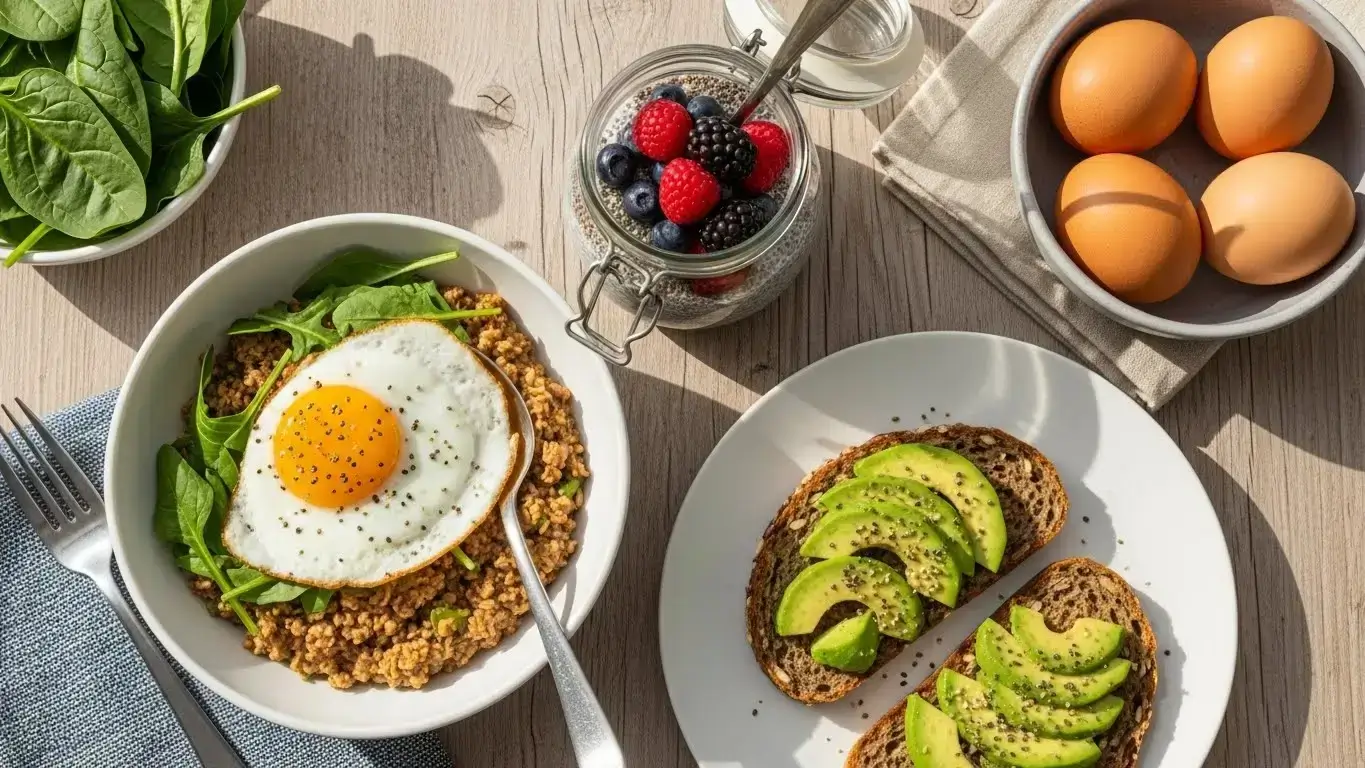
Confused about your morning meal? Discover 15 simple, quick, and delicious diabetes-friendly breakfast ideas for beginners. Stabilize your blood sugar and start your day with energy, not a spike.
Let’s be honest: receiving a diabetes diagnosis (or even a prediabetes warning) changes how you look at food. Suddenly, the cereal aisle looks like a minefield, and the bagel shop feels forbidden. But the most stressful time of day? Usually, it’s the morning.
You’ve probably heard of the “Dawn Phenomenon”—that frustrating natural rise in blood sugar that happens right as you wake up. This makes your breakfast choice the most critical decision of your day. Get it wrong, and you’re chasing high numbers until dinner. Get it right, and you set a foundation of stable energy and clarity.
As a beginner, you don’t need complex culinary skills or hours in the kitchen. You need practical, real-world solutions. In this guide, we are going to explore 15 diabetes-friendly breakfast ideas for beginners that take less than 10 minutes to prep. We focus on the “PFF” formula: Protein, Fiber, and Healthy Fats.
Forget the cardboard-tasting diet food. Let’s talk about meals you’ll actually want to wake up for.
Table of Contents
- The “Golden Formula” for Blood Sugar Stability
- 1. Egg-Cellent Starts (Protein Powerhouses)
- 2. Oatmeal Done Right (Without the Spike)
- 3. Creamy & Cool: Yogurt and Smoothies
- 4. The “Toast” Upgrade
- 5. The “No-Cook” Rush Hour Plates
- ⚠️ The Morning Coffee Trap
- Frequently Asked Questions
The “Golden Formula” for Blood Sugar Stability
Before we dive into the recipes, I want to give you a tool that is more valuable than any single recipe. It’s the framework for building a diabetes-friendly breakfast anywhere, anytime.
When you eat carbohydrates (bread, fruit, oats), they turn into sugar. If eaten alone, they spike your glucose quickly. To stop this, we use “brakes.”
The P.F.F. Method:
Protein (Eggs, Greek yogurt, tofu, protein powder)
Fiber (Chia seeds, flax, leafy greens, berries)
Fats (Avocado, nuts, olive oil, cheese)
Always pair your carb with at least two of these.
1. Egg-Cellent Starts (Protein Powerhouses)
Eggs are arguably the perfect food for diabetes beginners. They have effectively zero carbs and high-quality protein, which keeps you full for hours.
Idea #1: The Spinach & Feta Mug Scramble
No time? No problem. Grease a microwave-safe mug. Crack two eggs, add a handful of spinach and a sprinkle of feta cheese. Microwave for 90 seconds. It’s warm, savory, and ready in under 2 minutes.
Idea #2: Meal-Prep Veggie Egg Muffins
On Sunday, whisk 10 eggs with chopped peppers, onions, and turkey sausage. Pour into a muffin tin and bake at 350°F (175°C) for 20 minutes. Keep these in the fridge. In the morning, grab two and go. This is one of the most efficient low-carb breakfast ideas for busy professionals.
Idea #3: Avocado & Hard-Boiled Egg Plate
Simple is often best. Two hard-boiled eggs seasoned with “Everything Bagel” seasoning, served alongside half an avocado eaten with a spoon. The fat from the avocado slows digestion beautifully.
2. Oatmeal Done Right (Without the Spike)
A common myth is that diabetics can’t eat oatmeal. That’s false. You just can’t eat instant, sugary oatmeal. We need to upgrade your oats to make them blood sugar friendly.
Idea #4: Savory Steel-Cut Oats
Steel-cut oats have a lower glycemic index than rolled oats. Instead of brown sugar, cook them with chicken broth instead of water. Top with a fried egg and scallions. It sounds strange if you’re used to sweet oats, but it’s a game-changer.
Idea #5: The “Pro-Oats” Bowl
Cook 1/2 cup of rolled oats. Before eating, stir in a scoop of whey protein powder or 1/2 cup of egg whites (while cooking) to boost volume and protein. Top with walnuts. The added protein dampens the glucose response.
Idea #6: Chia Seed “No-Oat” Pudding
If oats still spike you, try chia pudding. Mix 3 tablespoons of chia seeds with 1 cup of almond milk and a splash of vanilla. Let it sit overnight. It has a similar texture to porridge but is packed with massive amounts of fiber and omega-3s.
3. Creamy & Cool: Yogurt and Smoothies
Be careful here. Most commercial smoothies are just sugar bombs in disguise. We are aiming for high protein, low sugar.
Idea #7: Greek Yogurt Power Parfait
Use plain, unsweetened Greek yogurt (not the vanilla kind, which adds 15g of sugar). Add 1/4 cup of blueberries (berries are the best fruit for diabetics) and 2 tablespoons of hemp hearts or slivered almonds.
Idea #8: The “Green Machine” Glucose Smoothie
Blend: 1 cup unsweetened almond milk, 1 handful of spinach (you won’t taste it), 1/2 avocado (for creaminess), 1 scoop low-carb vanilla protein powder, and ice. This provides sustained energy without the crash.
Idea #9: Cottage Cheese & Cantaloupe
Cottage cheese is making a comeback, and for good reason—it’s incredibly high in protein. Serve 1/2 cup with a small slice of cantaloupe or strawberries. The saltiness of the cheese balances the fruit perfectly.
4. The “Toast” Upgrade
Bread isn’t the enemy, but white flour is. Look for sprouted grain bread (like Ezekiel bread) which is easier for your body to digest slowly.
Idea #10: Smoked Salmon & Cream Cheese Toast
Toast one slice of sprouted grain bread. Spread a thin layer of cream cheese and top with smoked salmon and cucumber slices. It feels fancy, but takes 3 minutes to assemble.
Idea #11: The Nut Butter Open-Face
One slice of sprouted bread, topped with 2 tablespoons of natural almond butter (check the label: ingredients should just be “almonds”) and a dusting of cinnamon. Cinnamon has been shown in some studies to aid in insulin sensitivity.
Idea #12: Avocado & Tomato Smash
Mash 1/4 avocado on toast. Top with tomato slices and plenty of black pepper. The healthy fats in the avocado blunt the carb impact of the bread.
5. The “No-Cook” Rush Hour Plates
Sometimes you don’t even have time to toast bread. These ideas are grab-and-go.
Idea #13: The Adult “Lunchable”
Grab a container. Throw in: 2 cheese sticks, a handful of almonds, and a few slices of turkey deli meat. It’s pure protein and fat, meaning zero blood sugar spike.
Idea #14: Apple “Donuts”
Slice an apple horizontally into rings. Remove the core. Spread peanut butter on the rings and sprinkle with hemp seeds or crushed walnuts. It’s crunchy, sweet, and satisfying.
Idea #15: Leftover Dinner (The Secret Weapon)
Who says breakfast has to be breakfast food? A piece of leftover grilled chicken and some roasted broccoli from last night is actually one of the best diabetes-friendly breakfast ideas for beginners. It’s real food, ready to eat.
⚠️ The Morning Coffee Trap
A quick note on your morning brew. Black coffee or coffee with a splash of heavy cream is fine. But beware of:
- Oat Milk: It is delicious, but often very high in carbohydrates and can spike blood sugar faster than soda for some people.
- Flavored Syrups: Even one pump can derail your morning. Stick to sugar-free syrups or stevia.
- “Healthy” Juices: Orange juice is essentially concentrated sugar without the fiber. Stick to whole fruit.
Managing diabetes is a marathon, not a sprint. Start with these 15 ideas, find the 2 or 3 that you love, and put them on rotation. Consistency is the key to lowering your A1C.
Frequently Asked Questions
Here are some of the most common questions I get from those just starting their journey with blood sugar management.
Q: Is oatmeal actually good for diabetics?
A: Yes, but it depends on the type. Steel-cut oats and rolled oats are full of soluble fiber (beta-glucan) which helps regulate blood sugar. However, instant oatmeal packets often contain added sugar and are processed to digest too quickly, causing spikes. Always pair oats with protein or fat.
Q: What is the best time to eat breakfast for diabetes?
A: Aim to eat within 1 to 2 hours of waking up. Skipping breakfast can sometimes cause the liver to release extra glucose (due to stress hormones), leading to higher blood sugar later in the day.
Q: Can I eat fruit for breakfast?
A: Absolutely. The key is portion control and selection. Berries (strawberries, blueberries, raspberries) are the best choices because they are low in sugar and high in fiber. Melons and pineapples are higher in sugar and should be eaten in smaller quantities.
Q: How many carbs should I have for breakfast?
A: This varies by person and activity level, but a common starting point for many beginners is between 15g and 30g of carbohydrates for breakfast. It is best to consult with a dietitian to find your specific number.
“15 Diabetes Friendly Breakfast Ideas for Beginners (Under 10 Mins)”에 대한 1개의 생각