

Is your face stinging? Discover the ultimate Korean skincare routine for damaged skin barrier recovery. Learn how Cica, Ceramides, and the “7 Skin Method” can heal redness and sensitivity fast. 🛡️✨
Let’s be honest for a second. We have all been there. You got excited about a new Retinol prescription, or maybe you went a little too hard with the AHA/BHA exfoliating toner in pursuit of that “glass skin” glow. But instead of radiance, you woke up to redness, tightness, and a face that stings even when you apply water.
Welcome to the club of the Damaged Skin Barrier. In the US, our approach to skincare is often “more is more”—higher percentages, stronger acids, faster results. But in Korea, the philosophy is fundamentally different. It is about nurturing, hydrating, and protecting.
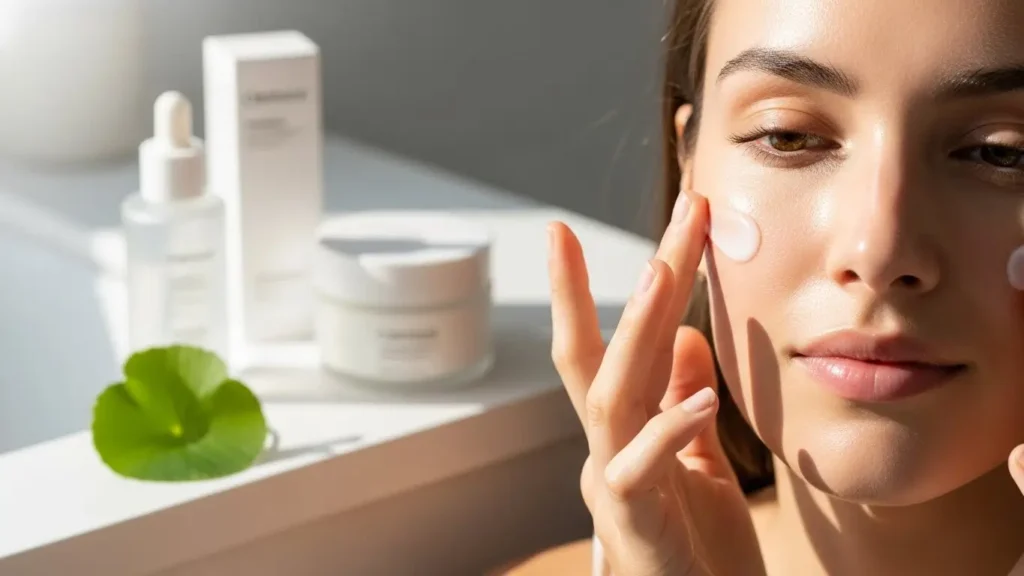
If your skin is crying out for help, a Korean skincare routine for damaged skin barrier isn’t just a trend; it is a prescription for healing. In this deep dive, we are ditching the harsh actives and embracing the K-Beauty art of restoration. We will cover the ingredients you need (hello, Cica!), the exact AM/PM routine to follow, and why “Skin Cycling” needs to take a backseat to “Skin Healing.” Let’s get your glow back—safely.
Table of Contents 📑
- Signs Your Skin Barrier is Damaged (The “Sting” Test)
- Why K-Beauty Works Best for Barrier Repair
- The Holy Trinity of Ingredients: Cica, Panthenol, Ceramides
- Step-by-Step Korean Skincare Routine for Damaged Skin Barrier
- Advanced Tips: The 7-Skin Method & Slugging
- FAQ: Common Questions About Barrier Repair
Signs Your Skin Barrier is Damaged (The “Sting” Test) 🚨
Before we fix the problem, we need to confirm it. Your moisture barrier (Stratum Corneum) is the outermost layer of your skin. Think of it as a brick wall: the cells are the bricks, and the lipids (oils/ceramides) are the mortar holding them together. When you over-exfoliate, you strip away that mortar.
Here are the tell-tale signs you need to switch to a Korean barrier repair routine immediately:
- The Sting: Does your regular moisturizer or even mild cleanser sting upon application? This is the biggest red flag.
- Trans-Epidermal Water Loss (TEWL): Your skin feels tight and dry, no matter how much water you drink.
- Redness and Inflammation: You look constantly flushed or have blotchy patches.
- Breakouts: Paradoxically, a damaged barrier lets bacteria in, causing small, itchy bumps (often confused with fungal acne).
Why K-Beauty Works Best for Barrier Repair 🇰🇷
Why turn to Korea? While Western skincare often focuses on treatment (attacking acne, attacking wrinkles), Korean skincare focuses on the environment of the skin. The philosophy is that if the skin is hydrated and the barrier is strong, problems like acne and aging will resolve themselves.
Korean formulations are elegant. They prioritize layering lightweight hydration (toners, essences, ampoules) rather than relying on one thick, heavy cream. This allows a compromised barrier to absorb moisture without being suffocated.
The Holy Trinity of Ingredients: Cica, Panthenol, Ceramides 🌿
When shopping for your Korean skincare routine for damaged skin barrier, ignore the fancy marketing and flip the bottle. You are looking for these three powerhouses:
1. Centella Asiatica (Cica / Tiger Grass)
The superstar of K-Beauty repair. Legend has it that tigers would roll in this grass to heal their wounds. It is incredibly anti-inflammatory and speeds up skin healing. Look for “Madecassoside” on the label—it’s the active compound in Cica.
2. Ceramides
If your barrier is a brick wall, Ceramides are the cement. Korean brands excel at formulating “skin-identical” ceramides that patch up the holes in your barrier, locking moisture in and keeping irritants out.
3. Panthenol (Vitamin B5)
A humectant that also heals. Panthenol penetrates deep into the skin to attract water and soothe the itching and tightness associated with a damaged barrier.
Step-by-Step Korean Skincare Routine for Damaged Skin Barrier 🧖♀️
Stop your “Skin Cycling.” Put down the exfoliants. For the next 2-4 weeks, this is your bible. This routine focuses purely on Hydration, Repair, and Protection.
☀️ Morning Routine (AM)
- Water Wash Only: Skip the cleanser. Your natural oils are precious right now. Just rinse with lukewarm water.
- Hydrating Toner (Alcohol-Free): Pat in a toner rich in Centella or Hyaluronic Acid. This preps the sponge (your skin) to absorb products.
- Barrier Support Serum: Use a serum containing Panthenol or Propolis to calm redness.
- Ceramide Moisturizer: Seal it all in. Look for a cream that feels comforting, not heavy.
- SPF 50+ (Mineral preferred): A damaged barrier is defenseless against UV rays. Use a gentle, mineral sunscreen (Zinc Oxide) to avoid irritation.
🌙 Evening Routine (PM)
- Oil Cleanser (First Cleanse): Essential to remove SPF gently. Massage purely for 60 seconds. Do not tug!
- Cream/Milk Cleanser (Second Cleanse): Avoid foaming cleansers with high pH (alkaline). Use a low-pH, non-foaming milk cleanser.
- Essence/Ampoule: Apply a Snail Mucin or Mugwort essence. These are K-Beauty staples for repair.
- Heavy Barrier Cream: Use a thicker moisturizer at night. Ingredients like Shea Butter and high-concentration Ceramides are key here.
- (Optional) Sleeping Pack: On very dry nights, seal everything with a sleeping mask containing Cica to heal while you snooze.
Advanced Tips: The 7-Skin Method & Slugging 💧
If the basic routine isn’t cutting it, try these K-Beauty techniques tailored for damaged barriers.
🧴 The Modified 7-Skin Method
Normally, this involves applying toner 7 times. For damaged skin, reduce this to 3 layers. Apply a layer of alcohol-free, fragrance-free toner. Let it sink in slightly (still damp). Apply the second. Then the third. This forces hydration deep into the compromised layers without the heaviness of a cream.
K-Beauty Slugging: While “slugging” (using Vaseline) is a western trend, Koreans often use “Cica Balms” for this. Instead of pure petroleum jelly which can trap heat, use a thick Cica Balm as your final step to create an occlusive seal that breathes but protects.
FAQ: Common Questions About Barrier Repair ❓
Q: How long does it take to repair a damaged skin barrier?
A: It typically takes anywhere from 2 weeks to 1 month depending on the severity of the damage. You must completely stop using actives (Retinol, Vitamin C, AHA/BHA) during this period for the process to work.
Q: Can I use Vitamin C while repairing my barrier?
A: No. Vitamin C (Ascorbic Acid) usually has a low pH, which can sting and further irritate a compromised barrier. Focus on hydration first; introduce Vitamin C only after the stinging has completely stopped.
Q: Is chemical or physical sunscreen better for damaged skin?
A: Physical (Mineral) sunscreen containing Zinc Oxide is superior for damaged skin. Chemical filters absorb heat, which can exacerbate inflammation, while Zinc Oxide is naturally anti-inflammatory.
Repairing a damaged barrier requires patience, but your skin is resilient. By simplifying your routine and trusting the soothing power of Korean skincare ingredients like Cica and Ceramides, you will bounce back—healthier and glowing than before. Listen to your skin, treat it gently, and let the healing begin.
Medical Disclaimer: This article is for informational purposes only and does not substitute for professional medical advice. If you have severe cystic acne or persistent dermatitis, please consult a dermatologist.
“Korean Skincare Routine for Damaged Skin Barrier: The Ultimate Repair Guide”에 대한 2개의 생각