
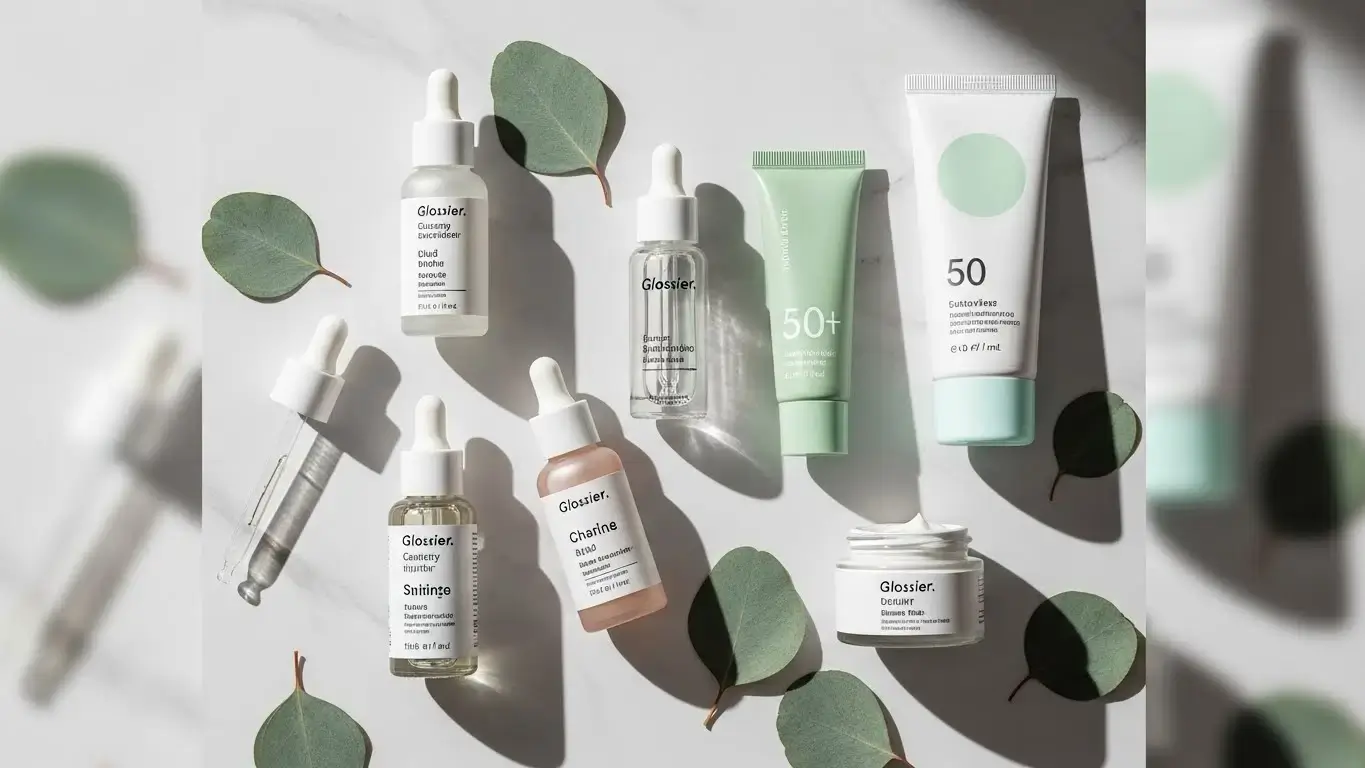
Discover the hottest skincare trends captivating American women in 2025. From barrier repair to “Notox” solutions, unlock the secrets to a radiant, healthy complexion today! ✨
Let’s be honest for a second. If you’ve scrolled through TikTok or Instagram lately, you’ve probably felt that overwhelming wave of confusion. One day it’s all about ten-step routines, and the next, we’re told to wash our faces with nothing but water. It’s exhausting, isn’t it? 😩
As someone who has navigated the chaotic world of beauty for years, I’ve noticed a massive shift in how American women are approaching skincare recently. We are moving away from “perfect” skin and striving for healthy, resilient skin. It’s no longer just about looking younger; it’s about feeling confident in your own skin barrier.
In this deep dive, we’re going to explore the Skincare Trends US Women Are Obsessed With right now. These aren’t just fleeting fads; these are science-backed shifts in the beauty industry that are here to stay. Whether you’re a skincare novice or a seasoned pro, this guide will help you curate a routine that actually works.
Table of Contents 📑
- The Era of “Skinimalism” and Skin Streaming
- Barrier Repair: The Holy Grail of 2025
- The “Notox” Movement: Peptides Over Needles?
- K-Beauty 2.0: Beyond the Sheet Mask
- Comparison: Retinol vs. Bio-Retinols
- FAQ: Common Skincare Questions
The Era of “Skinimalism” and Skin Streaming 🤔
Remember when we thought we needed 15 different serums to have good skin? Those days are fading fast. One of the most significant current skincare trends in the USA is “Skinimalism,” or more recently dubbed, “Skin Streaming.”
This trend is all about streamlining your routine to minimize irritation and maximize results. It’s not about being lazy; it’s about being smart. American women are realizing that mixing Vitamin C, Retinol, AHA, BHA, and Niacinamide all at once is a recipe for disaster (hello, dermatitis!).
💡 Pro Tip!
Try the “3-Product Rule” for a month. A gentle cleanser, a multitasking moisturizer (perhaps with SPF for the day), and one targeted treatment at night. Your skin might just thank you for the break!
Instead of buying single-ingredient serums, consumers are flocking to hybrid products. Think of a moisturizer that contains ceramides and peptides, or a sunscreen that doubles as a vitamin C serum. It saves money, time, and shelf space.
Barrier Repair: The Holy Grail of 2025 🛡️
If “exfoliation” was the buzzword of 2020, “Barrier Repair” is the queen of 2025. Over-exfoliation creates a compromised skin barrier, leading to redness, acne, and sensitivity. We’ve learned our lesson the hard way.
Now, products rich in Ceramides, Fatty Acids, and Cholesterol are flying off the shelves at Sephora and Ulta. The focus has shifted from “stripping” the skin to “feeding” it.
- Ceramides: Think of these as the mortar between your skin cells (the bricks). They keep hydration in and bad bacteria out.
- Centella Asiatica (Cica): A K-beauty staple that has fully infiltrated the US market for its incredible soothing properties.
- Panthenol (Vitamin B5): An absolute hero for hydration and calming inflamed skin.
⚠️ Watch Out!
If your skin stings when you apply moisturizer, that is a major red flag that your barrier is damaged. Stop all actives (acids, retinols) immediately and focus purely on hydration and repair for at least two weeks.
The “Notox” Movement: Peptides Over Needles? 💉
While Botox and fillers aren’t disappearing, there is a growing fatigue regarding the “frozen” look. Enter the “Notox” trend. This involves using high-performance skincare ingredients that mimic the effects of injectables without the needle.
American women are increasingly interested in Neurocosmetics and advanced peptides. Ingredients like Argireline (often called “Botox in a jar”) and Matrixyl are becoming non-negotiables in anti-aging routines. The goal is gracefully aging with a full range of facial expressions, rather than erasing every single line.
It’s about pro-aging rather than anti-aging. Supporting collagen production naturally through LED light therapy masks and microcurrent devices is also part of this holistic approach.
K-Beauty 2.0: Beyond the Sheet Mask 🇰🇷
Korean Skincare (K-Beauty) isn’t new to the US, but it has evolved. We aren’t just buying cute animal sheet masks anymore. American consumers are now deeply educated on the advanced formulations of Korean labs.
Sunscreen innovation is the biggest driver here. US women have realized that Korean SPFs are lightyears ahead in terms of texture and filter technology compared to many traditional US options (though the FDA is trying to catch up!).
Furthermore, ingredients like Snail Mucin (yes, the slime!) and Fermented ingredients (Galactomyces) have become mainstream staples in American bathrooms for achieving that coveted “Glass Skin” glow.
Comparison: Retinol vs. Bio-Retinols 📊
A massive debate happening in skincare circles right now is between traditional Retinol and plant-based alternatives like Bakuchiol. Here is a quick breakdown to help you decide.
| Feature | Traditional Retinol | Bio-Retinol (e.g., Bakuchiol) |
|---|---|---|
| Primary Benefit | Gold standard for wrinkles & acne | Collagen boosting & calming |
| Sensitivity | High (can cause peeling/redness) | Very Low (generally safe for sensitive skin) |
| Pregnancy Safe? | No (Must avoid) | Generally Yes (Consult doctor) |
| Best For | Oily, resilient, aging skin | Dry, sensitive, rosacea-prone skin |
🔢 Quick Routine Builder
Not sure where to start? Select your main concern to see a simplified routine suggestion.
My Main Concern: Damaged Barrier (Redness/Stinging) Fine Lines & Wrinkles Breakouts & Clogged Pores Dullness & Dark Spots Get My Routine
Key Takeaways: Future-Proofing Your Skin 📝
To wrap things up, the skincare landscape in the US is becoming smarter, gentler, and more effective. We are leaving behind the harsh scrubs and embracing the science of barrier health.
- Less is More: Skin streaming is better for your wallet and your face.
- Barrier First: You cannot have glowing skin if your barrier is compromised.
- SPF is Non-Negotiable: It remains the number one anti-aging product.
- Consistency Wins: A simple routine done daily beats a complex one done sporadically.
FAQ: Frequently Asked Questions ❓
Q: Is medical-grade skincare actually better than drugstore brands?
A: Not necessarily. While medical-grade brands often spend more on clinical trials, many drugstore brands (like CeraVe or La Roche-Posay) offer incredible formulations backed by dermatologists at a fraction of the price. It’s about ingredients, not just the price tag.
Q: At what age should I start using anti-aging products?
A: Most dermatologists recommend starting preventative measures like daily sunscreen in childhood. For active ingredients like Retinol, your mid-20s is often considered the ideal time to start boosting collagen production.
Q: Can I use Vitamin C and Retinol together?
A: It is generally best to separate them to avoid irritation. Use Vitamin C in the morning (AM) to protect against free radicals and Retinol at night (PM) for repair.
Q: How do I know my skin type?
A: Wash your face and wait 30 minutes without applying product. If you feel tight, you are dry. If you shine all over, you are oily. If you shine only on the T-zone, you are combination.
Skincare is a personal journey, and what works for your best friend might not work for you. Listen to your skin, be patient with results (it usually takes 4-6 weeks to see changes!), and don’t forget your SPF!
Have you tried any of these trends? Or do you have a “holy grail” product you swear by? Let me know in the comments below—I’d love to hear your experiences! 😊
Medical Disclaimer: This article is for informational purposes only and does not substitute for professional medical advice. Always consult a dermatologist or healthcare provider for specific skin concerns.
“Skincare Trends 2025: What American Women Are Buying Now”에 대한 1개의 생각