
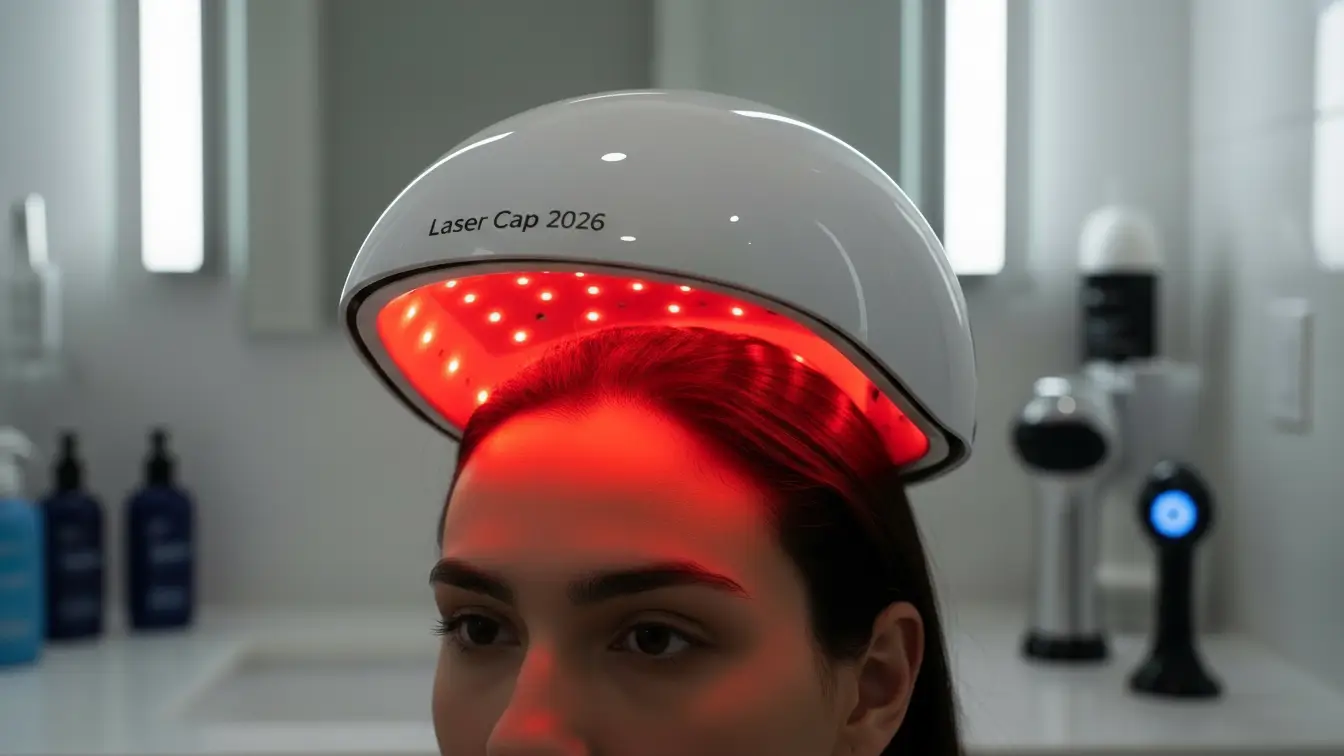
Is Red Light Therapy the fix for thinning hair in 2026? We tested the latest smart helmets and caps. Here is the no-nonsense guide to safety, real results, and the best devices for your scalp care routine.
Table of Contents
I still remember the first time I put on a laser helmet. My partner walked in, took one look at my glowing red head, and asked if I was trying to communicate with aliens. It looked ridiculous. But when you are watching more hair accumulate in the shower drain than on your head, you are willing to try just about anything.
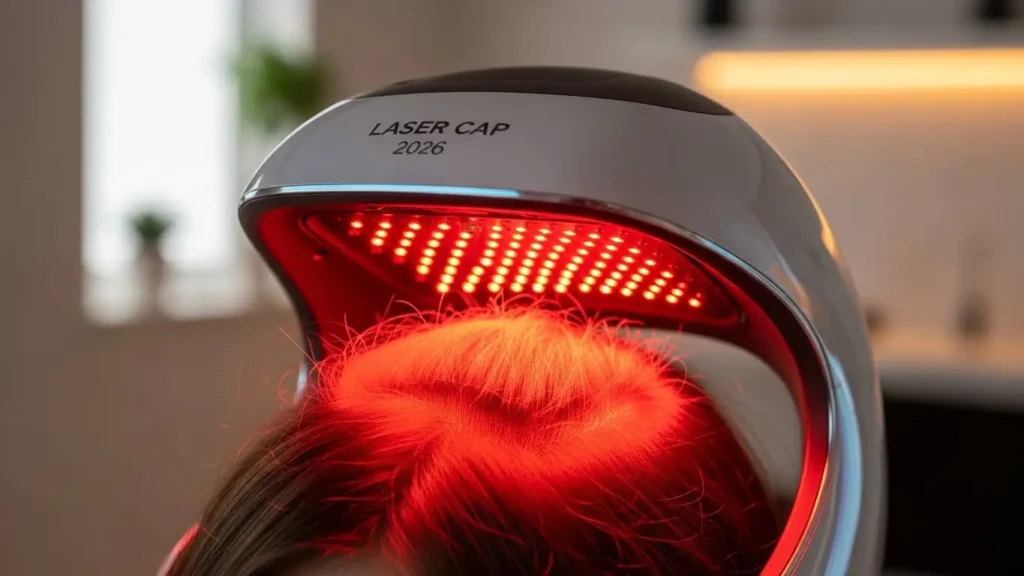
For a long time, Low-Level Laser Therapy (LLLT) felt like snake oil sold on late-night TV. But fast forward to 2026, and the tech has evolved massively. We aren’t just talking about clunky plastic helmets anymore. We have smart caps that track follicle density, flexible bands that fit under baseball hats, and clinical-grade diode density at home.
If you are tech-savvy and tired of applying messy foams twice a day, this guide is for you. We are going to break down how Red Light Therapy for Scalp Care actually works, whether the 2026 upgrades are worth the cash, and how to use them without wasting your time.
Table of Contents
- 1. The Science: Photobiomodulation Explained Simply
- 2. 2026 Tech Trends: AI and Smart Scalp Care
- 3. Choosing the Right Device (Lasers vs. LEDs)
- 4. Your Step-by-Step Usage Routine
- 5. FAQ: Safety and Timeline
The Science: Photobiomodulation Explained Simply 🧬
Forget the buzzwords for a second. The mechanism here is called Photobiomodulation. It sounds complex, but think of it like photosynthesis for your head.
Your hair follicles need energy to grow. This energy comes from adenosine triphosphate (ATP) produced by the mitochondria in your cells. As we age (or deal with genetic hair loss), these mitochondria get tired and sluggish. They stop producing enough fuel, and the hair follicle shrinks—a process called miniaturization.
Specific wavelengths of red light (usually between 630nm and 660nm) penetrate the scalp and stimulate the mitochondria. This kickstarts ATP production, essentially waking up the follicle and shifting it from the resting phase (Telogen) back to the growth phase (Anagen).
💡 Tech Note
Wavelength matters. Blue light affects the surface (good for acne), but for scalp care, you need deep red or Near-Infrared (NIR) light at 800nm+ to reach the follicle base. Ensure your device specs list these specific numbers.
2026 Tech Trends: AI and Smart Scalp Care 🤖
If you bought a device five years ago, it was probably a heavy, wired helmet that made your neck hurt. The Red Light Therapy for Scalp Care 2026 market is different. Here is what we are seeing in the newest high-end devices:
- Smart Sensors: The latest caps from brands like Capillus or iRestore now include sensors that detect scalp temperature and inflammation, adjusting the light intensity automatically to prevent overheating.
- App Integration: You can now sync your helmet to your phone. The app tracks your sessions, reminds you when to put it on, and some even use your phone camera to scan your scalp density over time.
- Flexible PCBs: Instead of rigid plastic, 2026 devices use flexible printed circuit boards. They mold to your head shape, ensuring the diodes are closer to the scalp for better light absorption.
Choosing the Right Device: Lasers vs. LEDs 🔦
This is the most common debate in forums. Should you buy a device with medical-grade Lasers or just LEDs?
Lasers are coherent light sources. They are focused and penetrate deeply without spreading out. LEDs are non-coherent; the light scatters.
In 2026, the best devices actually use a hybrid approach. Lasers target the follicle depth, while high-output LEDs cover the broader surface area to increase blood flow across the entire scalp.
| Feature | Budget Device (<$300) | Premium Device ($800+) |
|---|---|---|
| Light Source | Mostly LEDs | High-density Lasers |
| Diodes Count | 50 – 80 | 270 – 300+ |
| Coverage | Top of head only | Full scalp (including hairline) |
⚠️ Buyer Beware
Avoid cheap “red light” hats from random marketplaces that cost $50. Many of these are just red colored light bulbs, not therapeutic specific wavelengths. If they don’t list the ‘nm’ (nanometer) specs, skip them.
Your Step-by-Step Usage Routine 📅
Buying the device is the easy part. Using it consistently is where most people fail. Here is a routine optimized for results based on current protocols.
Step 1: The Clean Slate
Light cannot penetrate through layers of hair gel, dry shampoo, or thick grease. Use the device on a clean, dry scalp. The best time is right after showering and drying your hair.
Step 2: The Timing
Most 2026 devices are designed for every other day use. Why not every day? Because your cells need time to process the ATP stimulation. Overloading them doesn’t speed up growth; it just wastes battery. Stick to 20–25 minutes per session.
Step 3: The Combo (Stacking)
Red light therapy works best as a force multiplier. Apply your topical treatments (like Minoxidil or scalp serums) after your light session. Using them before might block the light absorption, or the heat from the helmet could cause the liquid to evaporate too quickly.
FAQ: Safety and Timeline ❓
You likely have questions that the product manuals don’t answer clearly.
Q: Does it hurt or get hot?
A: It should not hurt. You might feel a very mild warmth, which is actually pleasant. If it burns, the device is faulty or you are using it too long.
Q: Can I stop using it once my hair grows back?
A: Generally, no. Like gym workouts, if you stop the stimulation, the benefits slowly fade. Once you achieve results, you can often switch to a “maintenance mode” (1-2 times a week) rather than every other day.
Q: How long until I see real results?
A: Patience is non-negotiable here.
– Month 1-2: Decreased shedding (hair feels stronger).
– Month 3-4: Tiny “baby hairs” appear.
– Month 6+: Visible cosmetic improvement in density.
📝 Quick Takeaways
⚡ Mechanism: It uses 650nm light to boost mitochondrial ATP production.
📅 Frequency: Aim for 20 minutes, every other day.
🛡️ 2026 Tech: Look for flexible fits, hybrid Laser/LEDs, and smart sensors.
💰 Verdict: A solid investment for long-term preservation rather than an overnight miracle.
Technology has finally caught up to the promise of hair regrowth. While Red Light Therapy isn’t a magic wand that will give you a rockstar mane overnight, it is one of the few non-invasive tools backed by genuine data.
If you commit to the routine and manage your expectations, a high-quality device can be the MVP of your grooming kit in 2026.
Have you tried any of the new smart laser caps? I’d love to hear about your experience in the comments below! 👇
Disclaimer: This article is for informational purposes only and does not constitute medical advice. Always consult with a dermatologist or healthcare professional before starting any new treatment for hair loss.