
Hollywood is completely abuzz with the latest details leaking from Christopher Nolan’s highly anticipated next project, an ambitious adaptation of Homer’s classical epic, The Odyssey. Following an exclusive feature by Time Magazine, movie enthusiasts and classical scholars alike have found themselves locked in a fierce, unprecedented debate. What was supposed to be a historic cinematic event has quickly transformed into an internet battleground over creative freedom, political correctness, and historical fidelity. Let’s dive straight into why some critics are already calling this the most controversial adaptation in modern film history! 😊
1. Lupita Nyong’o as Helen: The Race-Swapping Debate 🎭
The epicenter of the public outcry rests squarely on the casting of Helen of Troy. In Homer’s original texts, The Odyssey and The Illiad, Helen is explicitly described with classical tropes of Mediterranean antiquity, often translated as “fair-haired” and “white-armed.” Nolan, however, has cast the brilliant Kenyan-Mexican actress Lupita Nyong’o to play the face that launched a thousand ships.
Purists argue that setting a movie in 1200 BCE Greece while changing the racial background of an explicitly described character shatters historical immersion. Many point out what they see as a glaring double standard in modern media: if Hollywood were to cast a Caucasian actor in an African historical or mythological role—a practice known as whitewashing—the backlash would be swift and severe. Yet, “race-swapping” Western classical characters under the banner of inclusivity is frequently celebrated by studio executives.
Insiders suggest that these unconventional casting decisions are heavily influenced by the strict corporate diversity requirements mandated by major awards bodies like the Academy Awards. This has led critics to argue that artistic authenticity is being compromised to clear bureaucratic hurdles. Adding fuel to the fire, the casting of Hispanic actor John Leguizamo as a Greek general has raised questions about the internal consistency of Nolan’s casting logic.
2. Synths, Gongs, and Travis Scott: A Shocking Sonic Landscape 🎵
Christopher Nolan has never been a traditionalist when it comes to film scores, but his directions to Academy Award-winning composer Ludwig Göransson for The Odyssey have raised more than a few eyebrows. Nolan reportedly declared, “The ancient Greeks didn’t have symphonic orchestras, so we shouldn’t use them.”
To simulate an ancient yet alien texture, the production constructed a massive array consisting of 35 custom bronze gongs layered with heavy, modern electronic synthesizers. This design choice struck many as deeply ironic; while orchestras didn’t exist in ancient Greece, electronic synthesizers certainly didn’t either, exposing a strange contradiction in the film’s creative framework.
The most polarizing creative leap, however, is the casting of mega-rapper Travis Scott as a classical Greek Bard (poet). Nolan defended this decision by stating that the oral tradition through which ancient epics were shared perfectly mirrors the rhythm, cultural transmission, and spoken-word delivery of modern hip-hop culture. Critics strongly counter that an enduring, multi-generation oral epic is fundamentally distinct from studio-produced commercial music, questioning if this mashup will elevate the text or completely cheapen it.
3. The Limits of Hyper-Realism in Classical Myth 🧠
Film theorists have brought forward a fascinating angle: perhaps Nolan isn’t trying to destroy the source material intentionally, but rather, his signature style of hyper-rationalism is fundamentally incompatible with the magic of myth. Nolan is famous for creating airtight, scientifically grounded narratives. But myth relies entirely on the supernatural, the symbolic, and the divine.
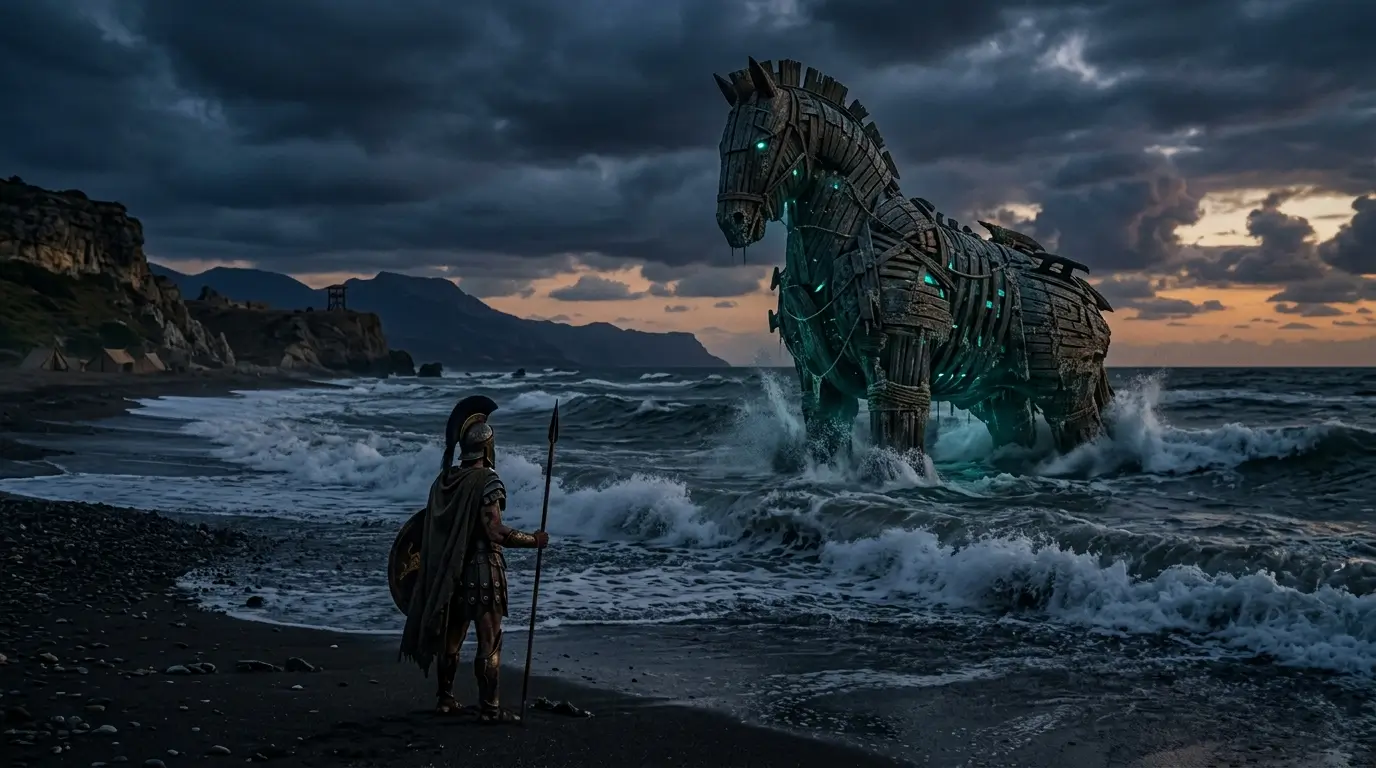
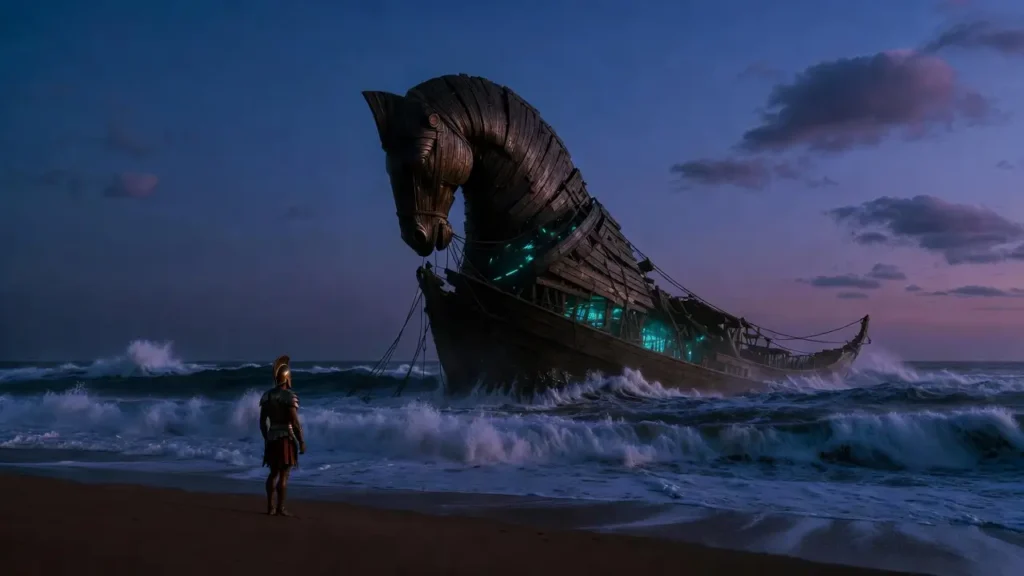
Take Nolan’s redesign of the iconic Trojan Horse. In interviews, he questioned why the Trojans would ever blindly accept a giant, hollow wooden horse into their fortified city walls. His hyper-real solution? The horse is engineered as a semi-submerged, damaged marine vessel washed ashore, styled to look like a desperate religious offering or a salvageable wreck rather than a conspicuous wooden statue.
This aggressive push for realism risks repeating the exact mistakes of George Lucas in the Star Wars prequels, where the mystical “Force” was over-explained away via microscopic cellular organisms called midi-chlorians. When you view ancient spiritual narratives through a purely materialistic, literal lens, you inevitably strip away the cosmic romance, wonder, and terror that made the story timeless in the first place.
Comparing Approaches to Mythological Adaptation
| Film / Project | Creative Philosophy | Audience / Critical Reception |
|---|---|---|
| Nolan’s ‘The Odyssey’ | Hyper-realism, materialistic explanations, modern identity casting, electronic soundscapes. | Highly polarized pre-release reception; deep division between purists and progressive film fans. |
| Robert Eggers’ ‘The Northman’ | Strict historical and spiritual fidelity; fully embraces 10th-century Viking mysticism without rewriting it. | Critically acclaimed for its uncompromising atmosphere, deep cultural immersion, and raw authenticity. |
Nolan’s ‘The Odyssey’: Controversy at a Glance
Frequently Asked Questions ❓
Ultimately, Christopher Nolan’s upcoming project forces us to ask tough questions about the nature of adaptation. Is it the responsibility of a modern director to preserve the literal descriptions of antiquity, or is classical mythology a living canvas meant to be endlessly reshaped by our contemporary culture? Whether this film becomes an iconic milestone or a notorious misstep remains to be seen. What do you think about these radical changes? Drop your thoughts in the comments below! 👇😊