
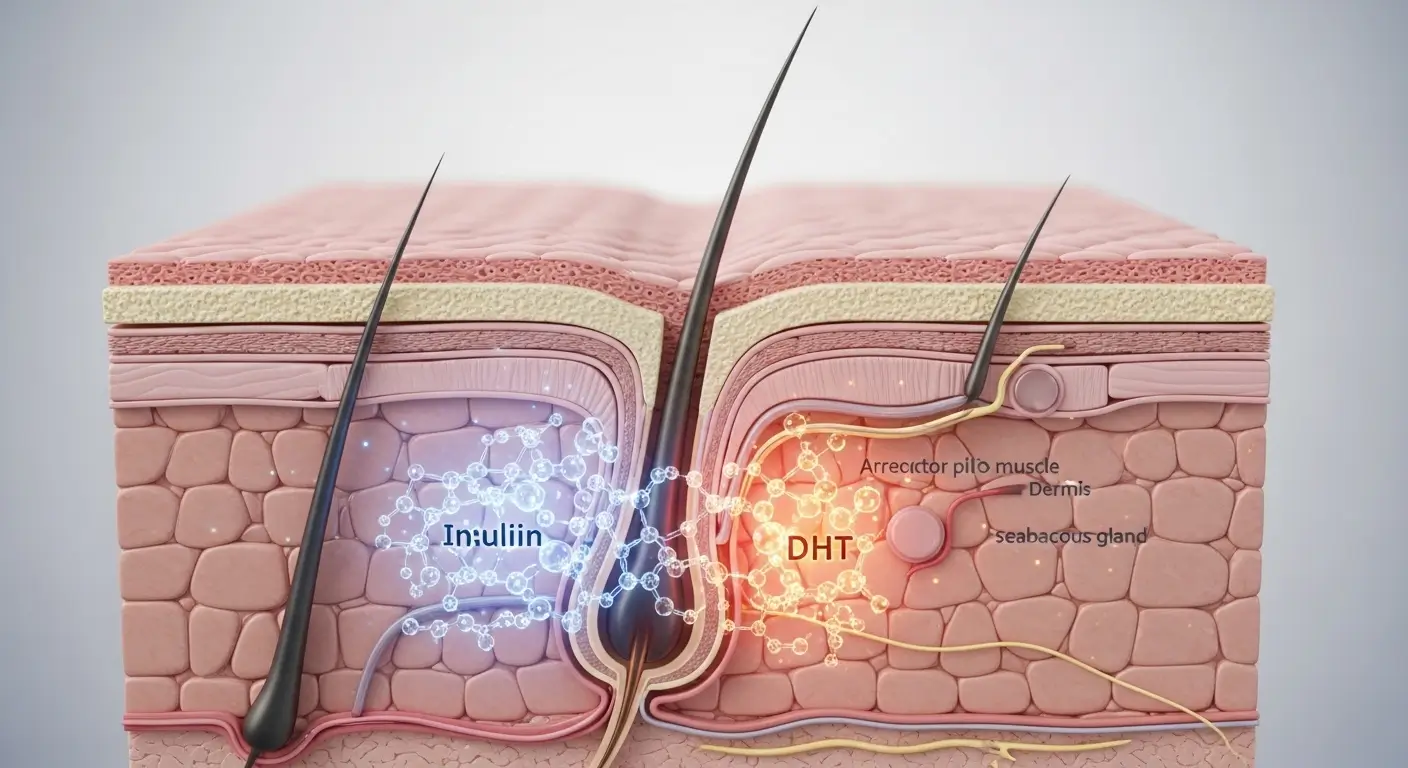
Discover the scientific link between insulin resistance and hair loss. Learn how metabolic health, androgen levels, and scalp inflammation impact hair thinning in this expert guide.
Table of Contents
1. Understanding the Link: Does Insulin Resistance Cause Hair Loss?
If you’ve noticed your hair thinning while also struggling with fatigue, sugar cravings, or stubborn weight gain, you might be asking: Does insulin resistance cause hair loss? The short answer is yes—but the pathway is more complex than just high blood sugar. As someone who has analyzed the intersection of metabolic health and dermatology, I can tell you that the state of your metabolism dictates the health of your hair follicles.

Insulin resistance occurs when your body’s cells stop responding effectively to insulin, leading to chronically high levels of both glucose and insulin in the bloodstream. This metabolic “noise” disrupts several delicate hormonal systems, creating an internal environment that is hostile to healthy hair growth cycles.
2. How High Insulin Triggers Hair Thinning and Androgenic Alopecia
The primary reason insulin resistance causes hair loss involves a hormone called DHT (Dihydrotestosterone). High insulin levels stimulate the enzyme 5-alpha reductase, which converts testosterone into DHT. DHT is the primary culprit in androgenic alopecia (male or female pattern baldness), as it miniaturizes hair follicles until they stop producing hair entirely.
Furthermore, hyperinsulinemia (excess insulin) reduces the production of Sex Hormone-Binding Globulin (SHBG). SHBG’s job is to “mop up” excess hormones in the blood. When SHBG is low, more free testosterone and DHT circulate, directly attacking your scalp’s hair follicles. This is why metabolic health is often the “hidden” driver behind hereditary hair loss.
3. Scalp Health and Systemic Inflammation from Metabolic Dysfunction
Beyond hormones, we must look at metabolic dysfunction and scalp inflammation. Insulin resistance is a pro-inflammatory state. Chronic inflammation damages the micro-vasculature—the tiny blood vessels that feed your hair follicles. Without adequate blood flow and nutrient delivery, the “anagen” (growth) phase of your hair shortens, leading to increased shedding, a condition known as telogen effluvium.
I’ve seen many patients try expensive shampoos or topical treatments without success because they were ignoring the systemic fire of inflammation burning underneath. High insulin levels also promote oxidative stress, which further weakens the structural integrity of the hair shaft, making it prone to breakage and lack of luster.
4. Insulin Resistance and Hair Loss in Women (PCOS) vs. Men
The manifestation of insulin-related hair loss differs by gender but shares the same root.
- For Women: This is most commonly seen in PCOS (Polycystic Ovary Syndrome). Insulin resistance drives the ovaries to produce excess androgens, leading to thinning at the crown and temples, often accompanied by unwanted facial hair growth.
- For Men: Early-onset male pattern baldness is now considered a strong clinical marker for insulin resistance and future cardiovascular risk. Research indicates that men who lose hair early are significantly more likely to have metabolic syndrome.
5. Reversing Metabolic Hair Loss Through Diet and Lifestyle
The good news is that reversing insulin resistance can often halt and sometimes reverse metabolic-driven hair thinning. Here is a professional-grade strategy to stabilize your blood sugar and protect your hair:
- Prioritize Low-Glycemic Nutrition: Focus on whole foods, fiber, and protein. Eliminating refined sugars and processed flours reduces the insulin spikes that trigger DHT production.
- Strength Training: Muscle is your largest “glucose sink.” Increasing muscle mass improves insulin sensitivity more effectively than any other lifestyle intervention.
- Intermittent Fasting: Giving your body periods of low insulin allows SHBG levels to rise and gives follicles a break from the androgenic onslaught.
- Targeted Supplementation: Myo-inositol, Berberine, and Zinc have shown promise in improving metabolic markers and supporting the hair growth cycle.
Consistency is key. Hair follicles take months to recover. Typically, it takes 3 to 6 months of improved metabolic health before you see physical changes in hair density.
6. Frequently Asked Questions (FAQ) ❓
Q: Can hair grow back after fixing insulin resistance?
A: Yes, in many cases. If the hair follicles have not been completely scarred over by long-term DHT exposure, improving insulin sensitivity can reactive dormant follicles and thicken existing strands.
Q: How do I know if my hair loss is caused by insulin resistance?
A: Look for accompanying metabolic signs: skin tags, darkening of the skin around the neck (acanthosis nigricans), central obesity, and intense sugar cravings. Blood tests like Fasting Insulin and HOMA-IR are the gold standards for diagnosis.
Q: Does sugar intake directly cause hair loss?
A: Indirectly, yes. Excessive sugar leads to insulin spikes, which increase DHT and inflammation—the two primary drivers of follicle miniaturization.
Medical Disclaimer: This article is for informational purposes only and does not constitute medical advice. It is not intended to be a substitute for professional medical advice, diagnosis, or treatment. Always seek the advice of your physician or other qualified health provider with any questions you may have regarding a medical condition.
“Does Insulin Resistance Cause Hair Loss? The Hidden Metabolic Link”에 대한 2개의 생각