

Struggling with thinning hair? Explore the deep biological connection between insulin resistance and hair loss, and discover actionable strategies to restore your metabolic health and hair density.
Table of Contents
The Silent Connection: Is Your Metabolism Stealing Your Hair? 🧬
Have you ever stood in front of the mirror, noticed your part widening or more hair in the drain, and wondered, “Why is this happening?” Most people immediately blame stress, genetics, or a new shampoo. But what if the real culprit isn’t on your scalp, but in your bloodstream?
As someone who has spent years analyzing metabolic health, I’ve seen a recurring pattern: hair health is often a mirror of metabolic health. Specifically, the rise of insulin resistance has become one of the most overlooked “hidden triggers” for both male and female pattern hair loss. It’s a frustrating cycle where your body’s inability to process sugar efficiently leads to a hormonal cascade that literally starves your hair follicles.
In this guide, we aren’t just going to look at surface-level fixes. We’re diving deep into the why and how, using the latest clinical data to understand how balancing your insulin might be the most effective “hair growth serum” you’ve never tried. 😊
The Biological Link Between Insulin Resistance and Hair Loss 🔬
To understand the connection, we first need to define insulin resistance (IR). Simply put, IR occurs when your cells stop responding effectively to the hormone insulin. To compensate, your pancreas pumps out even more insulin to force blood sugar into the cells. This state of chronically high insulin is known as hyperinsulinemia.
So, how does high insulin reach your scalp? The link is multifaceted. Clinical studies have shown that individuals with early-onset androgenetic alopecia (AGA) often present with significantly higher markers of insulin resistance than those with full heads of hair.
💡 Key Scientific Insight:
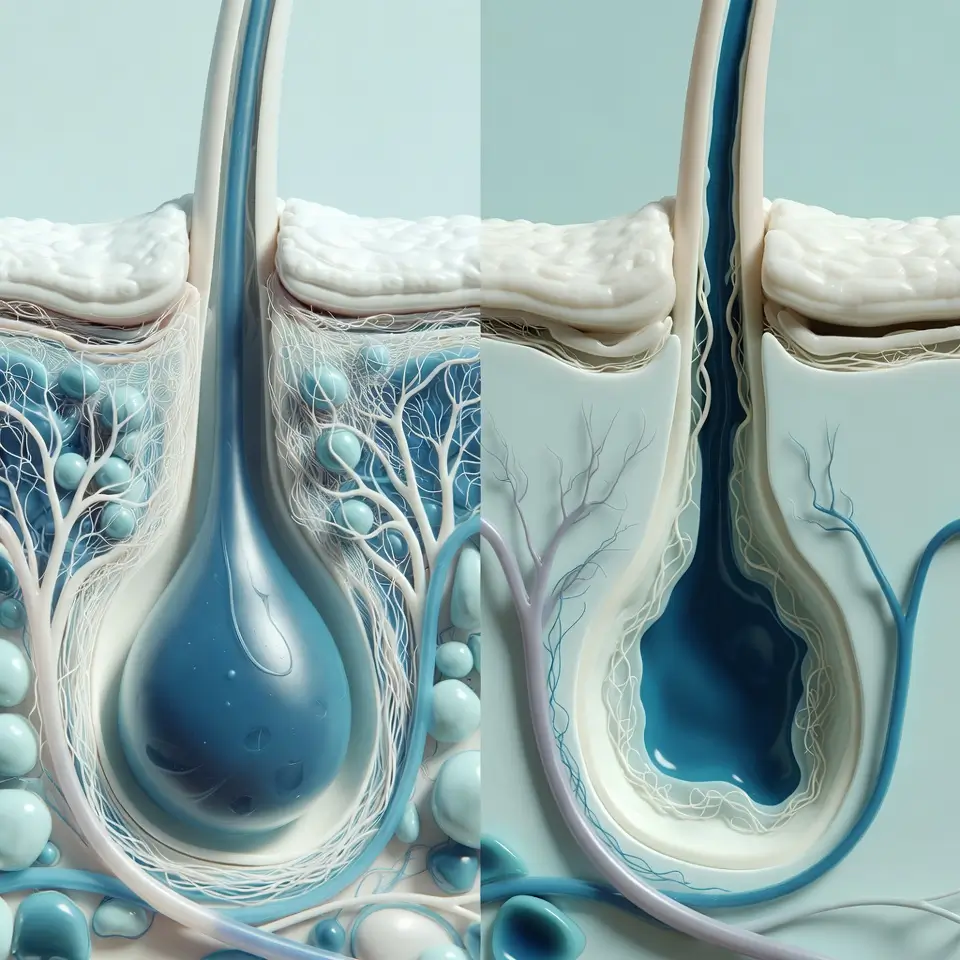
Research published in the Journal of the American Academy of Dermatology suggests that insulin resistance can lead to the miniaturization of hair follicles. When insulin levels stay high, it acts as a growth-stimulating factor—but not the kind you want. It interferes with the delicate vascular system that feeds each follicle.
How Hyperinsulinemia Fuels Androgenetic Alopecia (Pattern Thinning) 📉
This is where the “Expert” part of the SEO comes in. Most people know that DHT (Dihydrotestosterone) is the hormone responsible for male and female pattern baldness. But few realize that insulin is the gasoline on the DHT fire.
High insulin levels decrease the production of Sex Hormone-Binding Globulin (SHBG) in the liver. SHBG is a protein that acts like a “sponge,” soaking up excess hormones like testosterone. When SHBG is low, you have more free testosterone circulating in your body.
More free testosterone means more substrate for the enzyme 5-alpha reductase to convert into DHT. Consequently, the follicles on your scalp are bombarded with DHT, leading to follicular miniaturization—where hair grows back thinner and shorter with each cycle until it stops growing altogether.
Micro-Inflammation and Restricted Blood Flow to Follicles 🩸
Beyond hormones, insulin resistance is a pro-inflammatory state. Chronic high blood sugar damages the endothelium (the inner lining of your blood vessels). This leads to:
- Reduced Nitric Oxide: Insulin resistance lowers nitric oxide, which is essential for vasodilation. Without it, blood flow to the tiny capillaries in the scalp is restricted.
- Oxidative Stress: High insulin generates reactive oxygen species (ROS) that damage the DNA of the hair follicle stem cells.
- Glycation: Excess sugar can attach to proteins in the scalp (AGEs), making the scalp tissue less flexible and more prone to “follicular fibrosis.”
Imagine your hair follicle is a plant. Insulin resistance doesn’t just poison the water (hormones); it also kinks the hose (blood flow) and hardens the soil (inflammation). 🥀
Insulin Resistance, PCOS, and Female Hair Thinning 👩🦰
For women, the link between insulin resistance and hair loss is most visible in Polycystic Ovary Syndrome (PCOS). Up to 70-80% of women with PCOS have insulin resistance, regardless of their weight.
In PCOS, high insulin stimulates the ovaries to produce excess androgens (male hormones). This leads to a cruel paradox: Hirsutism (excess hair on the face and body) and Androgenic Alopecia (thinning on the scalp). If you are a woman experiencing hair loss along with irregular cycles or sugar cravings, checking your fasting insulin (HOMA-IR) is non-negotiable.
Actionable Steps: Reversing Insulin Resistance for Hair Regrowth 🛠️
The good news? Insulin resistance is largely reversible through lifestyle. While you can’t change your genetics, you can change the environment your genes “bathe” in. Here is a science-backed protocol to improve your metabolic health and support your hair:
| Strategy | How it Helps Hair |
|---|---|
| Low Glycemic Diet | Reduces insulin spikes, which lowers DHT production. |
| Strength Training | Increases muscle glucose uptake, improving overall insulin sensitivity. |
| Intermittent Fasting | Gives the pancreas a break and lowers baseline insulin levels. |
| Key Supplements | Inositol, Berberine, and Omega-3s help sensitize cells to insulin. |
📌 Pro Tip: Focus on fiber first. Eating vegetables before carbohydrates significantly blunts the glucose and insulin response of a meal. This simple “food sequencing” trick is a game-changer for metabolic health.
Frequently Asked Questions (FAQ) ❓
Q: Can hair grow back after reversing insulin resistance?
A: Yes, in many cases! If the hair follicles haven’t fully scarred (fibrosis), improving insulin sensitivity can reduce DHT and inflammation, allowing follicles to return to a healthy growth phase (anagen).
Q: How do I know if my hair loss is caused by insulin?
A: Look for other signs of IR: midsection weight gain, skin tags, dark patches on the neck (acanthosis nigricans), and intense sugar cravings. A blood test for “Fasting Insulin” is the best way to confirm.
Q: Is Metformin helpful for hair loss?
A: For some individuals with high insulin, Metformin helps by improving sensitivity. However, always consult a doctor, as Metformin can also cause B12 deficiency, which itself is a cause of hair loss.
Your hair is a vital sign. If it’s telling you that something is wrong internally, don’t just cover it up with topical treatments. By addressing insulin resistance and hair loss at the root—literally—you aren’t just saving your hair; you’re protecting your long-term health against diabetes and heart disease.
Have you tried changing your diet to help your hair? I’d love to hear your experiences in the comments below! Let’s support each other on this journey to metabolic wellness. 😊
Medical Disclaimer: This article is for informational purposes only and does not substitute for professional medical advice, diagnosis, or treatment. Always seek the advice of your physician or other qualified health provider with any questions you may have regarding a medical condition.