
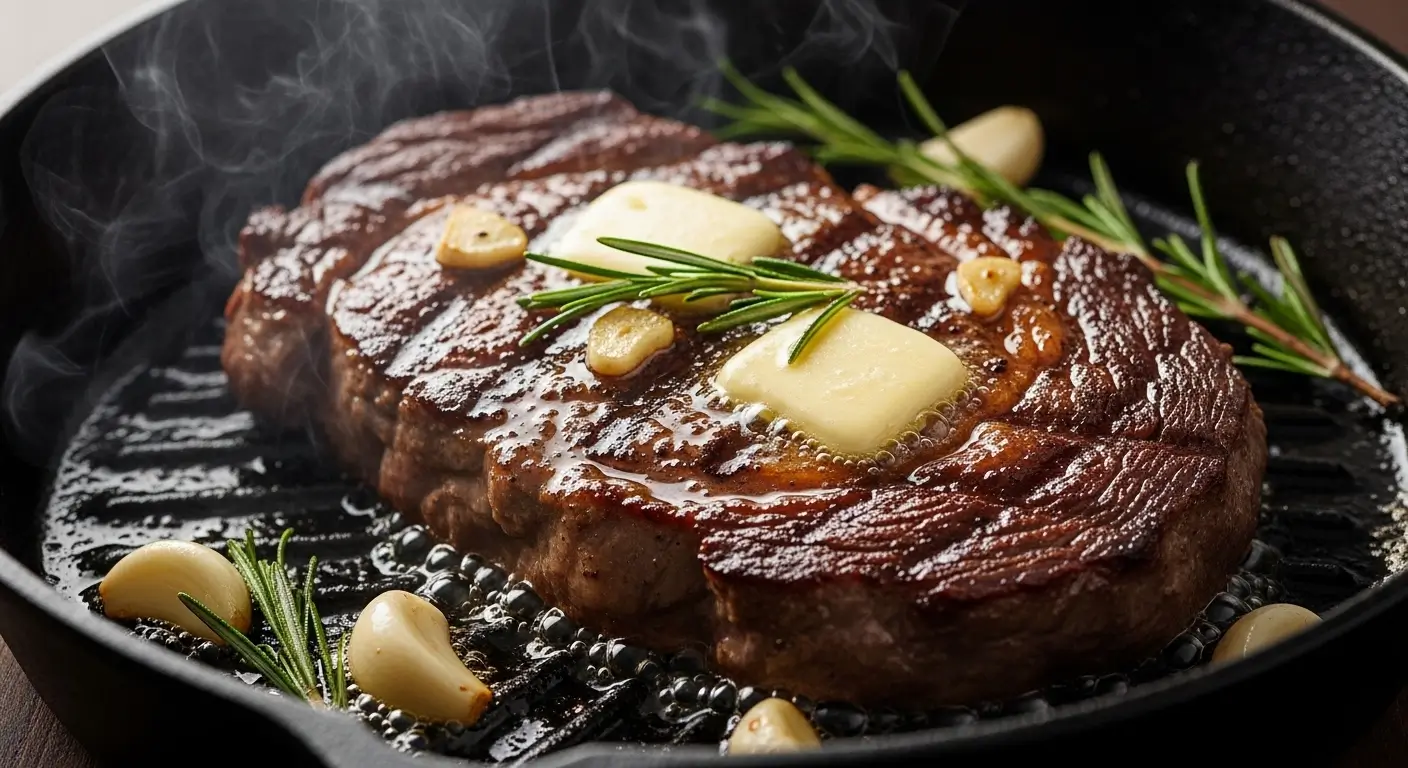
How To Cook The PERFECT Steak! Discover the ultimate professional techniques for a restaurant-quality steak at home. Master the Maillard reaction, butter basting, and the science of resting for succulent results.
We’ve all been there—buying a premium cut of ribeye or filet mignon, only to have it turn out grey, chewy, or unevenly cooked. It’s heartbreaking, right? Honestly, cooking the perfect steak isn’t about having a professional kitchen; it’s about understanding the thermodynamics of meat and the chemistry of flavor. I used to struggle with this too until I realized that the “perfect” steak is a result of a few non-negotiable scientific steps. Today, I’m sharing the definitive method to achieve that elusive crust and tender interior every single time. 😊
Table of Contents
The Scientific Benefits of Tempering and Surface Moisture Control 🌡️
The journey to a perfect steak begins long before it touches the pan. One of the most common mistakes is throwing a cold steak onto a hot surface. According to culinary science, if the internal temperature of the meat is too low, the exterior will overcook and turn “rubbery” before the center even reaches a safe or desirable temperature.
💡 Pro Tip: The 30-Minute Rule
Take your steak out of the refrigerator at least 30 to 60 minutes before cooking. This allows the muscle fibers to relax and ensures more even heat distribution during the searing process.
Equally important is absolute surface dryness. Moisture is the enemy of the sear. When water is present on the surface, the heat of the pan is wasted on evaporating that water (turning it into steam) rather than browning the meat. Use a paper towel to pat the steak bone-dry on all sides. This is the only way to achieve a professional-grade crust.
Maximizing Flavor: The Maillard Reaction and Pan Choice 🔥
Why does a steakhouse steak taste so much better? The secret lies in the Maillard Reaction—a chemical reaction between amino acids and reducing sugars that gives browned food its distinctive flavor. To trigger this effectively, you need high, sustained heat.
| Pan Material | Benefits for Steak |
|---|---|
| Cast Iron Skillet | Excellent heat retention; provides the best even sear. |
| Stainless Steel | Great for temperature control and creating “fond” for pan sauces. |
| Non-Stick Pan | ⚠️ Not recommended; cannot handle the high heat required for searing. |
Use an oil with a high smoke point, such as avocado oil or grapeseed oil. Avoid extra virgin olive oil for the initial sear, as it will burn and become bitter. Wait until the oil is shimmering and just starting to smoke before placing the steak in the pan. Listen for that aggressive sizzle—that is the sound of flavor being created!
The Benefits of Butter Basting (Arrosé Technique) 🧈
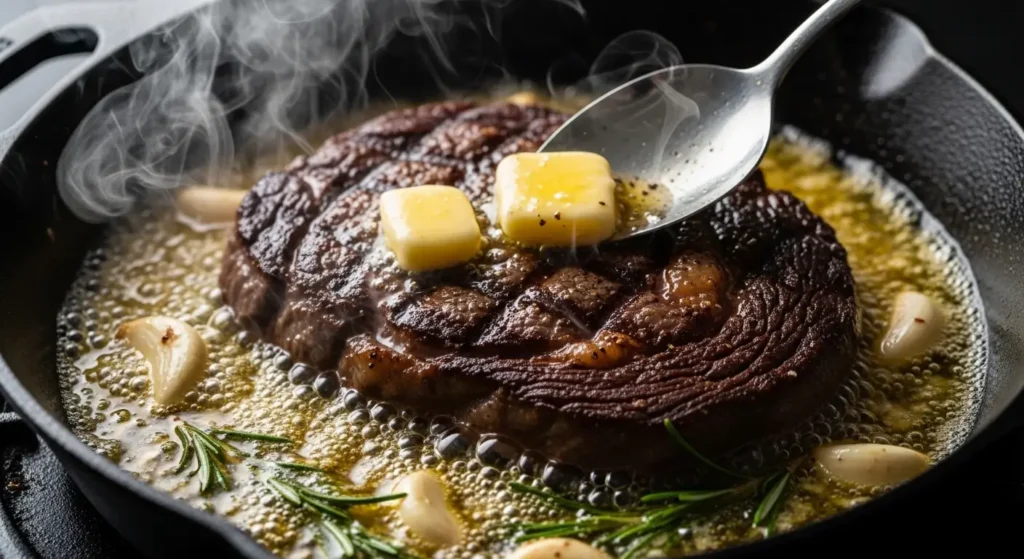
If searing is the foundation, butter basting is the finishing touch that adds a “luxury” profile to your steak. In French cooking, this is known as Arrosé. Once you’ve flipped the steak and it’s about 2-3 minutes away from your target temperature, drop the heat to medium.
The Basting Checklist 📝
- Unsalted Butter: Use high-quality European-style butter for best results.
- Aromatics: 2-3 cloves of smashed garlic and a few sprigs of fresh thyme or rosemary.
- The Action: Tilt the pan so the butter pools at the bottom with the herbs, and use a large spoon to continuously drench the steak in the foaming, flavored fat.
This process doesn’t just add flavor; it acts as a gentle cooking medium that helps finish the interior of the steak without drying out the exterior. The garlic and herbs infuse the butter, which then permeates the crust of the meat, creating a complex, savory profile that salt and pepper alone cannot achieve.
Don’t Ruin It Now: The Benefits of Proper Resting ⏳
This is the part where most home cooks fail. You’re hungry, the steak smells incredible, and you want to slice into it immediately. Stop! Slicing a steak right off the pan is the fastest way to turn a “perfect” steak into a dry one.
Physics dictates that high heat causes the muscle fibers to contract, pushing the juices toward the center of the meat. If you cut it immediately, those juices will spill out onto the cutting board. By resting the meat for 5 to 10 minutes (depending on thickness), the muscle fibers relax and reabsorb the liquid, ensuring every bite is juicy.
⚠️ Attention: Carry-over Cooking
Remember that the internal temperature of the steak will continue to rise by 2-5°F (1-3°C) while resting. Pull the steak off the heat slightly before it reaches your final desired temperature.
Summary of the Perfect Steak Method 📝
Let’s recap the essential steps to master your next steak night:
- Prep: Temper to room temperature and pat bone-dry.
- Season: Generously salt all sides (including the edges).
- Sear: Use a ripped-hot cast iron pan with high-smoke-point oil.
- Baste: Add butter, garlic, and herbs in the final minutes.
- Rest: Wait at least 5-10 minutes before slicing.
🥩
Steak Master Cheat Sheet
Core Requirement:Cast Iron + High Smoke Point Oil
Flavor Enhancer:Butter Basting (Arrosé) with Aromatics
The “Secret” Step:
Resting Period = 1/2 of Cooking Time
Final Touch:Flaky Sea Salt after slicing
Master the heat, master the meat.
Frequently Asked Questions ❓
Q: Should I salt my steak way in advance?
A: Ideally, yes. Salt your steak at least 40 minutes before cooking (Dry Brining) or immediately before. Salting 10 minutes before is the worst time because the salt draws out moisture but hasn’t had time to be reabsorbed.
Q: How do I know when the steak is done without a thermometer?
A: While the “finger test” is popular, it is highly inaccurate for beginners. For a perfect steak every time, a digital instant-read thermometer is the only way to ensure precision.
Q: Can I use frozen steak?
A: Yes, but it must be fully thawed in the refrigerator overnight. Cooking from frozen will result in a burnt exterior and raw interior.
Cooking the perfect steak is a skill that improves with every attempt. Don’t be afraid of the high heat—it’s your best friend for flavor! If you have any specific questions about different cuts like Ribeye vs. Sirloin, feel free to leave a comment below. Happy cooking! 😊