

Is breakfast really the most important meal of the day? Discover why skipping your morning meal might be the secret to healing a fatty liver, boosting energy, and fixing insulin resistance.
We’ve all heard the saying, “Eat breakfast like a king.” For decades, we’ve been told that starting the day with a hearty meal is non-negotiable for a healthy metabolism. But what if I told you that for your liver, this advice might be completely backward?
I used to force myself to eat toast and eggs at 7 AM, thinking I was doing my body a favor. Instead, I felt sluggish and struggled with stubborn belly fat. It turns out, breakfast might be the very thing stopping your liver from healing itself. If you are dealing with fatigue, weight gain, or liver concerns, this “morning fasting” approach could be a game-changer for you. Let’s get into it! 😊
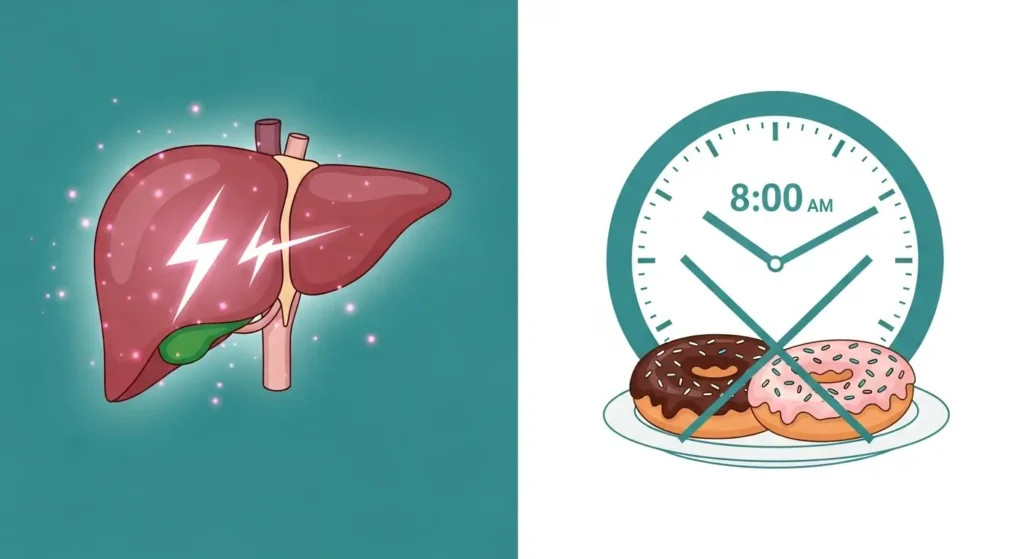
The Morning “Fuel” Myth: What Really Happens When You Wake Up 🤔
Most people believe their “tank is empty” when they wake up. Actually, the opposite is true. In the morning, your body is naturally primed to burn fat, not store it.
Around 8:00 AM, your body experiences a natural surge in hormones like cortisol (the stress hormone) and glucagon. These hormones work together to release stored sugar (glycogen) from your liver into your blood to give you energy. This is often called the Dawn Phenomenon.
So, your blood sugar is already elevated naturally to get you moving. If you add a high-carb breakfast (like bagels, cereal, or sweetened coffee) on top of this, you create a massive sugar spike.
💡 Did You Know?
Your liver performs a deep cleaning process called Autophagy during fasting. This is when cells recycle waste and repair themselves. Eating breakfast stops this process immediately!
Why “Skipping Breakfast” Saves Your Liver 📊
Experts like Dr. Eric Berg suggest that the most powerful thing you can do for a fatty liver is to give it a break. When you eat frequently, your insulin levels stay high, and insulin prevents fat burning.
By pushing your first meal to lunchtime (essentially practicing Intermittent Fasting), you allow your insulin levels to drop to baseline. This signals your liver to switch modes:
- From Storing Fat: Converting excess sugar into liver fat.
- To Burning Fat: Using up stored liver fat for fuel (Ketosis).
Impact of Meal Timing on Liver Health
| Condition | Standard Breakfast Eater | Morning Faster (Skipper) |
|---|---|---|
| Insulin Levels | High all day (Spikes early) | Low in AM (Fat burning zone) |
| Liver Function | Storage Mode (Lipogenesis) | Detox Mode (Autophagy) |
| Energy Source | Glucose from food | Stored Body Fat (Ketones) |
⚠️ A Word of Warning!
If you are pregnant, have a history of eating disorders, or have advanced liver cirrhosis, please consult your doctor before skipping meals. Fasting is powerful, but it must be done safely!
How to Start: The 16:8 Method 🧮
The easiest way to implement this is the 16:8 method. You fast for 16 hours (including sleep) and eat during an 8-hour window. Essentially, you just skip breakfast and stop snacking after dinner.
📝 The Golden Rule
Don’t eat if you aren’t hungry. If you wake up and feel fine, push your first meal as late as possible.
🔢 Fasting Window Calculator
Find out when your eating window should start!
I finished dinner last night at: 5:00 PM 6:00 PM 7:00 PM 8:00 PM 9:00 PM 10:00 PM Calculate Eating Start Time
Start Eating At:
This gives you a 16-hour fast to let your liver heal!
Real Life Example: Sarah’s Transformation 📚
Let’s look at a quick example. Sarah, a 45-year-old office worker, struggled with “Non-Alcoholic Fatty Liver Disease” (NAFLD) and constant morning fatigue. She thought she needed juice and cereal to get energy.
Sarah’s Change
- Before: Toast & Latte at 8 AM. Snacks at 10 AM.
- After: Black coffee at 8 AM. First meal (Salad & Protein) at 12 PM.
The Result (3 Months Later)
– Liver Enzymes (ALT): Dropped from 65 to 24 (Normal).
– Weight: Lost 12 lbs without counting calories.
Sarah realized that her morning hunger wasn’t a need for food—it was just habit and hormones. By waiting just 4 extra hours, she gave her liver the time it needed to clear out the fat.
📝
Article Takeaways
✨ Myth Busted: You don’t need to eat immediately upon waking. Your body has energy stored!
📉 Insulin Factor: Eating breakfast spikes insulin, which stops Fat Burning & Autophagy.
🕒 The Solution:
16:8 Fasting (Skip Breakfast, Eat 12 PM – 8 PM)
Give your liver the break it deserves!
Frequently Asked Questions ❓
Q: Can I drink coffee during the fast?
A: Yes! Black coffee and tea (without sugar or milk) are perfectly fine and can actually boost autophagy.
Q: Won’t skipping breakfast slow down my metabolism?
A: No, this is a common myth. Short-term fasting actually increases metabolic rate by increasing norepinephrine.
Q: What should I eat to break my fast?
A: Start with protein and healthy fats (like eggs, avocado, or nuts) rather than carbohydrates to keep insulin stable.
Healing your liver doesn’t always require expensive supplements or complicated diets. Sometimes, the most powerful thing you can do is simply do nothing—at least for a few hours in the morning.
Try pushing your breakfast back just a little bit tomorrow. See how you feel. Your liver might just thank you for it! If you have any questions or want to share your experience, drop a comment below. I’d love to hear from you! 😊
Disclaimer: This article is for informational purposes only and does not constitute medical advice. Always consult with a healthcare professional before making significant changes to your diet or lifestyle, especially if you have pre-existing medical conditions.