
Discover Magnesium L-Threonate, the only form of magnesium clinically shown to cross the blood-brain barrier. Learn how it can enhance memory, improve sleep, and support cognitive function.
We’ve all been there. You walk into a room and completely forget why. You struggle to recall a name that’s “right on the tip of your tongue.” Or maybe you lie awake at night, your mind racing, unable to get the deep, restorative sleep you desperately need. This feeling of “brain fog” isn’t just frustrating; it feels like you’re losing a bit of your edge.
You might know that magnesium is a “master mineral,” crucial for over 300 biochemical reactions in the body, including muscle function and nerve health. But here’s the problem: most forms of magnesium you buy at the store are great for your muscles, but they barely touch your brain.
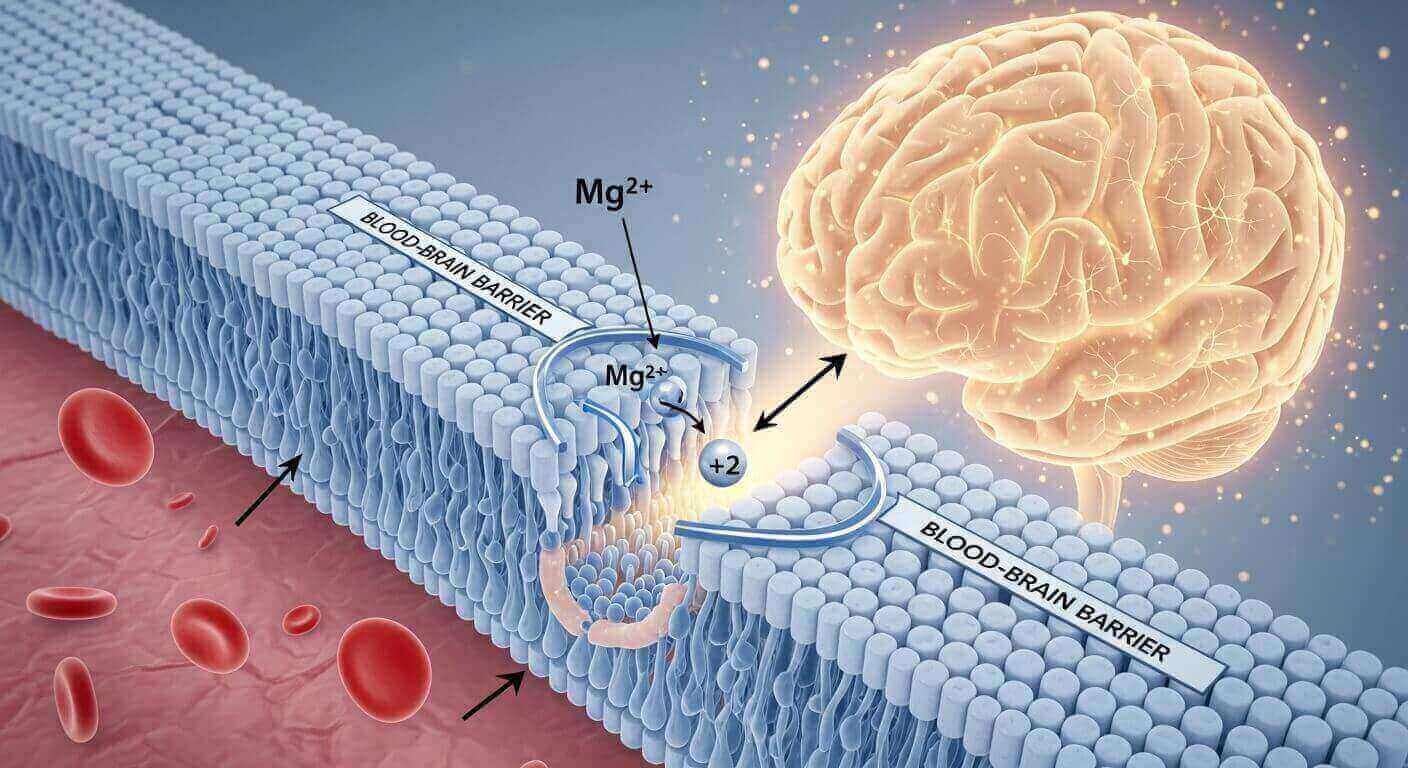
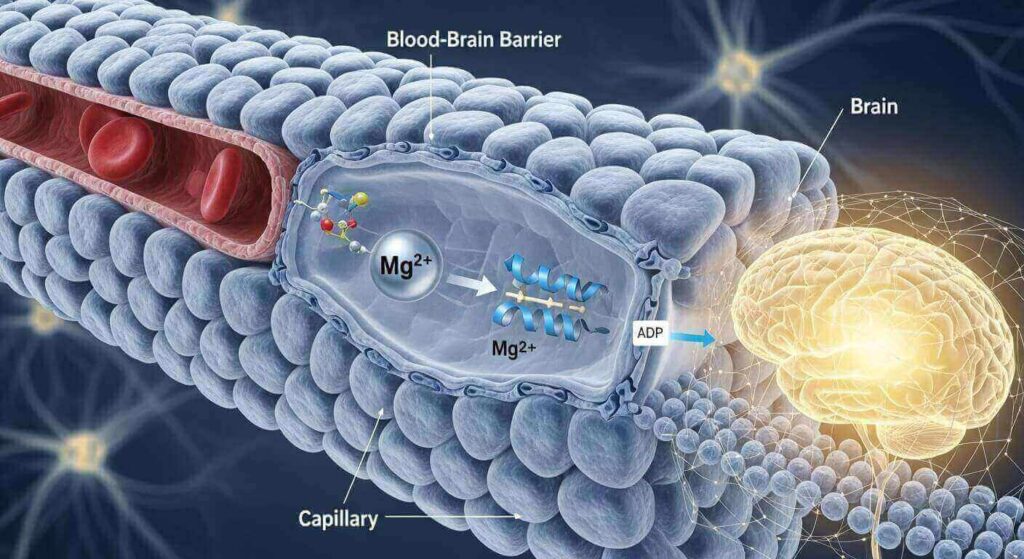
The brain is protected by a highly selective fortress called the Blood-Brain Barrier (BBB). This barrier decides what gets in and what stays out. It turns out, most magnesium supplements are simply denied entry.
This is where Magnesium L-Threonate changes the game. It’s a unique, scientifically-engineered form of magnesium specifically designed to do one thing: get past the fortress and deliver magnesium directly to your brain cells. This article is a deep dive into the science of Magnesium L-Threonate, exploring how it works, its proven benefits for memory, sleep, and mood, and how you can use it to reclaim your mental clarity.
Table of Contents
- What Exactly is Magnesium L-Threonate?
- The Key: Why Crossing the Blood-Brain Barrier Matters
- The Core Benefits of Boosting Brain Magnesium 🧠
- The Science: What the MIT Research Actually Found
- How to Use Magnesium L-Threonate: A Practical Guide
- Conclusion: Is Magnesium L-Threonate Right for You?
- Frequently Asked Questions (FAQ)
What Exactly is Magnesium L-Threonate?
Magnesium L-Threonate (often abbreviated as MgT) isn’t your average magnesium. It’s a patented compound created by scientists who “chelated”—or bound—a magnesium ion to L-Threonate. L-Threonate is a unique sugar compound derived from the metabolic breakdown of Vitamin C.
Why this specific combination? The L-Threonate acts as a “carrier,” essentially holding the magnesium’s hand and escorting it through the brain’s tight security system. This unique structure is the secret to its success.
The Key: Why Crossing the Blood-Brain Barrier Matters
Think of your brain as a VIP club with a very strict bouncer: the Blood-Brain Barrier (BBB). Its job is to protect your central nervous system from toxins, pathogens, and anything that could disrupt its delicate balance. While this is a vital protective measure, it also means most supplements and medications struggle to get inside.
This is the failure point for common magnesium supplements like Magnesium Oxide or Magnesium Citrate. While they are excellent for relaxing muscles, easing constipation, and supporting general health, studies show they have a negligible effect on the actual concentration of magnesium *inside your brain*.
Magnesium L-Threonate is the only form that has been shown in clinical studies to significantly increase magnesium levels *within the brain*. This means for the first time, we can directly supply the brain with the magnesium it needs to perform at its best.
The Core Benefits of Boosting Brain Magnesium 🧠
When your brain’s magnesium levels are optimized, a cascade of positive effects can occur. Here are the three most well-documented benefits of Magnesium L-Threonate.
Supports Cognitive Function and Memory
This is the “headline” benefit of MgT. Its power lies in its ability to support synaptic plasticity. Think of synapses as the connections between your brain cells (neurons). Learning and memory occur when these connections are strengthened, weakened, or new ones are formed. This flexibility is plasticity.
Magnesium L-Threonate has been shown to increase the density of these synapses, particularly in the hippocampus—the brain’s memory headquarters. More connections, and more flexible connections, mean better communication between neurons. This translates to:
- Improved short-term and long-term memory.
- Faster learning and recall.
- Reduced “brain fog” and enhanced mental clarity.
- Some research also suggests it supports the creation of BDNF (Brain-Derived Neurotrophic Factor), a protein that acts like “fertilizer” for new brain cells.
Promotes Deep, Restorative Sleep
If you struggle with insomnia, Magnesium L-Threonate may be a powerful ally. It works in two primary ways:
- Calms the Nervous System: Magnesium is a natural “brake” for the brain. It binds to and stimulates GABA receptors—the same receptors targeted by anti-anxiety drugs. GABA’s job is to quiet down “excitatory” neurotransmitters, helping to silence racing thoughts and prepare the brain for sleep.
- Regulates Melatonin: Magnesium plays a key role in the body’s production of melatonin, the hormone that governs your sleep-wake cycles.
By supporting both GABA and melatonin, MgT doesn’t just help you fall asleep; it promotes the deep, high-quality, restorative sleep that is essential for brain health and memory consolidation.
Helps Stabilize Mood and Ease Anxiety
The same GABA-calming mechanism that helps with sleep also makes Magnesium L-Threonate effective for anxiety and stress. Low magnesium levels are strongly linked to higher anxiety, as the brain’s “excitatory” signals are left unchecked.
Furthermore, magnesium is a vital co-factor in the creation of serotonin, the “happy hormone” that regulates mood, well-being, and happiness. By calming the nervous system and supporting serotonin production, MgT can be a powerful tool for promoting a stable, positive mood and building resilience against stress.
The Science: What the MIT Research Actually Found
The buzz around Magnesium L-Threonate isn’t just marketing hype. It originated from a landmark 2010 study published in the prestigious journal *Neuron*. Researchers from MIT, including lead author Dr. Guosong Liu, developed MgT (which they branded Magtein®) to find a way to overcome the BBB problem.
In their animal studies, they found that supplementing with Magnesium L-Threonate was the only method that effectively raised magnesium concentrations in the hippocampus. More importantly, this increase in brain magnesium directly correlated with enhanced synaptic plasticity and superior performance in learning and memory tasks.
Since then, human studies have followed, showing promising results. One 2016 study on older adults with mild cognitive impairment found that 12 weeks of Magnesium L-Threonate supplementation significantly improved cognitive function, effectively “reversing” measures of brain aging.
How to Use Magnesium L-Threonate: A Practical Guide
Recommended Dosage: How Much is Effective?
This is a critical point of confusion. Most successful clinical studies use a daily dose of 2,000 mg (2 grams) of the Magnesium L-Threonate *compound*.
It’s important to understand that this 2,000 mg dose of the *compound* provides approximately 144 mg of *elemental* magnesium. This may seem low compared to the RDA of 300-400mg, but remember: it’s not about the *total* dose, it’s about *absorption into the brain*. That 144mg is highly efficient at its job.
My advice: Always follow the specific instructions on the product label you purchase, as formulations can vary. Look for products that provide 2,000 mg of Magnesium L-Threonate (or Magtein®) per full daily serving.
Who Can Benefit Most?
While most adults can benefit from optimized magnesium levels, Magnesium L-Threonate is especially targeted for:
- Middle-aged and older adults concerned about age-related memory decline or cognitive impairment.
- Individuals suffering from chronic insomnia, racing thoughts, or poor sleep quality.
- People experiencing high stress, anxiety, or mood issues.
- Professionals or students looking to support their cognitive function (though it’s most studied in aging populations).
As with any supplement, it is essential to consult with your doctor before starting, especially if you are pregnant, nursing, have kidney disease, or are taking other medications.
Safety and Potential Side Effects
Magnesium L-Threonate is generally very well-tolerated. It is not associated with the laxative effect common to other forms like Oxide or Citrate, precisely because it’s designed for brain absorption, not digestive action.
However, in doses higher than recommended, any magnesium supplement can cause side effects like digestive upset, nausea, or headaches. The best practice is to start with the recommended dose (or even half) and see how your body responds.
Conclusion: Is Magnesium L-Threonate Right for You?
Magnesium L-Threonate represents a significant leap forward in nutritional neuroscience. It’s not just *more* magnesium; it’s *smarter* magnesium. By being the only form that can reliably cross the blood-brain barrier, it offers targeted support for our most vital organ.
If you are looking to support your brain health, sharpen your memory, finally get a good night’s sleep, or build resilience against stress, Magnesium L-Threonate is one of the most promising, science-backed supplements available today. It’s a direct investment in your cognitive future.
Frequently Asked Questions (FAQ) ❓
Q: What’s the difference between Magnesium L-Threonate and other forms like Glycinate or Citrate?
A: The simplest answer is: Brain vs. Body. Magnesium L-Threonate is for the *brain* (cognition, memory, sleep regulation). Magnesium Glycinate is also good for sleep and calming (as glycine is a calming neurotransmitter) but is used more for the body. Magnesium Citrate is primarily for the *body* (muscle relaxation, digestion, and correcting overall deficiency).
Q: How long does it take to see results from Magnesium L-Threonate?
A: Be patient. This is not an instant-fix drug. While some people report better sleep within the first week, the cognitive benefits (memory, clarity) take time to build. Clinical studies typically test subjects after 6 to 12 weeks of consistent daily use.
Q: Can I take Magnesium L-Threonate with my other magnesium supplement?
A: Yes, many people do. For example, you might take Magnesium L-Threonate in the evening for brain health and sleep, and take Magnesium Glycinate or Malate in the morning for energy and muscle support. Just be mindful of your total *elemental* magnesium intake and consult your doctor.
Q: What is the best time of day to take Magnesium L-Threonate?
A: Because of its powerful benefits for sleep quality and its calming effect on the nervous system, the most recommended time to take Magnesium L-Threonate is 1-2 hours before you go to bed.
Q: Is Magnesium L-Threonate safe to take long-term?
A: Based on current research, it is considered safe for long-term use when taken at the recommended dosage. It is a natural mineral compound. However, if you have any pre-existing health conditions, especially kidney-related, always maintain an ongoing conversation with your healthcare provider about your supplement regimen.