

Have you ever felt trapped in a cycle of unwanted thoughts and repetitive behaviors? You’re not alone. While many dismiss Obsessive-Compulsive Disorder (OCD) as just a “quirk” or a personality problem, modern neuroscience proves it’s a distinct brain disorder with identifiable causes. Recent breakthrough research, led by world-renowned experts like Professor Kwon Jun-soo at Seoul National University Hospital, has pinpointed the precise neural circuits that go haywire in OCD. This article will demystify the science behind your struggles and explore the cutting-edge treatments that are bringing new hope to millions.
Table of Contents
- 1. What Exactly is OCD (Obsessive-Compulsive Disorder)?
- 2. The Root Cause of OCD: When the Brain’s Balance is Broken
- 3. A Scientific Breakthrough: Pinpointing OCD’s Faulty Brain Circuits
- 4. New Hope for OCD Treatment: The Rise of Neuromodulation
- 5. Three Key Strategies for Managing OCD
1. What Exactly is OCD (Obsessive-Compulsive Disorder)?
According to the American Psychiatric Association, OCD is a mental health disorder characterized by two core components: obsessions and compulsions. It’s not about being neat or double-checking things occasionally. It’s a debilitating condition where, as leading experts define it, “a person gets caught in a cycle of unwanted, intrusive thoughts, images, or urges (obsessions), which triggers intensely distressing feelings, followed by repetitive behaviors or mental acts (compulsions) aimed at decreasing that distress.”
- Obsessions: These are persistent and irrational thoughts you can’t control. You know they don’t make sense, but they cause immense anxiety. Common examples include fears of contamination (“There are germs everywhere”), fears of causing harm to others, or an intense need for things to be “just right.”
- Compulsions: These are the repetitive actions you feel driven to perform to relieve the anxiety from the obsessions. This could be excessive hand-washing, checking locks dozens of times, counting, or arranging objects in a specific order.
The critical point is that this cycle provides only temporary relief. The underlying obsession remains, and the urge to perform the compulsion soon returns, often stronger than before. It’s an exhausting battle where logic is overshadowed by an overwhelming, involuntary impulse.
2. The Root Cause of OCD: When the Brain’s Balance is Broken
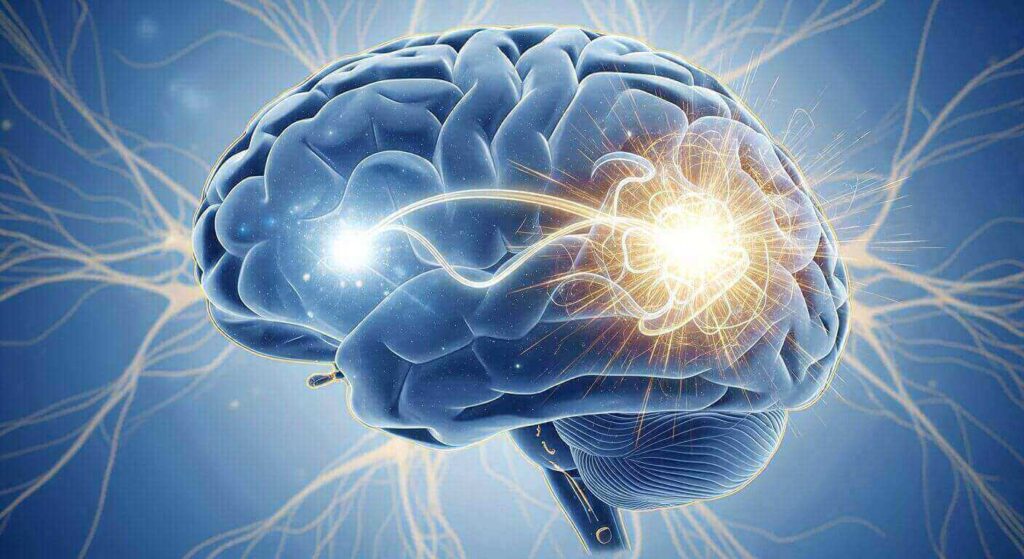
For decades, the cause of OCD was a mystery. Today, we know it stems from a communication breakdown in the brain—specifically, a hyperactivity in a neural pathway called the Cortico-Striato-Thalamo-Cortical (CSTC) loop. Think of it as a feedback loop between the parts of your brain that generate impulses and the parts that regulate them.
- The Impulse Generator (Striatum): Deep within the brain, the striatum acts like an engine, generating impulses, habits, and repetitive thoughts. It’s constantly sending “what if” signals.
- The Control Center (Prefrontal Cortex): The front of your brain, particularly the prefrontal cortex, acts as the command center for rational thought and impulse control. Its job is to evaluate the signals from the striatum and say, “No, that’s an irrational fear. Ignore it.”
In people with OCD, the neural “wiring” connecting these two regions is faulty. The striatum is overactive, like a car alarm that won’t shut off, while the prefrontal cortex is underactive and struggles to apply the brakes. This imbalance leaves the individual flooded with powerful urges they cannot rationally dismiss.
3. A Scientific Breakthrough: Pinpointing OCD’s Faulty Brain Circuits
This isn’t just a theory. Groundbreaking research led by experts like Dr. Kwon Jun-soo has used advanced neuroimaging techniques to map these faulty circuits for the first time. Using methods like Diffusion Tensor Imaging (DTI) and Diffusion Kurtosis Imaging (DKI)—powerful MRI techniques that trace the brain’s white matter pathways like a wiring diagram—scientists can now see the specific structural differences in the brains of OCD patients.
A. Imbalance in Brain Connectivity
The research revealed a clear pattern of imbalanced connectivity between the striatum and the cerebral cortex in individuals with OCD:
| Brain Region | Function | Connectivity Change in OCD |
|---|---|---|
| Prefrontal Cortex | Rational judgment, impulse control | Decreased connectivity |
| Parietal Lobe | Primary sensory processing (e.g., sense of touch) | Increased connectivity |
This explains so much. The weakened connection to the prefrontal cortex means a failure to control impulses. Simultaneously, the heightened connection to the sensory cortex makes things *feel* more intense and real—that feeling of “dirt” on your hands becomes overwhelmingly vivid and impossible to ignore. It’s a perfect storm of weakened control and heightened sensory alarm.
B. Microstructural Abnormalities in the Striatum
Furthermore, the studies found that the striatum itself showed microstructural abnormalities. The density of neurons appeared to be lower, creating a “sparse” or less robust structure. This physical difference suggests a deep-seated biological basis for the disorder, solidifying the fact that OCD is a true neurological condition.
4. New Hope for OCD Treatment: The Rise of Neuromodulation
If OCD is caused by a faulty brain circuit, then it stands to reason that directly modulating that circuit could be an effective treatment. This is the principle behind Neuromodulation, a revolutionary field of medicine that is changing how we treat brain disorders.
Based on these research findings, clinicians are now exploring treatments like Transcranial Magnetic Stimulation (TMS). TMS is a non-invasive procedure, FDA-approved for OCD treatment, that uses targeted magnetic pulses to stimulate or inhibit specific areas of the brain. The goal is to “recalibrate” the faulty CSTC loop—strengthening the underactive prefrontal cortex and calming the overactive striatum. This approach moves beyond managing symptoms and aims to correct the root cause of the problem at the circuit level.
5. Three Key Strategies for Managing OCD
Understanding the science behind OCD empowers you to seek the right help. If you are struggling, remember that OCD is a highly treatable condition. Here are three crucial steps to take:
- Recognize it as a Brain Disorder and Seek Early Treatment. Just like diabetes or heart disease, OCD is a medical condition. There is no shame in it. The sooner you seek help from a qualified mental health professional, the better your prognosis will be. Delaying treatment can allow the neural pathways to become more entrenched.
- Combine Therapy and Medication. The gold standard for OCD treatment is a combination of medication and a specific type of therapy. SSRIs (Selective Serotonin Reuptake Inhibitors) are often prescribed to help reduce the intensity of the obsessions and compulsions. This is most effective when paired with Exposure and Response Prevention (ERP), a cognitive-behavioral therapy that trains your brain to resist performing compulsions and gradually teaches the prefrontal cortex to regain control.
- Let Go of Perfectionism. While not the cause, a tendency toward perfectionism can fuel OCD. Acknowledge that the drive for 100% certainty is part of the disorder. Learning to accept uncertainty and embrace “good enough” is a powerful mental tool. Be compassionate with yourself; the world will not fall apart if everything isn’t perfect.
Conclusion
The latest neuroscience research definitively shows that OCD is not a personal failing but a disorder of the brain’s circuitry. This understanding removes stigma and paves the way for more targeted, effective treatments. By viewing OCD through a scientific lens, we can embrace the hope that comes with new discoveries and take active, informed steps toward recovery.
Frequently Asked Questions About OCD
Q: Is OCD a rare condition?
A: Not at all. According to the National Institute of Mental Health (NIMH), OCD affects about 1.2% of U.S. adults, which translates to over 2-3 million people. It affects men, women, and children of all backgrounds.
Q: Can OCD be cured completely?
A: While there is no definitive “cure,” OCD is a very treatable condition. With the right combination of therapy (like ERP), medication, and potentially newer treatments like TMS, many people can achieve significant symptom reduction and live full, productive lives where OCD no longer dominates their day.
Q: Is being very organized or a “clean freak” the same as having OCD?
A: No. This is a common misconception. People who are neat or organized find satisfaction in their habits. In contrast, people with OCD feel tormented by their compulsions. The behaviors are a source of distress, not pleasure, and they are performed to alleviate intense anxiety, often taking up hours of their day and significantly impairing their quality of life.
Q: How does TMS treatment for OCD work?
A: TMS uses focused magnetic fields to stimulate nerve cells in the brain regions involved in OCD, particularly the prefrontal cortex. The procedure is non-invasive (no surgery or anesthesia) and is performed in an outpatient setting. By repeatedly stimulating these areas, TMS helps restore normal communication within the brain’s CSTC circuit, reducing OCD symptoms over time.
Q: What should I do if I think I or a loved one has OCD?
A: The first and most important step is to consult with a mental health professional, such as a psychiatrist or a psychologist specializing in OCD. They can provide an accurate diagnosis and develop a personalized treatment plan. Organizations like the International OCD Foundation (IOCDF) offer excellent resources and directories to find specialists in your area.