

Unlock vitality after 50 with a science-backed diet. Discover 10 essential anti-aging foods to fight inflammation, boost brain health, and master healthy aging.
Have you ever felt like your body started playing by a new set of rules the moment you turned 50? You’re not alone. The way you ate in your 30s and 40s suddenly doesn’t seem to work anymore. This isn’t just a feeling; it’s a biological reality. After 50, our bodies undergo significant shifts, including muscle and collagen loss, and most critically, a growing resistance to insulin. Continuing with old eating habits isn’t just ineffective; it can accelerate aging.
This guide is designed to be your new playbook. We’ll dive deep into the science of aging and reveal a powerful dietary strategy centered on combating the two main culprits: chronic inflammation and insulin resistance. Based on principles highlighted by experts like Dr. Sten Ekberg, we’ll explore 10 essential foods that are not just nutritious but are strategic tools for slowing the aging process, protecting your brain, and reclaiming your vitality. Let’s get started. 😊
Table of Contents
- Why Your Diet Must Change After 50: Understanding the Core Issues
- Part 1: Top 5 Anti-Aging Foods for Brain Health & Vascular Elasticity
- Part 2: 5 Essential Foods for Blood Sugar Control & Gut Health
- Conclusion: Your Actionable Blueprint for Healthy Aging
- Frequently Asked Questions About Anti-Aging Diets
Why Your Diet Must Change After 50: Understanding the Core Issues 🤔
The fundamental reason we need a new dietary approach after 50 comes down to two interconnected processes: chronic inflammation and insulin resistance. Think of chronic inflammation as a low-level fire constantly smoldering inside your body. It doesn’t cause overt pain, but it silently damages cells and is a root cause of most age-related diseases, from heart disease to arthritis. Insulin resistance is when your cells stop responding properly to the hormone insulin, forcing your body to produce more and more of it. This not only leads to weight gain, especially around the belly, but also fuels that inflammatory fire.
Our goal is to choose foods that douse these flames and restore your body’s sensitivity to insulin. This isn’t about restriction; it’s about strategic replacement and focusing on nutrient density to give your body the tools it needs to thrive.
Part 1: Top 5 Anti-Aging Foods for Brain Health & Vascular Elasticity 🧠
Protecting your cognitive function and keeping your blood vessels flexible are paramount for healthy aging. These five foods are foundational for that mission.
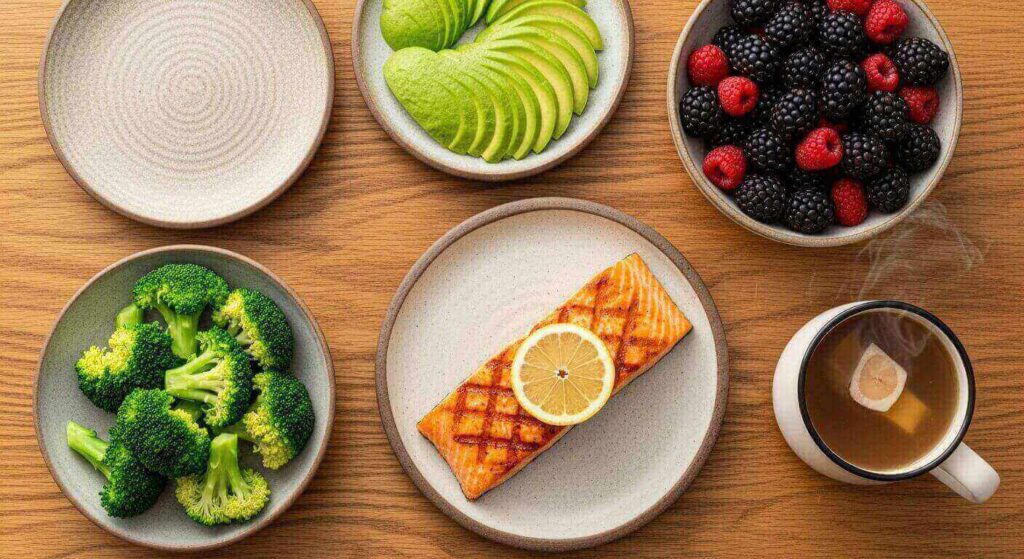
1. Fatty Fish (Salmon & Sardines): The Omega-3 Powerhouse 🐟
Omega-3 fatty acids, particularly DHA and EPA, are literal building blocks for your brain. They are crucial for maintaining brain cell integrity and communication. More importantly, they are powerful anti-inflammatory agents that help normalize the body’s inflammatory response.
Actionable Tip: Aim for at least three servings of fatty fish per week. If this isn’t realistic, a high-quality fish oil supplement is not an option—it’s a necessity.
2. Avocado: The Fiber-Rich Fat for Your Arteries 🥑
Avocados are a unique fruit packed with monounsaturated fats that help improve vascular elasticity. They are also incredibly low in carbohydrates and high in fiber, a winning combination for stabilizing blood sugar and insulin levels, directly combating insulin resistance.
3. Cruciferous Vegetables: The Body’s Detox Crew 🥦
Vegetables like broccoli, kale, and cauliflower contain a compound called sulforaphane, which powerfully supports the liver’s detoxification pathways. A healthy liver is essential for balancing hormones like estrogen and clearing out inflammatory byproducts, making these vegetables critical for your anti-aging diet.
4. Pastured Eggs: The Complete Brain Food 🍳
Forget the outdated advice to avoid egg yolks. The yolk is a nutritional goldmine, containing choline for memory, lutein and zeaxanthin for vision protection, and cholesterol, which is a vital component of brain cells. “Pastured” eggs (from hens raised on pasture) have a significantly higher nutrient profile than their caged counterparts.
5. Bone Broth: The Collagen and Glycine Restorer 🥣
As collagen production plummets after 50, our skin, joints, and gut lining suffer. Bone broth provides a bioavailable source of collagen and glycine, an amino acid that supports the gut mucosal lining, helps heal joints, and can even improve sleep quality.
Part 2: 5 Essential Foods for Blood Sugar Control & Gut Health 📊
Minimizing blood sugar spikes is perhaps the most impactful dietary change you can make. These five foods are your allies in this effort.
6. Berries (The Right Kind): Low-Glycemic Antioxidants 🍓
When it comes to fruit, you have to be selective. A “safe” Glycemic Index (GI) for those over 50 should ideally be under 25. Blackberries and raspberries fit the bill perfectly with a GI of 25, thanks to their high fiber content. Blueberries, while healthy, have a GI of 53, so they should be consumed in moderation.
7. Nuts and Seeds: Healthy Fats with a Caveat 🥜
Macadamia nuts, pecans, and almonds are excellent low-GI snacks. However, be cautious with Brazil nuts. While they are a fantastic source of the antioxidant mineral selenium, just one or two nuts can meet your daily needs. Exceeding this can lead to selenium toxicity (safe upper limit is 400 mcg).
8. Dark Chocolate (85%+): The Blood Flow Enhancer 🍫
The flavanols in dark chocolate are proven to improve the function of the endothelium (the lining of your blood vessels), which enhances blood flow and reduces blood pressure. The key is to choose a chocolate with at least 85% cacao content to ensure you get the benefits without the blood-sugar-spiking added sugars.
9. Fermented Vegetables: The Microbiome Boosters 🥬
The diversity of our gut microbiome naturally declines with age and antibiotic use. Fermented foods like kimchi and sauerkraut repopulate your gut with beneficial bacteria, which is essential for a strong immune system, proper nutrient absorption, and even mood regulation.
10. Grass-Fed Liver: Nature’s Multivitamin 🥩
Grass-fed beef liver is arguably the most nutrient-dense food on the planet. It is an unparalleled source of iron, vitamin B12, folate, and vitamin A—nutrients that are commonly deficient in adults over 50. These nutrients are vital for energy production at a cellular level (mitochondrial function). If the taste is a barrier, desiccated (dried) liver capsules are an excellent alternative.
Conclusion: Your Actionable Blueprint for Healthy Aging ✅
Navigating your health after 50 is not about fighting against your body; it’s about working with it. By adopting a diet that actively reduces inflammation and manages insulin, you are taking direct control over your aging process. Here are the key takeaways to implement today:
- Reset Your Plate: Prioritize foods with a Glycemic Index of 25 or less to restore your body’s insulin sensitivity.
- Don’t Guess, Supplement: If you aren’t consistently eating fatty fish, a high-quality Omega-3 supplement is non-negotiable for brain and heart health.
- Invest in Kitchen Skills: The single best investment in your long-term health is learning to cook these whole foods yourself. It’s the ultimate form of health sovereignty.
Frequently Asked Questions About Anti-Aging Diets ❓
Q: How often should I really eat fatty fish to see anti-aging benefits?
A: For optimal anti-inflammatory and brain health benefits, aiming for a 4-6 ounce (113-170 gram) serving of fatty fish like salmon, mackerel, or sardines 2-3 times per week is the gold standard. If you fall short, supplement with a fish oil that provides at least 1,000 mg of combined EPA and DHA daily.
Q: Are all nuts and seeds equally good for a diet after 50?
A: Not quite. While most are beneficial, prioritize those highest in healthy fats and lowest in inflammatory omega-6s, like macadamia nuts, pecans, and walnuts. As mentioned, be very mindful of Brazil nuts due to their high selenium content—limit to 1-2 per day.
Q: Why is grass-fed liver recommended over conventional liver?
A: The liver acts as a filter for toxins but also stores vital nutrients. A grass-fed cow lives a healthier life, resulting in a liver that is far richer in vitamins (like A and B12) and minerals and has a better fatty acid profile. It also ensures you are not consuming stored toxins from a conventionally raised animal’s diet.
Q: Can I get enough collagen for my joints and skin from bone broth alone?
A: While bone broth is an excellent source, the collagen content can vary widely. For targeted joint and skin support, many people find that adding a high-quality hydrolyzed collagen peptide powder to their routine (in coffee, smoothies, or the broth itself) provides a more consistent and therapeutic dose.
Q: What is the single most important dietary change to make after 50?
A: The consensus among functional health experts is to drastically reduce or eliminate added sugars and refined carbohydrates. This single action has the most profound impact on lowering insulin resistance and chronic inflammation, which are the primary drivers of accelerated aging.