
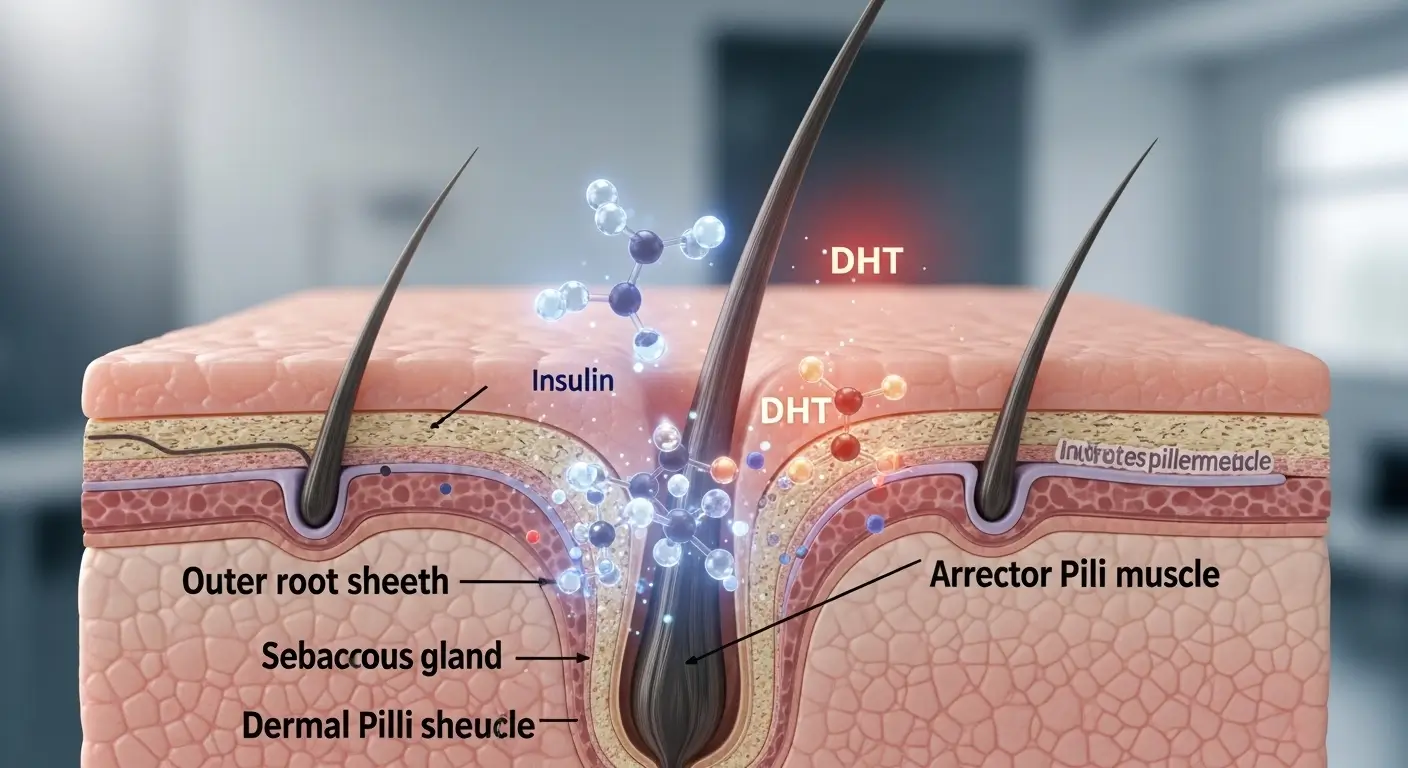
Discover how insulin and DHT interact to drive hair loss and hormonal imbalances. Learn the science of metabolic health and androgen control in this expert guide.
Quick Navigation
- 1. The Biological Connection Between Insulin and DHT
- 2. How Insulin Resistance Accelerates DHT-Driven Hair Loss
- 3. Hyperinsulinemia and the SHBG Factor: A Hormonal Domino Effect
- 4. Insulin and DHT in PCOS: The Metabolic Roots of Female Androgen Excess
- 5. Strategies to Lower Insulin and DHT Naturally
- 6. Expert Q&A: Understanding Metabolic Androgens
1. The Biological Connection Between Insulin and DHT
When we talk about hormonal health, we often treat the metabolic system and the endocrine system as separate entities. However, the synergy between insulin and DHT (Dihydrotestosterone) proves that our blood sugar regulation is inextricably linked to our androgenic profile. Insulin is a master storage hormone, but when levels remain chronically high, it acts as a powerful signaling molecule that alters how our body produces and utilizes male hormones.
DHT is a potent metabolite of testosterone, responsible for male characteristics but also infamous for its role in scalp hair follicle miniaturization. The bridge between insulin and DHT lies in the enzyme 5-alpha reductase. Elevated insulin levels have been clinically shown to upregulate the activity of this enzyme, effectively turning your body into a DHT-producing factory. This is why metabolic dysfunction often precedes visible hormonal symptoms like cystic acne or thinning hair.

2. How Insulin Resistance Accelerates DHT-Driven Hair Loss
Many individuals struggling with pattern baldness focus solely on topical blockers, yet they miss the internal driver: insulin and DHT-related hair loss. In a state of insulin resistance, the body is flooded with insulin that the cells no longer respond to. This surplus insulin does not just float harmlessly; it aggressively stimulates the androgen receptors in the scalp.
High insulin creates a pro-inflammatory environment that sensitizes hair follicles to even “normal” levels of DHT. If you have a genetic predisposition to androgenic alopecia, insulin resistance acts as an accelerant, shortening the growth (anagen) phase of the hair and hastening the transition to the shedding (telogen) phase.
3. Hyperinsulinemia and the SHBG Factor: A Hormonal Domino Effect
One of the most critical, yet overlooked, mechanisms in the insulin and DHT relationship is the role of Sex Hormone-Binding Globulin (SHBG). SHBG is a protein produced by the liver that acts like a “buffer,” binding to excess hormones like testosterone and DHT so they cannot freely enter cells and cause damage.
When you have hyperinsulinemia, the liver’s production of SHBG drops significantly. With less SHBG available, the amount of “free” or active testosterone in your blood spikes. More free testosterone means more substrate for 5-alpha reductase to convert into DHT. This double-whammy—higher enzyme activity and more available raw material—is why managing blood sugar is non-negotiable for hormonal balance.
4. Insulin and DHT in PCOS: The Metabolic Roots of Female Androgen Excess
For women, the insulin and DHT connection is the primary driver of Polycystic Ovary Syndrome (PCOS). In the female body, insulin resistance directly stimulates the ovaries to produce excess testosterone. This androgen excess then manifests as hirsutism (unwanted facial hair), severe acne, and androgenic thinning of the scalp hair.
Clinical studies have repeatedly shown that when women with PCOS adopt strategies to improve insulin sensitivity, their DHT levels fall, and their symptoms begin to resolve. This confirms that the insulin-androgen axis is a central pillar of metabolic and reproductive health in women.
5. Strategies to Lower Insulin and DHT Naturally
If you suspect that insulin and DHT are wreaking havoc on your health, the focus should be on systemic metabolic repair. Here are the most effective, evidence-based interventions:
- Glycemic Control: Transitioning to a whole-food, low-glycemic diet prevents the insulin spikes that trigger androgen production. Fiber is your best friend here, as it slows glucose absorption.
- Resistance Training: Lifting weights increases the insulin sensitivity of your muscle tissue, allowing your body to clear glucose with much less insulin.
- Strategic Supplementation: Compounds like Myo-inositol, Magnesium, and Zinc support insulin signaling and can naturally inhibit excess 5-alpha reductase activity.
- Stress Management: High cortisol (the stress hormone) elevates blood sugar, which in turn raises insulin. Managing stress is a direct way to manage your insulin and DHT levels.
6. Expert Q&A: Understanding Metabolic Androgens ❓
Q: Can a high-sugar diet increase DHT levels?
A: Yes. High sugar intake leads to frequent insulin spikes, which upregulate the enzymes responsible for converting testosterone into DHT, thereby increasing systemic DHT levels.
Q: Is insulin resistance always present in cases of early hair loss?
A: While genetics play a massive role, insulin resistance is a very common “silent” contributor that makes the hair loss more aggressive and harder to treat with standard topicals.
Q: Will lowering insulin reverse DHT-related hair thinning?
A: Improving insulin sensitivity can halt further miniaturization and, in many cases, improve hair density by reducing the inflammatory and androgenic pressure on the follicles.
Understanding the intricate dance between insulin and DHT is the first step toward reclaiming your hormonal health. By focusing on metabolic foundations, you address the root cause rather than just the symptoms. If you found this guide helpful, please share it with others navigating their hormonal journey! 😊
Medical Disclaimer: This article is for informational purposes only and does not substitute for professional medical advice, diagnosis, or treatment. Always consult with a qualified healthcare provider before making changes to your diet, exercise, or supplement regimen.
“Insulin and DHT: The Hidden Connection Behind Hormonal Hair Loss”에 대한 2개의 생각