
Discover the Best Scalp Care Products for Dry Scalp in 2026. From biotech serums to soothing oils, explore our expert guide to healing itchiness and restoring hydration.
If you felt like 2025 was the year of “scalp detox” and aggressively removing buildup, you weren’t alone. But let’s be real—sometimes we overdo it. As we settle into 2026, the pendulum has swung. The new frontier in hair wellness isn’t just about cleaning; it’s about restoration, hydration, and barrier repair. If you are battling tight, itchy, or flaking skin under your hair, you are looking for the Best Scalp Care Products for Dry Scalp in 2026.
We are seeing a massive shift towards “skinification“—treating the scalp with the same high-grade ingredients we use on our faces, like Hyaluronic Acid, Ectoin, and Centella Asiatica. It’s no longer enough to just wash and go. To truly banish the “winter snow” on your shoulders, you need a routine that respects your microbiome.
I’ve tested the latest innovations and revisited the classics to bring you a definitive, expert-backed guide to soothing your dry scalp this year. Let’s dive deep.
Table of Contents
- 1. Understanding Dry Scalp vs. Dandruff in 2026
- 2. What Defines the Best Scalp Care Products in 2026?
- 3. Best Pre-Wash Oils and Treatments
- 4. Hydrating & Sulfate-Free Shampoos
- 5. Post-Wash Serums: The Game Changers
- 6. The Role of Exfoliation for Dry Scalp
- 7. Common Mistakes Worsening Dry Scalp
- 8. Frequently Asked Questions (FAQ)
Understanding Dry Scalp vs. Dandruff in 2026
Before we add anything to our cart, we need to clear up a massive misconception that still persists. Dry scalp is not the same as dandruff.
- Dry Scalp: Your skin lacks moisture. The flakes are small, white, and dry. The itching feels like “tightness.” This is a hydration and barrier issue.
- Dandruff (Seborrheic Dermatitis): This is caused by an overgrowth of yeast (Malassezia). The flakes are larger, oily, and often yellowish.
In 2026, diagnostics have improved. If your problem is dryness, using a harsh anti-dandruff shampoo containing zinc pyrithione might actually strip your natural oils further, worsening the problem. The goal for dry scalp is to replenish lipids and lock in water.
What Defines the Best Scalp Care Products in 2026?
The beauty industry has evolved. We aren’t just looking for “moisturizing” on the label anymore. The Best Scalp Care Products for Dry Scalp in 2026 must meet specific criteria regarding ingredients and technology:
1. Microbiome-Friendly Certification:
Just like your gut, your scalp has a microbiome. Products in 2026 are formulated with prebiotics and postbiotics to feed the good bacteria that keep your scalp barrier intact.
2. Biotech Ingredients:
We are moving away from resource-heavy harvesting. Expect to see lab-grown fermented ingredients that offer higher potency and purity than traditional plant extracts.
3. pH Balancing:
The scalp is slightly acidic (around pH 5.5). The best products honor this. Alkaline products disrupt the acid mantle, leading to moisture loss and bacteria proliferation.
Best Pre-Wash Oils and Treatments for Dry Scalp
Think of this as the “double cleansing” step for your head. Pre-wash treatments protect your scalp from the stripping effects of water and shampoo.
The Power of Argan Oil
Argan oil remains a gold standard in 2026. Rich in Vitamin E and fatty acids, it mimics the sebum your scalp naturally produces. Look for Cold-Pressed, Organic Argan Oil. Massage it in 30 minutes before showering to soften flakes and moisturize the skin deep down.
Coconut Oil Masks: A Classic for a Reason
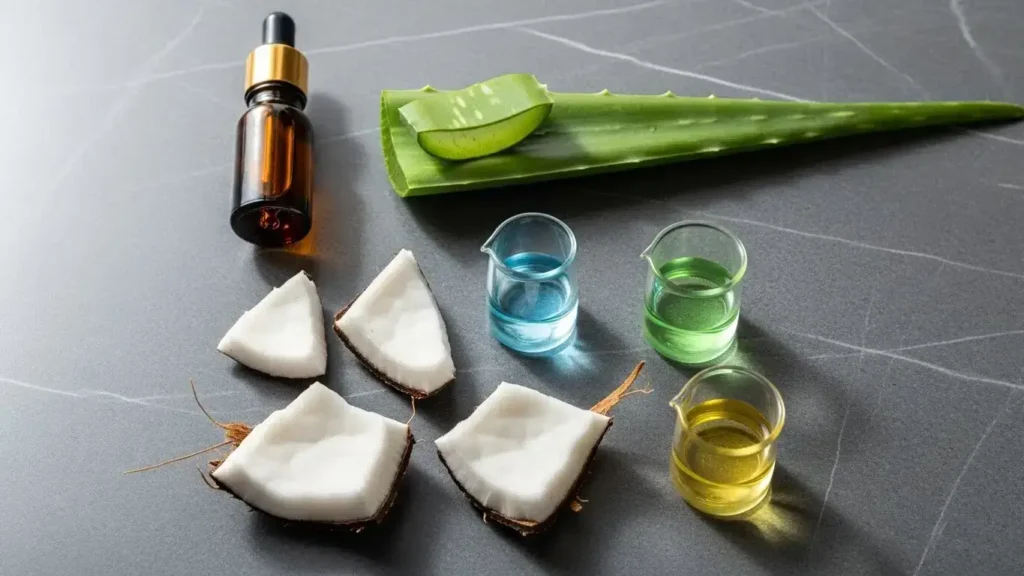
While some find it heavy for hair strands, for a dry scalp, coconut oil is a miracle worker due to its molecular structure allowing it to penetrate the skin barrier. Pro Tip: In 2026, look for fractionated coconut oil blends infused with soothing botanicals like chamomile or tea tree (at low percentages) to calm inflammation instantly.
Hydrating & Sulfate-Free Shampoos
If your shampoo lathers up like a bubble bath, it might be the enemy. Sulfates (SLS/SLES) are surfactants that strip away natural oils. For a dry scalp, you need a cleanser that acts more like a skincare milk.
Key Ingredients to Look For:
- Aloe Vera: The first ingredient should often be Aloe juice instead of water for maximum soothing.
- Hyaluronic Acid: Yes, in shampoo! It attracts moisture to the scalp surface while you wash.
- Manuka Honey: A humectant that also has antibacterial properties, perfect for soothing scratch-induced micro-tears.
Post-Wash Serums: The Game Changers
This is the category that has exploded in 2026. A leave-in scalp serum is non-negotiable for dry scalp sufferers. These are lightweight, water-based formulas that you apply to a damp or dry scalp daily.
Biotech Barrier Repair Serums
The top-rated serums this year feature Ectoin and Ceramides. Ectoin is a powerful stress-protection molecule that binds water to the skin cells, preventing dehydration even in harsh climates. Using a serum with a nozzle tip allows for precise application directly to the itchy spots without greasing up your roots.
The Role of Exfoliation for Dry Scalp
You might think, “My scalp is dry, why would I scrub it?” Here is the nuance: dead skin cells block moisture from penetrating. You need to remove the flakes to hydrate the fresh skin underneath.
However, Physical Scrubs (Salt/Sugar) are “Out” for dry scalps in 2026. They are too abrasive and can cause micro-tears.
Instead, the Best Scalp Care Products for Dry Scalp in 2026 utilize Chemical Exfoliants like:
- PHA (Polyhydroxy Acids): The gentle cousin of AHAs. They exfoliate the surface while acting as a humectant to draw in moisture.
- Lactic Acid: Excellent for hydration and gentle resurfacing.
- Salicylic Acid (in low concentrations): Helps dissolve the “glue” holding dry flakes to your scalp.
Common Mistakes Worsening Dry Scalp
Even with the best products, bad habits can sabotage your progress. Here is what to avoid:
- Washing with Hot Water: Hot water is a lipid solvent. It melts away your scalp’s protective barrier. Switch to lukewarm.
- Over-Washing: If your scalp is dry, you likely don’t need to wash every day. Aim for 2-3 times a week.
- Ignoring the weather: In winter, the dry air sucks moisture from your skin. 2026 trends suggest using a humidifier in your bedroom as part of your hair care routine.
- Scratching: It feels good in the moment, but it creates inflammation and leads to more dryness. Use a cooling serum instead.
Conclusion: Your Path to a Hydrated Scalp
Navigating the aisle of Best Scalp Care Products for Dry Scalp in 2026 doesn’t have to be overwhelming. The key takeaway is to treat your scalp with the same kindness you treat your face.
Start with a gentle, sulfate-free wash, incorporate a weekly chemical exfoliant (PHA is your best friend), and commit to a daily hydration serum containing Ectoin or Hyaluronic Acid. By restoring your scalp’s barrier, you aren’t just stopping the itch—you are laying the foundation for healthier, shinier hair growth.
Frequently Asked Questions (FAQ)
Q: How do I know if I have dry scalp or dandruff?
A: Dry scalp typically produces small, white, dry flakes and feels tight. Dandruff (seborrheic dermatitis) usually causes larger, greasy, yellowish flakes and is often associated with a yeast imbalance, not just a lack of moisture.
Q: Can I use body lotion on my dry scalp?
A: It is not recommended. Body lotions often contain heavier oils or fragrances that can clog hair follicles (comedogenic) or leave a greasy residue. It is best to use serums specifically formulated for the scalp.
Q: How often should I use scalp oil?
A: For a dry scalp, applying a pre-wash oil treatment 1-2 times a week is ideal. If you are using a lightweight leave-in serum, daily application is often recommended to maintain hydration levels.
Q: Is apple cider vinegar good for dry scalp?
A: When diluted properly, apple cider vinegar can help balance the scalp’s pH and soothe itchiness. However, using it undiluted is too acidic and can worsen dryness and irritation.
Disclaimer: The information provided in this article is for educational and informational purposes only and does not constitute medical advice. It is not intended to be a substitute for professional medical advice, diagnosis, or treatment. Always seek the advice of your physician or other qualified health provider with any questions you may have regarding a medical condition.
“Best Scalp Care Products for Dry Scalp in 2026: The Ultimate Guide”에 대한 2개의 생각