
Is Your Instant Ramen Habit Secretly Sabotaging Your Health? We scientifically debunk the myths about **instant noodles** (preservatives, palm oil, MSG) and offer five physician-approved hacks to transform your quick **ramen** fix into a surprisingly **healthy** and guilt-free meal. Stop worrying—start upgrading!
Let’s be real. We all have that one memory, probably from college or a late night at the office: the glorious, comforting crackle of an **instant ramen** package being opened. It’s affordable, it’s fast, and honestly, it tastes incredible. But here’s the kicker—every slurp comes with a tiny jolt of guilt. I know I used to feel it, too. I’d think, “Am I poisoning myself with preservatives and saturated fat?”
For decades, instant **noodles** have been branded as the ultimate “junk food.” High in carbs, low in virtually everything else, and packed with sodium. The question is, is this reputation deserved? Or is it a holdover from outdated information? As someone who has spent years diving deep into nutritional science, I can tell you that the truth is far more nuanced. It’s not about banning **ramen**; it’s about learning how to **eat ramen healthy**.
Table of Contents: A Guide to Healthier Instant Noodles 📝
- Instant Ramen Health Myths Debunked: The Scientific Truth 🔬
- The Real Challenge: Nutritional Deficiencies in Instant Noodles 😩
- 5 **Healthy Ramen** Hacks for a Guilt-Free Meal 🥬
- The **Instant Noodle** Sodium Challenge: A Practical Calculator 📊
- Key Takeaways: Mastering the Art of **Healthy Instant Noodles** 🍜
- **Ramen Health** FAQ: Your Questions Answered ❓
Instant Ramen Health Myths Debunked: The Scientific Truth 🔬
Before we talk about making **ramen healthier**, we need to address the elephant in the pantry. You’ve probably heard these three myths a thousand times. Let’s look at what the food science and nutrition experts actually say.
Myth 1: Preservatives in Instant Noodle Blocks? (The Drying Process Explained)
This is perhaps the most common misconception, fueled by the long shelf life of **instant noodles** (often 6+ months). The truth is, most commercial **ramen** does not contain chemical preservatives like BHA or BHT in the noodle block itself.
💡 Food Science Fact:
The preservation comes from the manufacturing process. The noodles are cooked, then rapidly **fried or air-dried**. This intense heat sterilization kills all microbes, and the process reduces the **water activity (Aw)** to less than 10%. Microorganisms simply cannot thrive in such a dry environment, eliminating the need for traditional preservatives.
Myth 2: The Truth About Palm Oil (And Cholesterol Levels)
Palm oil, used for the frying process, is a common source of concern. While it is a **vegetable oil**, it is higher in **saturated fat** than oils like canola or olive oil. The worry is that this saturated fat increases LDL (or “bad”) cholesterol.
Here’s the scientific consensus: while palm oil *can* raise LDL cholesterol compared to unsaturated oils, its effect is significantly less detrimental than trans fats, which have been largely eliminated from the US food supply. For the occasional serving, the saturated fat from the palm oil in your **instant noodles** is a minor player compared to your overall daily diet (e.g., fast-food burgers or heavy desserts). Focus on your total fat intake!
Myth 3: Is Instant Noodle Seasoning a ‘MSG Bomb’?
Monosodium glutamate (MSG) is one of the most unjustly maligned ingredients. I’ll be honest—most brands still use MSG or closely related flavor enhancers. However, the FDA classifies MSG as **Generally Recognized as Safe (GRAS)**, and numerous large-scale reviews have found no scientific basis for the severe negative health effects often claimed.
⚠️ A Note on MSG Sensitivity:
While rare, some individuals report mild, temporary symptoms (like headache or flushing) after consuming large amounts of MSG. If you’re sensitive, look for brands that advertise “No Added MSG,” though they often replace it with high-sodium alternatives like yeast extract or hydrolyzed protein.
The Real Challenge: Nutritional Deficiencies in Instant Noodles 😩
So, if the myths are mostly false, what’s the actual health risk? It boils down to two things: **nutritional imbalance** and **excess sodium**. A standard package of **ramen** is a nutritional wasteland, delivering massive amounts of carbs and sodium with almost no protein, fiber, or micronutrients (Vitamins A, C, Iron). This imbalance is the real reason you feel guilty—and hungry again an hour later!
5 **Healthy Ramen** Hacks for a Guilt-Free Meal 🥬
The good news? You can easily fix the nutritional imbalance. You don’t have to quit **instant noodles**; you just need to turn it into a balanced meal. Here are my favorite, simple hacks.
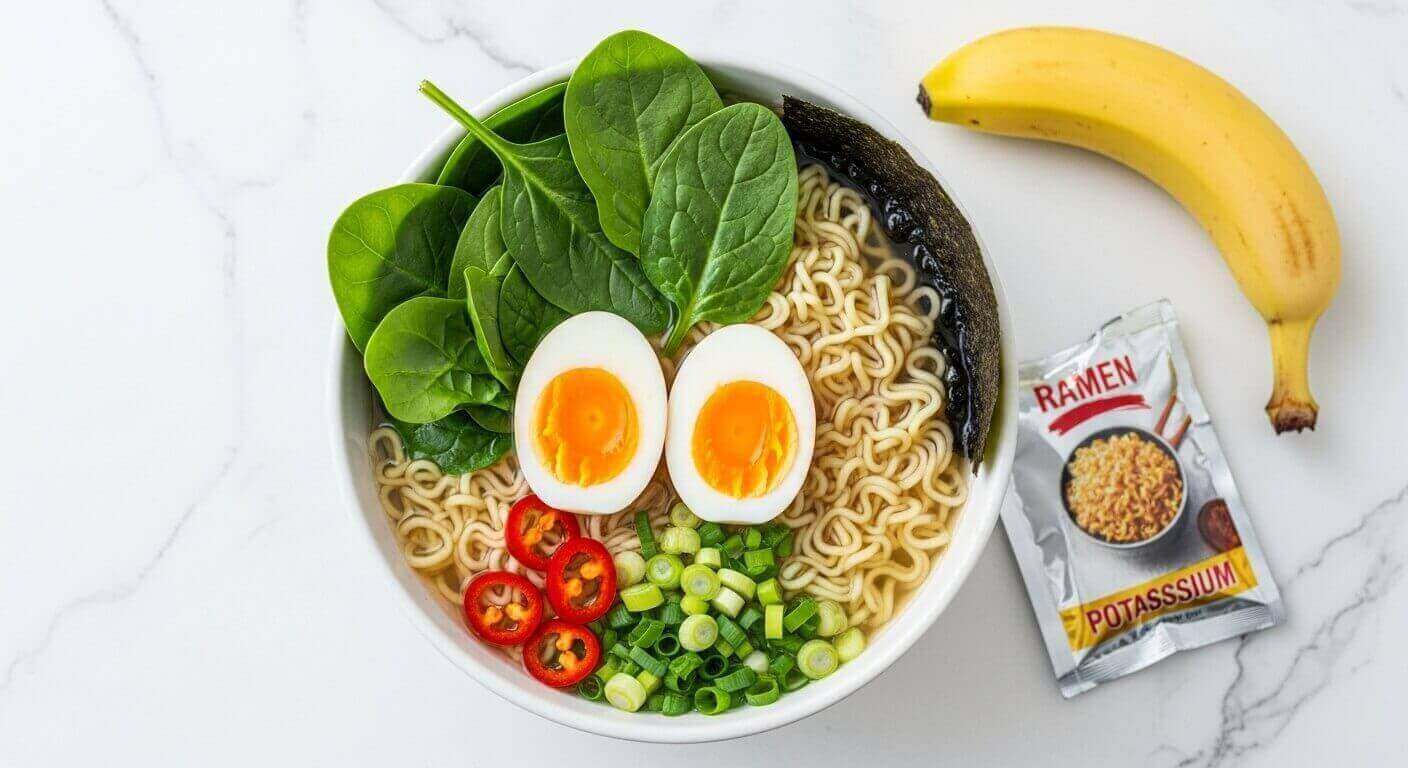
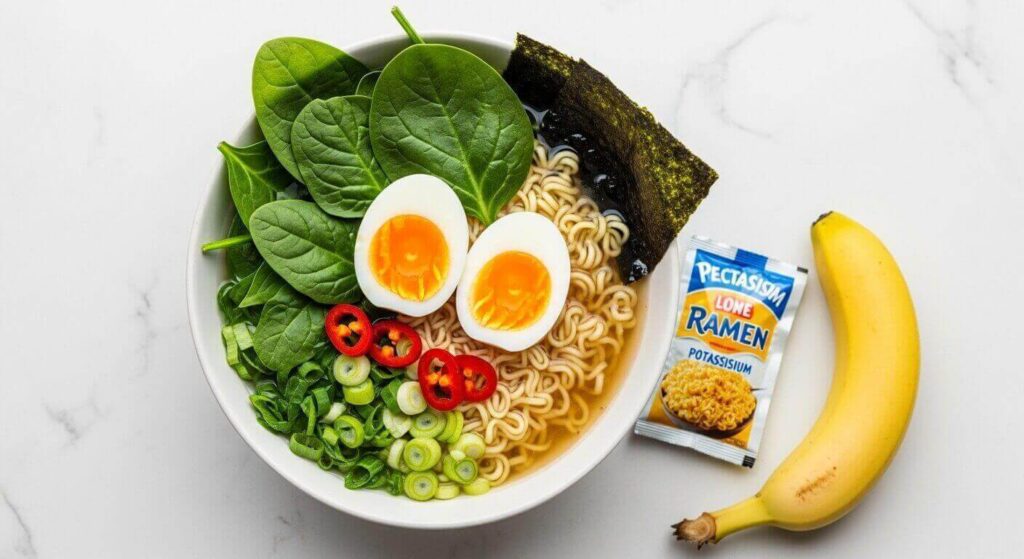
- Boost the Protein! This is the single most important change. Protein keeps you full and counters the massive carb load. **Add one or more:** a soft-boiled egg (or two!), shredded chicken breast, firm tofu cubes, or even a scoop of lentils.
- Double Down on Greens & Fiber: The broth is hot, so why not toss in a handful of fresh spinach, frozen mixed vegetables, chopped scallions, or thinly sliced mushrooms right before serving? Fiber and vitamins complete the meal.
- Master the Sodium Strategy: Broth Control, Not Packet Control. Most of the 1,500mg+ of sodium is in the broth. Don’t worry about using less seasoning—it ruins the flavor! Instead, enjoy the noodles and toppings, but aim to leave **half the broth** in the bowl. This cuts your sodium by a whopping 50% without sacrificing taste.
- Quick Noodle Rinse: If you’re serious about fat reduction, quickly rinse the cooked, drained noodles in hot water before adding them to your final broth. This removes some surface oil left over from the frying process.
- Post-Ramen Potassium Balance: Since **instant noodles** are sky-high in sodium, try to follow up your meal with a source of potassium. Potassium helps counteract the effects of sodium and can reduce water retention (i.e., morning bloat). Think a small banana, an orange, or a glass of skim milk.
Protein vs. Carb Breakdown 📝 (Approximate Values)
| Meal Type | Protein (g) | Carbs (g) |
|---|---|---|
| Standard **Ramen** Only | 8g | 55g |
| **Ramen** + 2 Eggs + Spinach | 22g+ | 58g |
| **Ramen** + Tofu + Veggies | 18g+ | 60g |
The **Instant Noodle** Sodium Challenge: A Practical Calculator 📊
Sodium is the biggest concern when consuming **instant noodles**. Use this simple tool to quickly estimate your sodium intake based on how much broth you actually consume. (Assumes an average package sodium content of 1850mg).
Sodium Intake Estimator 🔢
Percentage of Broth Consumed: 100% (The whole bowl) 75% (Most of it) 50% (Half the broth) 25% (A few sips) 10% (Just the noodles/toppings) Calculate Sodium
Key Takeaways: Mastering the Art of **Healthy Instant Noodles** 🍜
The biggest lesson is that **ramen** is a fantastic *starting point*—a blank canvas for a quick, cheap, and surprisingly nutritious meal. Use this visual guide to remember the essential upgrades:
✅
Your Healthy Instant Noodle Upgrade Plan
Myth Busting: The preservative and MSG myths are largely unfounded by major health organizations (FDA/WHO). The main problem is nutrition.
The Protein Priority: You MUST add **protein** (Egg, Tofu, Chicken) to create a balanced meal and stabilize blood sugar.
The Sodium Secret:
DO NOT reduce the seasoning packet.
Instead, leave at least 50% of the broth in the bowl.
The E-A-T Takeaway: When consumed in moderation (1-2 times per week) and upgraded with **healthy** ingredients, **instant noodles** are a convenient, low-risk meal option.
Empowering your diet, one upgraded ramen bowl at a time.
Final Thoughts: Ramen Is a Management Issue, Not a Morality Issue 🎯
Look, in the rush of American life—whether you’re a busy parent, a college student, or a late-shift worker—**ramen** is here to stay. And that’s okay! I personally believe that food should never be the source of guilt, especially when the scientific evidence doesn’t support it.
The power is now in your hands. You’ve learned that the preservative fears are baseless and that the real threat is simple: sodium and lack of nutrition. By committing to just two simple acts—**adding protein and leaving the broth**—you can turn your favorite comfort food into a reasonable part of a balanced diet. Go enjoy that bowl, guilt-free!
Ramen Health FAQ: Your Questions Answered ❓
Q: Can I really eat **instant noodles** every single day without major health issues?
A: **No.** While occasional consumption is fine, eating **ramen** daily will likely lead to chronic deficiencies in protein, fiber, and micronutrients, regardless of how much sodium you cut. It should be an occasional *convenience* meal, not a dietary staple.
Q: Are the air-dried (**non-fried**) **instant noodles** significantly **healthier**?
A: **Yes, slightly.** Air-dried noodles have significantly less fat and saturated fat than the traditional fried versions. However, they usually contain the same amount of **sodium** in the seasoning packet, so the broth strategy remains critical.
Q: How much sodium is too much in one bowl of **ramen**?
A: The FDA recommends a maximum of 2,300mg of sodium per day. Since one bowl of **instant noodles** often contains 1,500mg-1,900mg, eating the whole bowl means you consume most of your daily limit in one sitting. Aim for under 1,000mg per bowl by strictly limiting broth consumption.
Got a secret **healthy ramen** hack I missed? Drop it in the comments below—let’s share the wealth! 😊