

Tired of rhinitis? Master the FDA-approved saline nasal irrigation method. This expert guide details the *right* way to rinse for fast, lasting relief.
Table of Contents:
- What is Chronic Rhinitis (and Why Am I So Congested)?
- The FDA-Approved Solution: How Saline Nasal Irrigation Works
- The Complete Guide to Saline Nasal Irrigation (Step-by-Step)
- The Expert-Level Tip: How to Properly Drain Your Sinuses
- Beyond the Rinse: A Long-Term Strategy for Managing Rhinitis
- Conclusion: Reclaiming Your Breath and Your Life
- Frequently Asked Questions (FAQ) About Saline Nasal Irrigation
What is Chronic Rhinitis (and Why Am I So Congested)?
We’ve all been there. The constant sniffle. The feeling of pressure behind your eyes. The embarrassing “mouth-breather” status because your nose is just… closed. You might blame it on a lingering cold or seasonal allergies, but for millions of Americans, this isn’t temporary. It’s chronic rhinitis.
In simple terms, rhinitis is the inflammation of the mucous membrane inside your nose.
- Allergic Rhinitis (Hay Fever): This is what most people think of. Your immune system overreacts to allergens like pollen, dust mites, or pet dander.
- Non-Allergic Rhinitis: This type is triggered by other things, like weather changes, strong odors, smoke, or even certain foods.
Regardless of the cause, the result is the same: swelling, congestion, a runny nose, and that frustrating, blocked-up feeling. Many of us get so used to this state that we forget what it’s like to breathe freely. We accept it as “normal.”
This is not just an inconvenience; it’s a quality-of-life issue. It can lead to poor sleep, snoring, sleep apnea, and even an increased risk of sinus infections. But there is a simple, effective, and expert-endorsed solution.
The FDA-Approved Solution: How Saline Nasal Irrigation Works
You’ve probably seen them in the pharmacy: little-squeeze bottles and ceramic pots. This method, formally known as saline nasal irrigation, is a cornerstone of sinus care recommended by otolaryngologists (ENTs) worldwide.
When you see “FDA-approved” in relation to this, it refers to two things:
- The Device: The bottle or pot is regulated as a medical device.
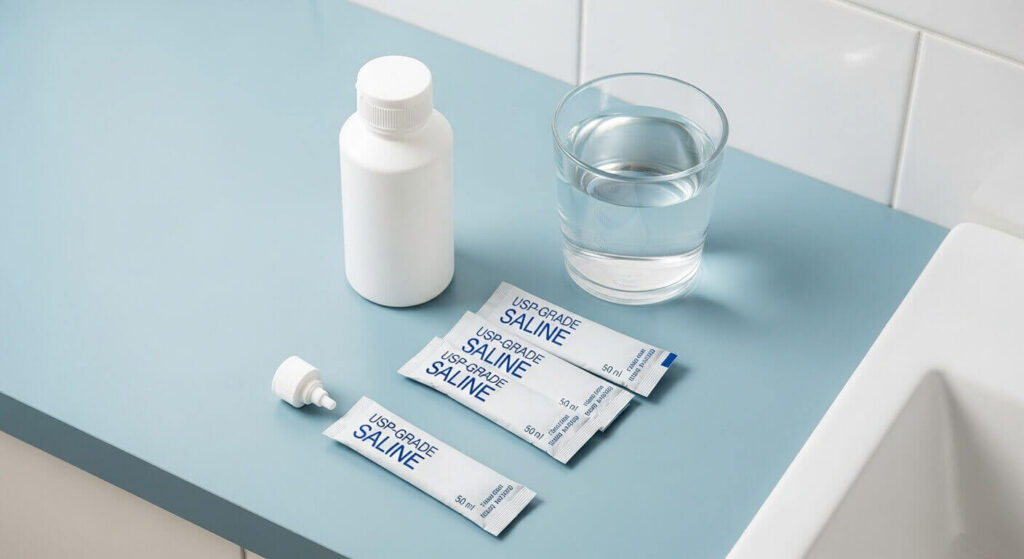
- The Saline: The pre-mixed saline packets are regulated to ensure they create an isotonic solution (matching your body’s natural salt content) that won’t burn or irritate your nasal passages.
But why does it work so well? It’s not just “flushing your nose with water.”
- It Thins Mucus: The saline solution liquefies thick, stubborn mucus, making it easier to expel.
- It Clears Irritants: It physically washes out allergens (pollen, dander), irritants (dust, smoke), and bacteria before they can cause inflammation.
- It Improves Cilia Function: Your nose is lined with tiny hairs called cilia that beat in a coordinated wave to move mucus out. Saline washing helps them function more efficiently.
It’s a simple, drug-free mechanical rinse that restores your nose’s natural defense system.
The Complete Guide to Saline Nasal Irrigation (Step-by-Step)
Ready to get started? Let’s walk through the process. Doing it right is the key to getting results and avoiding discomfort.
Step 1: Gather Your FDA-Regulated Supplies
- A Rinsing Device: A sinus squeeze bottle is generally easier for beginners and provides a more thorough, low-pressure rinse. A Neti pot relies on gravity and is also effective.
- Saline Packets: Use the pre-mixed, USP-grade sodium chloride packets. Do not use table salt. Table salt often contains iodine and anti-caking agents that will severely irritate your nose.
Step 2: The CRITICAL Water Safety Warning (Do Not Skip)
This is the most important part of this entire guide. NEVER use water directly from your tap.
Tap water is not sterile and can contain low levels of microorganisms. While safe to drink, they can be fatal if introduced into your sinuses. The CDC has warned specifically about the risk of Naegleria fowleri, the “brain-eating amoeba,” from improper nasal irrigation.
ALWAYS use one of the following water sources:
- Distilled Water (store-bought)
- Sterile Water (store-bought)
- Boiled Water: Boil tap water for at least 3-5 minutes, then let it cool until it is lukewarm (about body temperature, ~98.6°F or 37°C).
Mix one saline packet into 8 oz (1 cup) of your safe, lukewarm water.
Step 3: The Rinsing Technique (The “Ah” Method)
- Lean forward over your sink, keeping your head down.
- Tilt your head sideways at about a 45-degree angle. (If rinsing your right nostril, tilt your head to the left).
- Insert the spout of the bottle or pot into your upper nostril (the right one in this example).
- Breathe through your mouth. This is key.
- The “Ah” Tip: As you gently squeeze the bottle (or pour from the pot), make a continuous “Ahhhhh” or “K-K-K-K-K” sound. This action closes the back of your throat (your soft palate) and prevents the solution from uncomfortably running down your throat.
- The solution will flow through your sinus cavities and drain out of your lower nostril (the left one).
- Use about half the solution (4 oz).
- Gently blow your nose to clear any remaining solution. Do not blow hard, as this can irritate your ears.
- Repeat the process on the other side.
The Expert-Level Tip: How to Properly Drain Your Sinuses
This is the pro-tip that most people miss, and it’s the secret to finishing the rinse correctly.
If you feel water is “trapped” in your sinuses after rinsing—or worse, it drips out an hour later when you bend over—you haven’t drained properly. Trapped water can be uncomfortable and counterproductive.
Here is the expert drainage technique:
- After your rinse, gently blow your nose.
- Lean forward from your waist, letting your head hang down.
- Tilt your head to the left (so your left ear faces the floor). Gently exhale (blow) through your nose. Do not pinch your nostrils.
- Tilt your head to the right (so your right ear faces the floor). Gently exhale through your nose again.
- Tilt your head back up and then bend forward again. You may be surprised by how much-trapped water drains out.
- For Thick Mucus: If you feel thick, stringy mucus that won’t come out, you can use a “suction” technique. Gently pull one nostril to the side to open it, and then sniff firmly (don’t snort aggressively) to pull the mucus from the back of your nasal passages.
Beyond the Rinse: A Long-Term Strategy for Managing Rhinitis
Saline irrigation is the most important first step, but chronic rhinitis requires a long-term management plan.
1. Nasal Steroid Sprays: Your Daily Inflammation Fighter
Many people are “steroid-phobic,” but it’s crucial to understand the difference.
- Decongestant Sprays (e.g., Afrin): These work instantly by shrinking blood vessels. They are highly addictive and should never be used for more than 3 days.
- Nasal Steroid Sprays (e.g., Flonase, Nasonex): These are not addictive. They are anti-inflammatory and work slowly. They are the single most effective maintenance drug for chronic rhinitis. Experts confirm they are safe for daily, long-term use as they are not absorbed into the body in any significant way.
Pro-Tip: Use your nasal spray after your saline rinse. You’ve just cleared the runway; now the medication can land and do its job effectively.
2. The Fix for Painful Nose Scabs and Bleeds
Constant blowing and dryness can lead to painful scabs or even small bleeds inside the nose. Picking them creates a vicious cycle.
The solution is simple: moisturize and heal.
After your evening rinse, gently apply a small amount of ointment inside your nostril with a Q-tip. For an active, persistent scab, a short course (3-5 days) of an antibiotic ointment (like Bacitracin) can clear it up. For daily maintenance, a simple saline nasal gel or even Vaseline is all you need.
3. Improving Sleep: Nasal Strips and Posture
If your congestion is worst at night, it can lead to snoring and sleep apnea.
- Nasal Strips (e.g., Breathe Right): These are not a gimmick. If you have a collapsed nasal valve (you can test this: pull your cheeks to the side, and if you breathe better, you have this), these strips can physically pull your nostrils open and dramatically improve airflow.
- Sleep Posture: Try to sleep on your side. When you sleep on your back, your tongue and soft palate can collapse, blocking your airway.
4. Control Your Environment (Dust Mites & Allergens)
You can rinse all you want, but if you’re in an “allergy soup,” you’ll never get ahead.
- Dust Mites: This is the #1 indoor allergen. Wash all bedding (sheets, pillowcases) once a week in hot water (130°F / 60°C or higher).
- Mattress Covers: Encase your mattress and pillows in allergen-proof, zippered covers (often made of Tyvek-like material).
- Humidity: Avoid over-humidifying your home. Dust mites and mold thrive in high humidity. Aim for a level between 30-50%.
Conclusion: Reclaiming Your Breath and Your Life
Chronic rhinitis isn’t something you just have to “live with.” It’s a manageable condition. By incorporating these expert-backed, FDA-approved techniques, you can move from “used to it” to “in control of it.”
Start today. Get a proper saline rinse kit, use safe water, and follow the drainage technique. Be consistent with your nasal steroids and control your environment. Breathing freely is not a luxury; it’s essential to your quality of life.
Frequently Asked Questions (FAQ) About Saline Nasal Irrigation
Q: How often should I do a saline nasal irrigation?
A: For active congestion or a sinus infection, most ENTs recommend rinsing 2-3 times per day. For daily maintenance and allergy prevention, once a day is perfect.
Q: Is it really that bad to use tap water for my neti pot?
A: YES. Do not do it. As stated above, tap water is not sterile. In rare but fatal cases, it can lead to a severe brain infection from the Naegleria fowleri amoeba. Always use distilled, sterile, or previously boiled and cooled water.
Q: What’s the difference between saline irrigation and a decongestant spray (like Afrin)?
A: Saline irrigation is a mechanical wash that is drug-free and safe for daily, long-term use. Decongestant sprays are medicated and work by shrinking blood vessels. They are highly effective for short-term (3 days max) relief but cause “rebound congestion” (addiction) if used longer.
Q: My nose scabs keep coming back. What am I doing wrong?
A: This is usually a sign of extreme dryness or a low-grade infection from picking. Stop picking. Use a saline rinse, and then apply an antibiotic ointment (like Bacitracin) with a Q-tip inside the nostril for 3-5 days. After that, switch to a simple saline gel for daily moisturizing.
Q: The water just goes down my throat. How do I stop this?
A: This is the most common beginner mistake! You are not leaning forward enough, or your soft palate is open. Remember the two rules: 1. Lean your head forward and down over the sink. 2. Make a continuous “Ahhhhh” sound as you rinse. This will close your throat, and the water will have nowhere to go but out the other nostril.